Developer Tools●●Solid
Give your AI coding assistant persistent, semantic memory
Three-tier memory architecture solves context bloat for Claude Code and Copilot CLI users.
Big BrainNiche Gem
strvmarv
201mo ago
Semantic memory extraction in browser SQLite, but local AI assistants are crowded.
Privacy-conscious users wanting persistent AI memory without cloud data collection; developers building local-first AI UX.
Jan.ai · Ollama WebUI · Khoj (local semantic search)
For the past year, I’ve been building a personal AI assistant from scratch. I was frustrated by two things: cloud-based LLMs using my conversations for training, and the lack of persistent, cross-chat memory in most UIs.
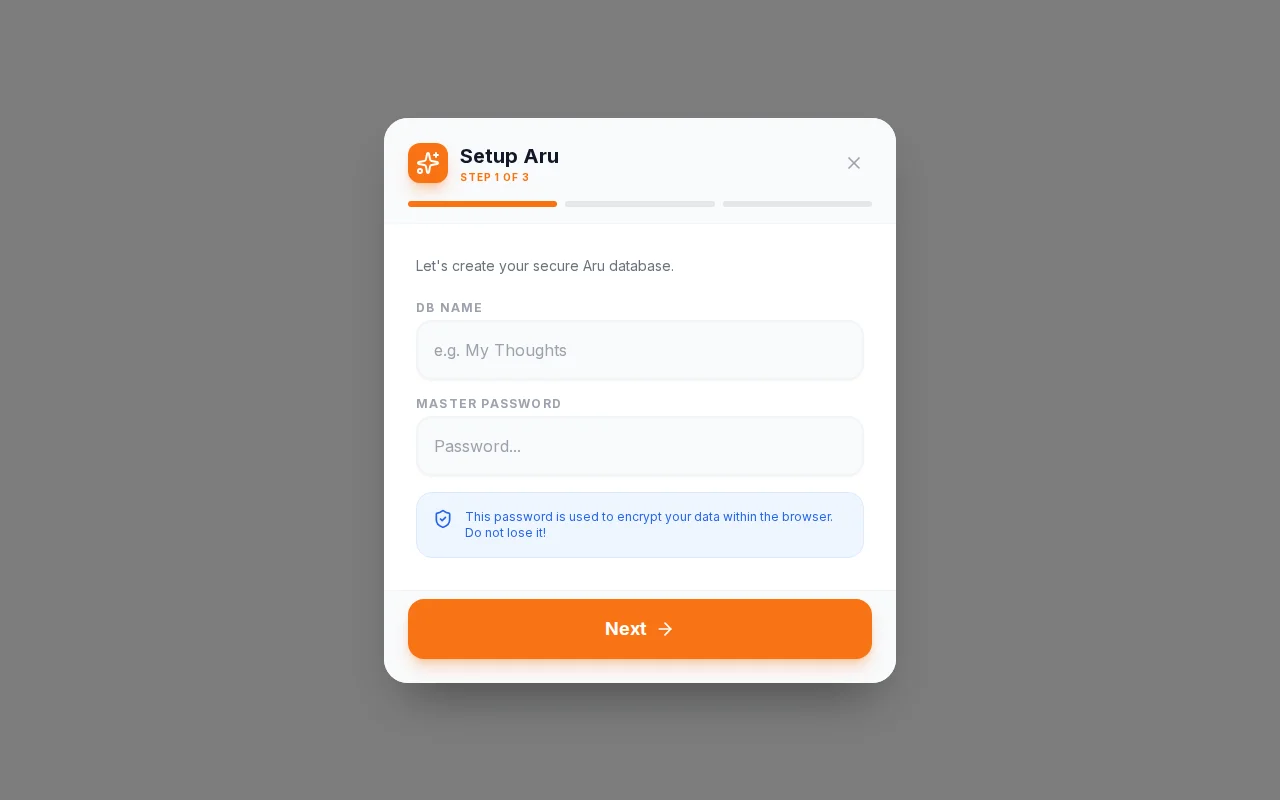
I wrote Aru Ai entirely in Vanilla JS as a PWA. There is no backend, no telemetry, and no data collection. Everything lives in your browser.
Here is how it works under the hood:
Local Storage: All chats, settings, and vector embeddings are stored locally in a SQLite database on your device. Bring Your Own Model: It connects directly to Gemini, OpenRouter, or local models via Ollama/LM Studio. Semantic Memory Module: It extracts facts about you (e.g., allergies, preferences) and dynamically injects them into the context window only when relevant. Canvas & Artifacts: Built-in support to generate code, charts (Chart.js), documents, and mini-games in a dedicated canvas. You can save these to a local library. Heuristic Module: A small math-based logic system that adjusts the AI's "mood" (sarcasm, humor, tone) based on how you interact with it. It also features different modes (Child/Teen/Adult) protected by a database password to restrict output and prevent API changes.
It’s completely free. The code isn't open-source yet as I am planning a major refactoring, but I wanted to share the functional PWA with the community to get some feedback on the architecture and the local-first approach.
Link: https://chat.aru-lab.space/
I'd be happy to answer any questions about running SQLite in the browser, semantic extraction, or building complex PWAs without frameworks.
Three-tier memory architecture solves context bloat for Claude Code and Copilot CLI users.
Local-only agent memory when mem0 and supermemory require servers.
MCP-native persistent memory prevents re-explaining projects to Claude every session.
Offline semantic memory for agents: SQLite + ONNX embeddings, no API needed.
Tiny footprint (~500 lines vs 400k OpenClaw), but local AI assistants are crowded.
SQLite-based LLM inference hitting 210MB RSS beats OS paging with deterministic memory control.