Back to browse
PaperBanana – Paste methodology text, get publication-ready diagrams

PaperBanana – Paste methodology text, get publication-ready diagrams

by mylsz·Feb 24, 2026·2 points·1 comment

AI Analysis

●●SolidSolve My ProblemEye CandyShip It

Methodology diagrams from text in 2-3 minutes—but academic diagram generation already exists.

Strengths
  • Retriever-first approach (reference similar diagrams) reduces hallucinated artifacts vs. naive gen-from-text
  • Multi-agent pipeline (Planner, Stylist, Visualizer, Critic) is thoughtfully architected
  • Benchmarked on 292 cases across 4 evaluation dimensions; research-backed claims
Weaknesses
  • Diagram generation for papers is an emerging-but-niche use case; unclear if solves real friction vs. PowerPoint
  • Pricing model ($10–100/month) may not justify subscription for casual academic users
Category
Target Audience

Academic researchers creating methodology figures for papers, theses, and conference submissions.

Similar To

Elicit · Typeset.io · Figma + AI plugins

Post Description

I got tired of spending hours in PowerPoint and TikZ drawing methodology diagrams for my papers. So I built PaperBanana — you paste your Method section text, and it generates a publication-ready figure in about 2-3 minutes.

How it works under the hood:

1. A Retriever agent searches a curated database of real academic diagrams to find structurally similar references 2. A Planner agent reads your text and generates a detailed visual description (layout, components, connections, groupings) 3. A Stylist agent polishes the visual aesthetics without changing content 4. Then it enters an iterative loop: a Visualizer generates the image, and a Critic evaluates it and suggests revisions — this repeats 1-5 times (you choose)

The key insight is that academic diagrams follow conventions — Transformer architectures, GAN pipelines, RLHF frameworks all have recognizable visual patterns. By retrieving relevant references first, the output is much closer to what you'd actually put in a paper vs. generic AI image generation.

Built with: Next.js + FastAPI + Celery, using Gemini 2.5 Flash for planning/critique and Nanobanana Pro/Seedream for image generation.

Try it here: https://paperbanana.online

Some examples it handles well: Transformer architectures, GAN training pipelines, RLHF frameworks, multi-agent systems, encoder-decoder architectures.

Known limitations: - Works best for CS/AI methodology diagrams — not optimized for biology, chemistry, or general scientific illustration - Text rendering in generated images isn't perfect yet — sometimes labels get slightly garbled - The curated reference database is still small (13 examples), expanding it is ongoing work

Would love feedback from anyone who writes papers regularly. What types of diagrams do you struggle with most?

Similar Projects

AI/ML●●Solid

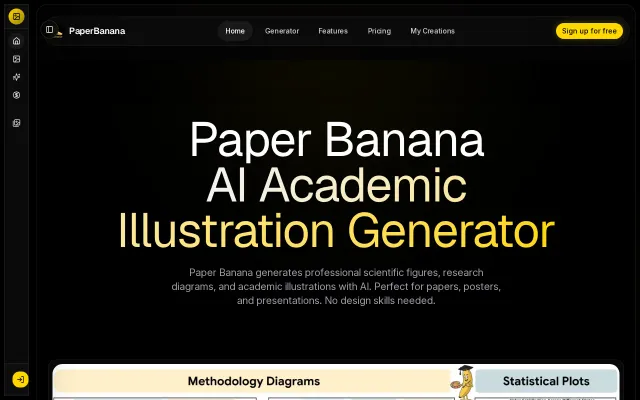
Paper Banana – AI academic illustration generator

The product nails a focused niche: text-to-academic-figure workflows with extras like I2I editing, a multi-agent Retriever→Planner→Stylist→Visualizer→Critic pipeline, and explicit support for diagram vs. plot modes. The landing looks tidy and the mention of DDPM/ResNet and plot-code output suggests real engineering under the hood, but the space is crowded (BioRender, generalist image LLMs, fig-helpers) and model transparency, failure modes and export fidelity for journal submission are the open questions.

Niche GemWizardry
GuiShou
103mo ago
Developer Tools●●Solid

Meto – Methodology backbone for AI agentic coding

Opinionated scaffolding for Claude Code projects with Agent Teams, but competes with create-react-app and similar boilerplate generators.

Ship ItNiche Gem
ilom
203mo ago
Productivity●●Solid

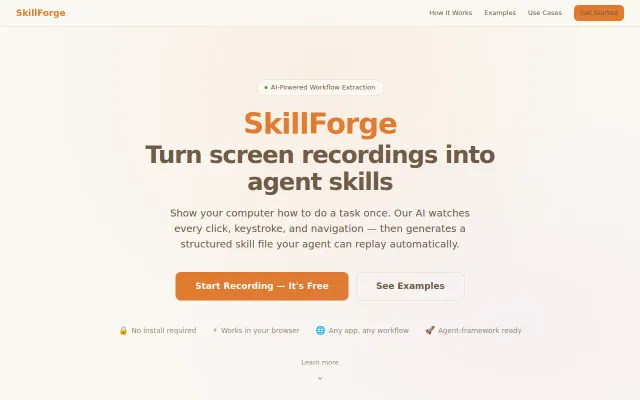
SkillForge – Turn Screen Recordings into Agent-Ready Skills

SkillForge turns the old 'show, don't tell' trick into code: record a task, and their AI teases clicks, keystrokes and navigation out of pixels into a stepwise skill file you can edit and export. The ability to trim video, rewrite steps via AI, and output a SKILL.md for agent frameworks is a practical, opinionated workflow that could shortcut lots of brittle RPA scripting — my main questions are reliability across dynamic UIs and privacy/recording controls, but the product direction is smart and tangible.

WizardrySolve My Problem
YaraDori
123mo ago
Developer Tools●●Solid

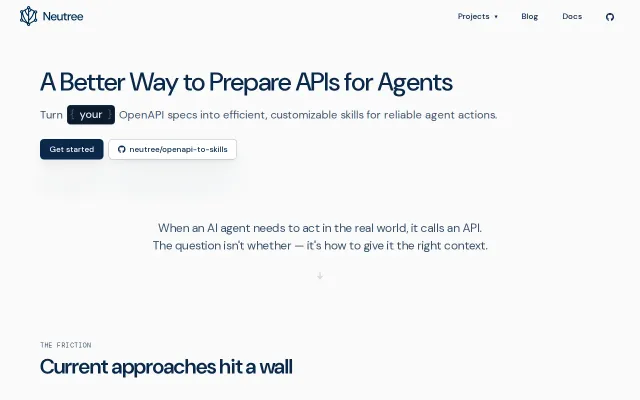
Turn any OpenAPI spec into agent-callable skills

It extracts focused, executable operations from giant OpenAPI files (the GitHub REST YAML is shown) to shrink context and avoid sidecar adapter sprawl — a pragmatic answer to token bloat and brittle ad-hoc integrations. Useful and concrete: if it actually generates tidy, updateable skill units and runtime hooks it saves a lot of maintenance. That said, the idea competes with existing LangChain/openai-function patterns; the repo will need clear runtime, versioning, and update strategies to feel like more than a nicer converter.

Solve My ProblemNiche Gem
yz-yu
103mo ago
SecurityPass

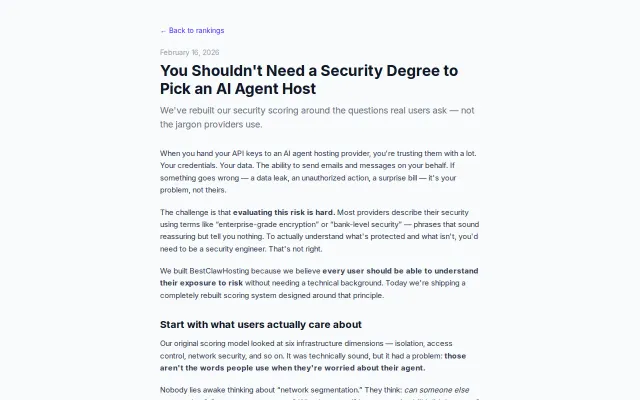
You Shouldn't Need a Security Degree to Pick an AI Agent Host

The post reframes provider security as ten blunt user questions (Can anyone else see my data? Will I get unexpected bills?) and pairs each score with an evidence grade (Verified / Documented / Claimed / Unknown). That combo—user-centric risks plus provenance—is genuinely useful for non-security experts, but the writeup stops short of publishing the detailed scoring rubric, test data, or a live comparison dashboard that would turn this from a helpful essay into a decision-making tool.

Solve My ProblemNiche Gem
wadim_grasza
113mo ago