Security●●Solid
Open-source scanner finds 97% of AI agent code non-compliant EU AI Act
Linter for EU AI Act: scans agent code against Articles 9–15, finds 97% non-compliance.
Big BrainBold Bet
airblackbox
114mo ago
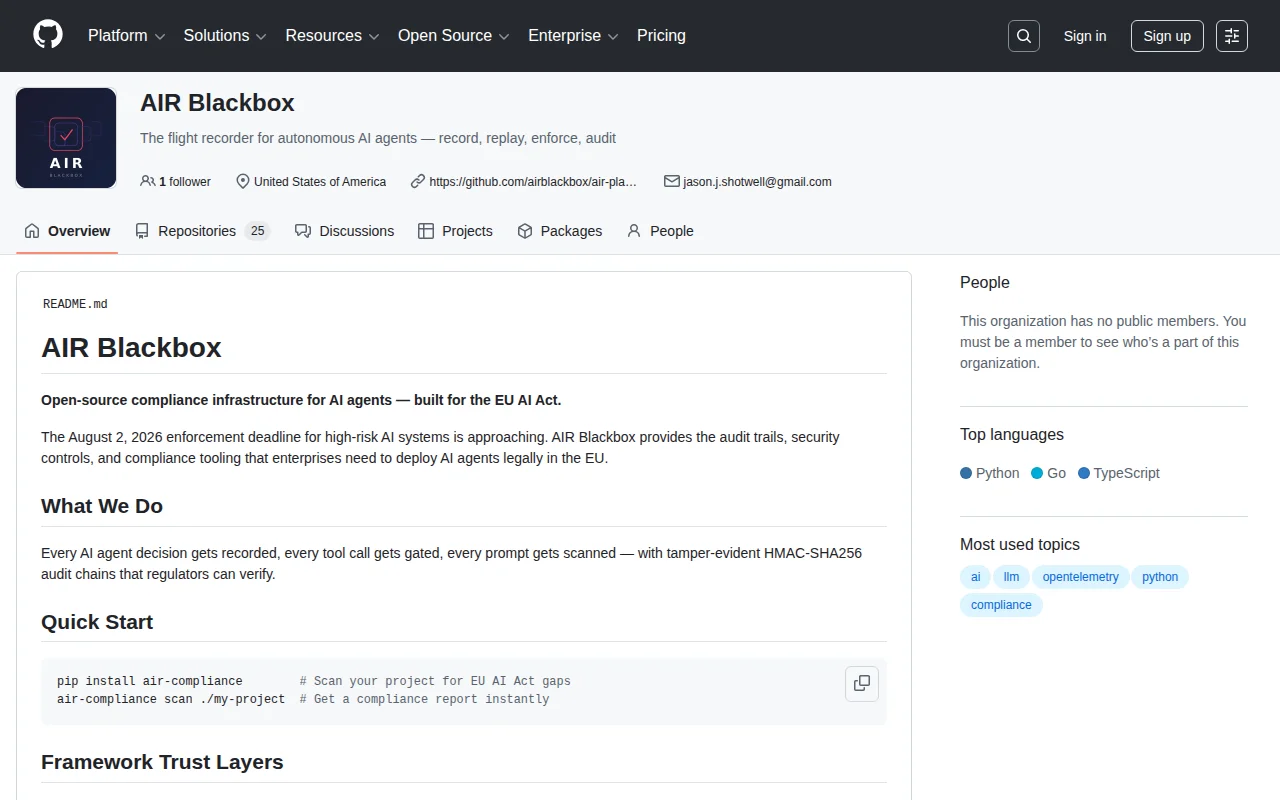
HMAC-SHA256 audit chains for EU AI Act Article 12 compliance, pip-installable trust layers for every major agent framework.
Enterprise teams deploying LLM agents in EU markets; compliance officers and engineers building production AI systems
Weights & Biases (model monitoring + governance) · Arize AI (observability for ML) · Humane Intelligence (AI safety compliance)
Trust layers for LangChain, CrewAI, AutoGen, OpenAI Agents SDK, and RAG pipelines — each is a pip install that hooks into your existing agent code with ~3 lines of setup HMAC-SHA256 tamper-evident audit chains — every agent decision, tool call, and LLM interaction gets logged to a chain that regulators can verify ConsentGate — risk-classifies tool calls and blocks critical operations until approved InjectionDetector — 15+ weighted patterns scanning prompts before they reach the model WriteGate + DriftDetector (for RAG) — prevents knowledge base poisoning and detects retrieval anomalies Compliance scanner — pip install air-compliance && air-compliance scan ./my-project tells you exactly which articles you're missing
Everything maps to specific EU AI Act articles (9, 10, 11, 12, 14, 15). Zero vendor lock-in, Apache 2.0, zero core dependencies on the trust layers. The scanner is probably the fastest way to understand where your gaps are. It takes about 3 seconds to run on a typical project. GitHub: https://github.com/airblackbox PyPI: pip install air-compliance Happy to answer questions about what the EU AI Act actually requires for AI agent deployments — we've read the full regulation and mapped it to specific technical controls.
Linter for EU AI Act: scans agent code against Articles 9–15, finds 97% non-compliance.
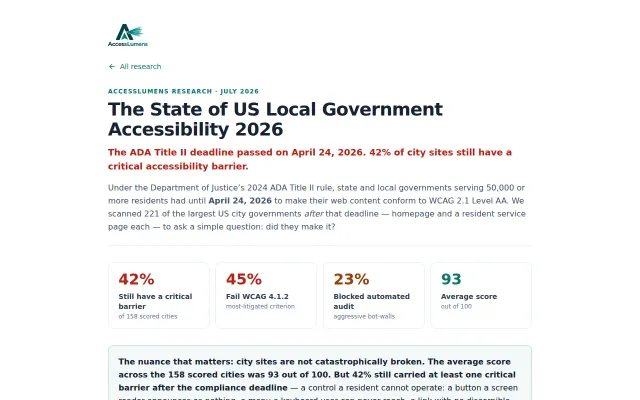
Valuable research data, but this is a report not a Show HN project.
Ambitious vision for agent payments, but shipping credibility unclear; blog post, no working product or API.
On-chain reputation and escrow for agent networks—ambitious, but product-market fit unproven.
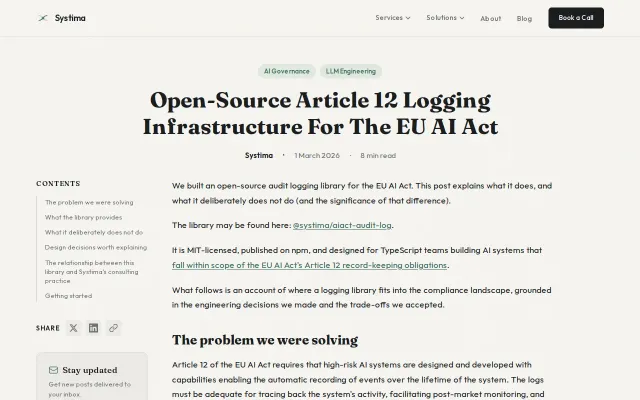
Solves a real regulatory gap with pragmatic middleware, not theoretical compliance theater.
Another customer data platform wrapper, but this one targets AI agents instead of human dashboards.