AI/ML●●Solid
Open-geo – Skill for Claude Code which shows your AI Visibility
Browser-based GEO tracking beats API scraping for real AI answer visibility.
Niche GemBig Brain
pupok46
1026d ago
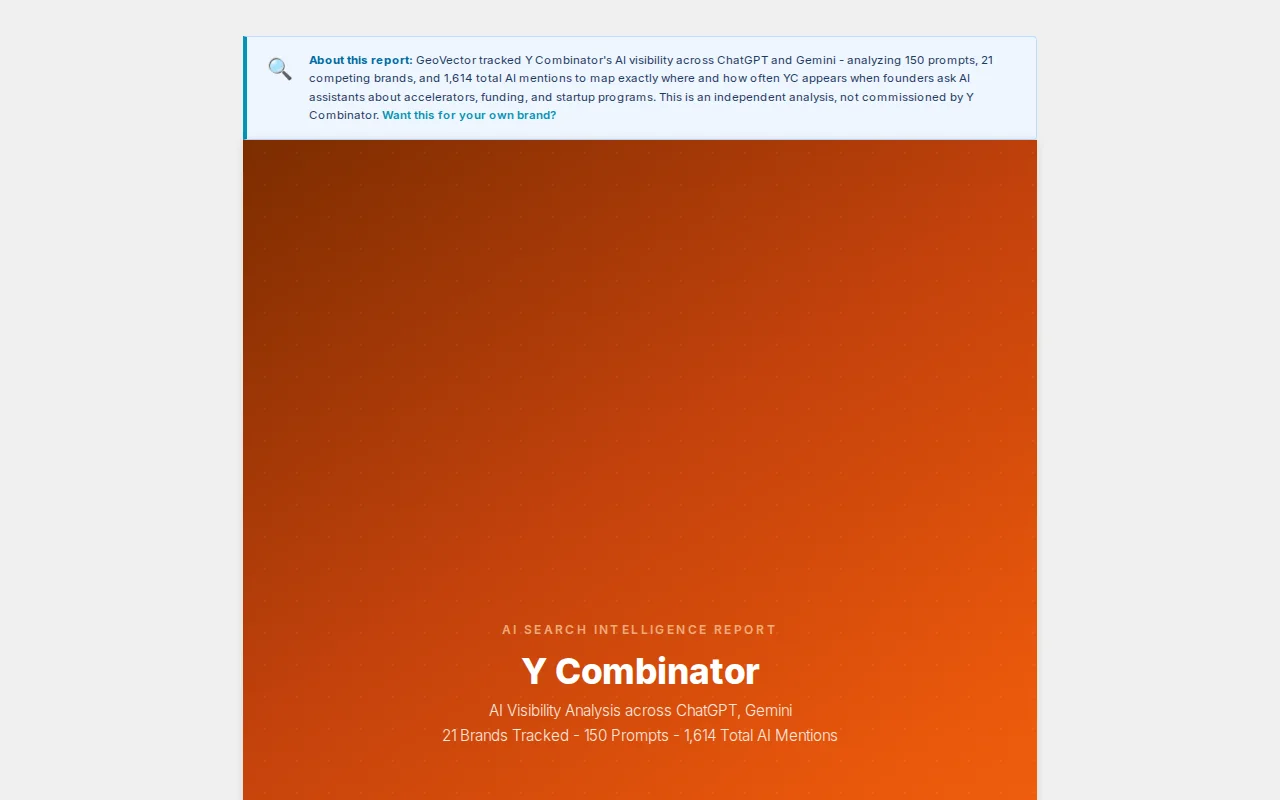
Thorough methodology, but it's a one-off report—no recurring product or unique insight beyond the YC analysis.
Marketing leaders and brand strategists monitoring AI visibility; enterprise research teams.
SEMrush · Similarweb · Brandwatch
We ran 150 prompts across ChatGPT and Gemini, tracking 21 brands. Three things that surprised us:
1. Techstars outranks YC on ChatGPT despite YC's far stronger Google presence 2. YC's own site accounts for just 8 of 940 AI source references 3. The single most-cited source driving competitor visibility is a blog post on pitchwise.se — not any accelerator's own website
Full report at the link, no signup. GeoVector runs this analysis for any brand or vertical.
Browser-based GEO tracking beats API scraping for real AI answer visibility.
Browser-based GEO tracking when API-based scrapers miss rendered AI citations.
Socratic AI tutor for study materials, but flashcard apps and tutoring already saturate the market.
Brand Entity Kit fixes LLM hallucinations when Prolific and AirOps just track rankings.
Yet another char-width package when string-width already dominates npm.
Brand positioning toolkit for Claude Code with Dunford, Miller, and Neumeier frameworks.