AI/ML●Mid
Id-agent – Token efficient UUID alternative for AI agents
Token-efficient word IDs for LLMs, but it's a narrow utility library.
Big BrainShip It
pranshuchittora
425525d ago
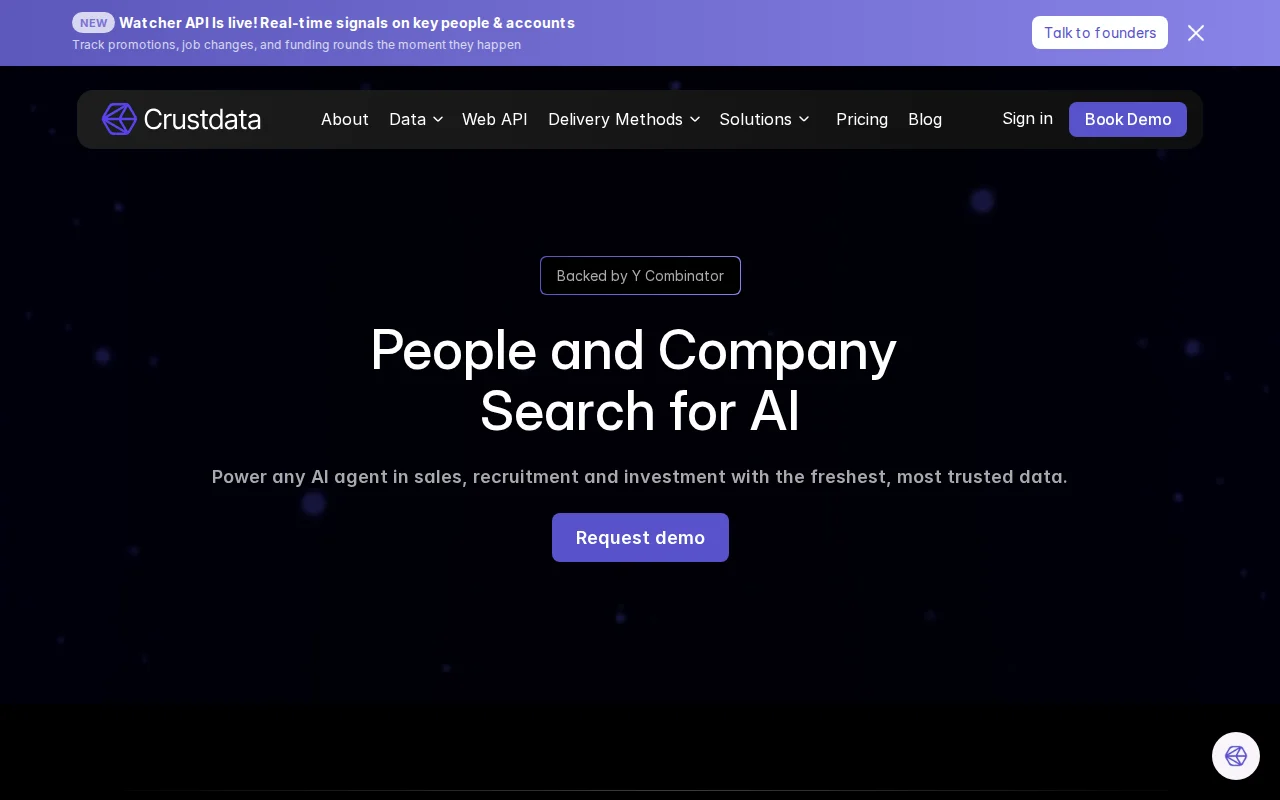
Entity-mapped web search API cuts agent token waste; targets real Perplexity/Anthropic use case.
AI agent builders, sales/recruitment/investment platform teams, enterprise GTM orgs
Perplexity API · Apollo (sales enrichment) · Hunter.io
If you run agents at scale, tokens become a line item. The web data is the worst input: long pages, repeated content, mixed entities, stale claims. The usual web search -> scrape -> summarize + structure forces the agent to spend tokens doing janitorial work before it can take action.
We’re trying to move that work upstream. We keep a canonical graph (ontology) of people and companies: stable internal IDs, aliases, and relationships. Then we continuously index the web and attach each document to the right entity ID. Example: raw web search for "Stripe pricing changes 2026" returns ~10 results across ~4,000 tokens, mostly redundant. We return 6 deduplicated results in ~1,200 tokens.
This is not just about saving tokens. It also matters because the common failure isn’t “search missed something.” It’s “search found something about the wrong entity.” Names collide. Companies rebrand. Domains move. Press releases get syndicated and look like independent sources. If you treat strings as IDs, you eventually attach evidence to the wrong person/company and the agent takes a confident action based on that mistake.
Under the hood, we run a continuous pipeline that updates the entity-linked index: discover -> fetch -> extract -> dedupe -> entity resolution -> attach -> index . And we serve you this index via our search API.
We didn’t start with web search. We spent ~2 years building verified people + company data from higher-trust sources. That forced us to build identity as a system, not a string. When we tried to bolt on web search and started building our integrated index of documents + people + companies, we ended up with a pile of local fixes: parser tweaks, domain rules, prompt hacks. Each fix helped one case and broke another because identity isn’t local. That’s when we committed to an entity-first index: pay the entity resolution cost once, then reuse it everywhere.
If you’re building AI agents for sales, recruiting, or investing that do a lot of web searches for people and companies, we’d love for you to try our web search APIs. https://crustdata.com/demo
Token-efficient word IDs for LLMs, but it's a narrow utility library.
Monodraw alternative with agent integration that closed-source tools lack.
94.9% cache hit rate cuts token costs, but AI agent wrappers are crowded.
58-task-head model that extracts + links entities + maps doc hierarchy—no hallucinations like LLMs.
Cuts Linear MCP token usage from 13,000 to under 1,000 for agent tool descriptions.
End-to-end and local-first: point it at PDFs or docs, and it extracts entities/relations with LLMs, proposes merges for you to approve in a terminal UI, then generates an interactive browser viewer and standard graph exports. The human-in-the-loop merge workflow and support for local providers (Ollama/LiteLLM) are smart, practical choices; just remember output quality and scale will still hinge on the LLM you pick.