Developer Tools●●Solid
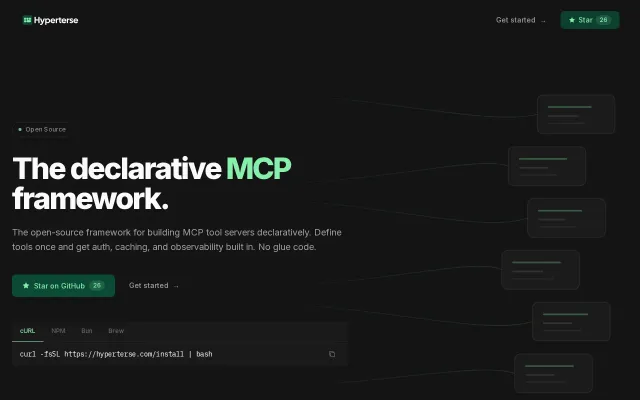
Declarative open-source framework for MCPs with search and execute
MCP servers collapse hundreds of tools into search+execute; reduces boilerplate vs traditional endpoint-per-tool.
Big BrainShip It
samrith
1143mo ago
Declarative AI-native application framework — schema-driven entities, Markdown skills, MCPB packaging
Schema-to-server codegen for MCP, but targets the crowded AI app layer.
AI engineers, full-stack developers building agent-driven applications
Anthropic MCP examples · Jan.ai scaffolding · Rivet
I built three apps with it: a CRM, a research assistant, and a todo app. Each one started the same way. I told Claude Code what I wanted. The app-builder skill generated schemas, domain skills in Markdown, a server, seed data. I pointed Claude Desktop at it. Working app, running locally.
The CRM has five entities (contact, company, deal, pipeline, activity) and three skills (lead qualification, deal forecasting, follow-ups). Hooks fire on events (new contact -> auto-score). Scheduled jobs run on cron (pipeline review weekdays 9 AM). Named views filter data (hot leads: score >= 80).
The research assistant has four entities (topic, source, note, report) and a synthesis skill that describes how to evaluate sources and cross-reference findings. Completely different domain, same framework.
Apps are MCPB bundles. They run in Claude Desktop, Claude Code, Codex, or any MCP client. Any data app you can describe, you can build.
The idea: we've always defined data models for developers to code against. LLMs don't need that. They reason over JSON Schema directly. They read Markdown and apply it. Give them a well-defined schema and domain rules, they do the rest.
My sales lead wrote the CRM's qualification rubric. Not a developer. C-suite: +25 pts, corporate email: +10. The agent reads it and follows it.
Storage is flat JSON files, one per record, backed by git. Grep your CRM, diff a contact, branch your pipeline. The storage layer is pluggable. Flat files today, other backends as the project grows.
Tools are generated from schemas, six per entity. Built on FastMCP in Python, TypeScript library too. The server:
from upjack.server import create_server mcp = create_server("manifest.json") mcp.run()
Three tiers: (1) schemas + skills, no code. (2) create_server() one-liner. (3) Python/TypeScript escape hatch for custom logic.Looking for developers and businesses who want to experiment with AI-native applications. If you're interested in collaborating, open an issue or ping me directly.
https://github.com/NimbleBrainInc/upjack Docs: https://upjack.dev
MCP servers collapse hundreds of tools into search+execute; reduces boilerplate vs traditional endpoint-per-tool.
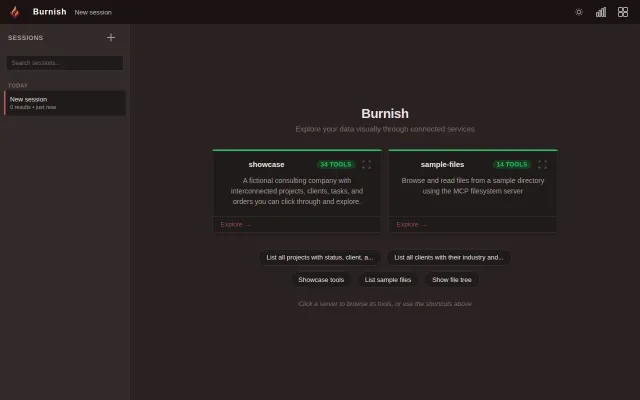
Schema-to-UI inference for MCP servers when most lack any visual interface.
AI agents can now self-audit compliance—solves the hallucination problem for legal requirements.
Schema-valid evidence packs for AI agents when generic evals miss domain nuance.
Markdown-for-Agents proxy for private/internal sites, but Jina.ai and Firecrawl cover most use cases.
Blog post about building MCP UIs, not an actual tool you can use today.