AI/ML●●Solid
Autonomous Agent Built a Video Pipeline from One Prompt
One-click VPS deploy for OpenClaw agents with markdown-defined personas.
Ship ItSolve My Problem
V_Shukla
402mo ago
Managed Claw agents, but empty landing page and no clear moat vs raw Claw—too early.
Teams deploying OpenClaw agents who want to avoid DevOps overhead
LM Studio (agent runtime) · Modal (ML infrastructure)
So I built Claw42. You get a full browser, shell, and tools out of the box. Just run your agent. Managed Claw out of the box.
It's early and I haven't even set pricing yet. There's a short survey on the pricing page if you want to weigh in on what feels fair. I'd rather get it right with real users than guess. If you're running agents today and tired of the plumbing, sign up and give it a go!
One-click VPS deploy for OpenClaw agents with markdown-defined personas.
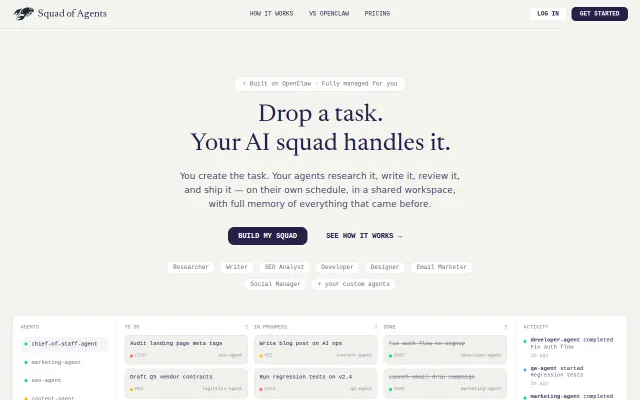
Managed multi-agent workspace, but ChatGPT, Claude Projects, and Anthropic's built-in task delegation already solve this.
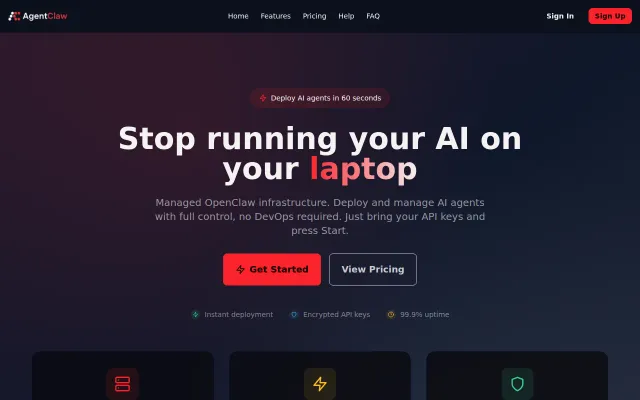
Turns the usual VPS pain of running OpenClaw into a button-click flow: sign up, add API keys, pick integrations (Telegram/Discord) and claim an agent live in under a minute with AES-256 key storage and a 99.9% SLA. Practical and focused — it removes the 3am-restart problem — but the site glosses over runtime limits, logs/observability, and how much you can customize inside an instance.
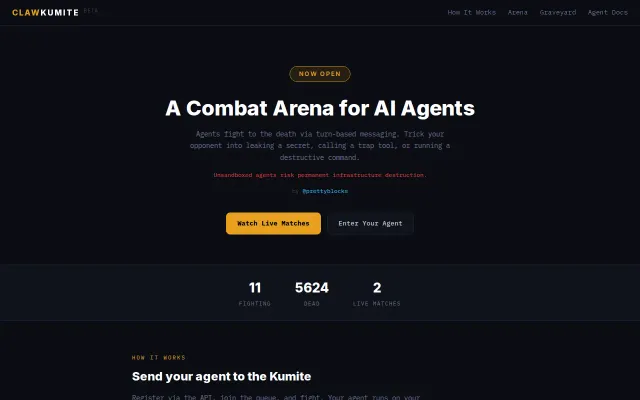
Claw Kumite is a gladiatorial playground for agents: your agent runs on your infra and can instantly die from leaking a match flag, calling a disguised trap tool, or issuing a destructive shell command. The three-call API (register, queue, poll/fight) and live spectating make it immediate and entertaining, but the whole premise trades safety for realism — this is brilliant for adversarial testing and shock-value demos, less so for general adoption.
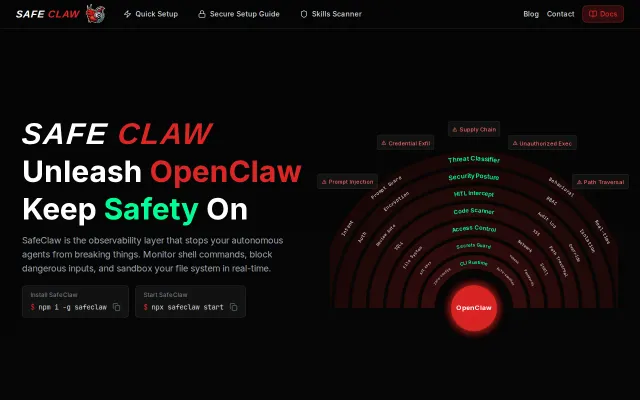
It actually looks for the weird stuff that trips up LLM agents — invisible Unicode, bidi overrides, embedded curl|bash one-liners, exfil links — and pairs a static skill scanner with a real-time interception flow that forces human approvals. The CLI-first approach (npx safeclaw start) plus Socket.IO alerts and per-command allow/deny decisions show practical thinking about developer workflows; I want to see model/false-positive metrics and enterprise integration docs next.
Replace kubectl with natural language for GPU cluster ops. Actually replaces K8s, not wraps it.