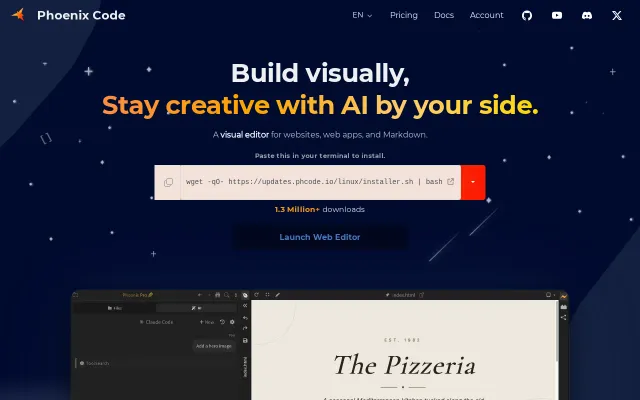
Productivity●●Solid
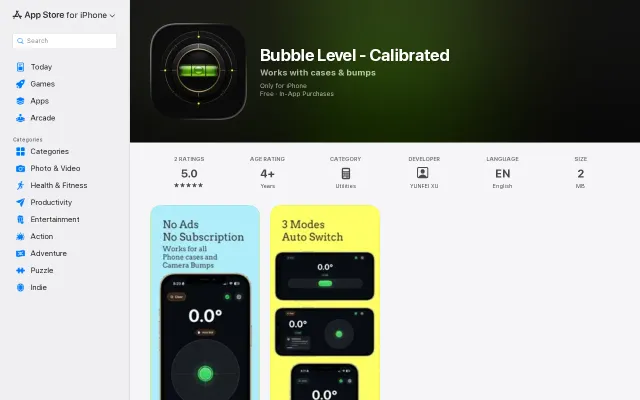
An iOS bubble level designed to calibrate away camera bump
Rotation-invariant calibration that stays zero when you rotate the phone — most apps fail this.
CozySolve My Problem
dfskGT
446d ago
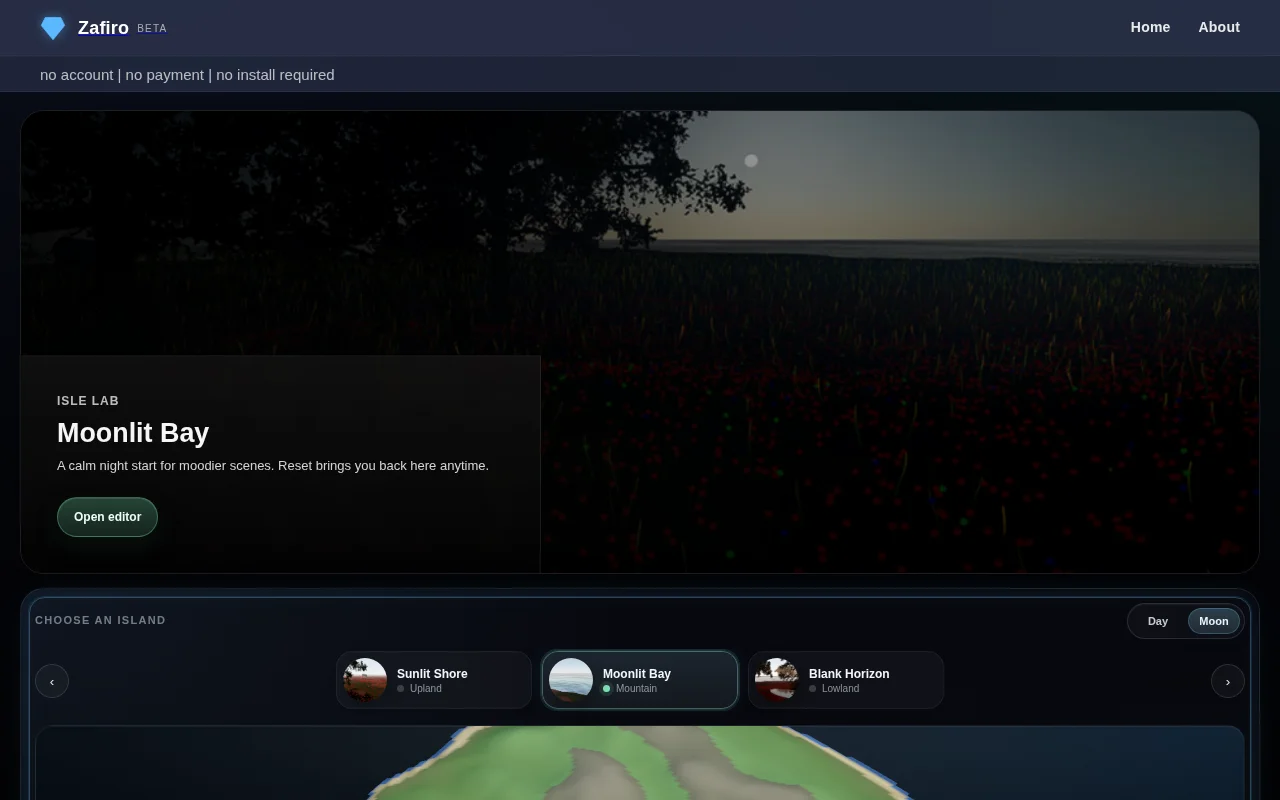
Three.js terrain editor with clean authoring modes, but lacks assets and feature depth.
Game developers, environment artists, world builders
Spline · Nomad Sculpt · Needle Engine
I’m building browser-based WebGL terrain editor powered by a custom Three.js engine. It’s a real-time 3D scene, not a static render.
What’s new since the last iteration:
Authoring mode UI integrated into the left navigation (clean tool separation, no ad-hoc overlays)
Camera Mode vs Explore Mode (orbit/zoom author camera with a clear mode switch)
Visual modes for authoring (production parity vs simplified white “workspace” mode)
Live demo: https://playzafiro.com/isle-lab/
Short context: I’m doing this solo. The long-term goal is a lightweight world-building tool that can evolve into a broader editor/workflow.
I’d love feedback on:
- usability (does the navigation/tooling feel intuitive?) - performance on your machine - what feature would make this immediately useful for you (even as a prototype)
Thanks!
Rotation-invariant calibration that stays zero when you rotate the phone — most apps fail this.
HTMX + Go HN reader, but better alternatives (Librarian, HN Classic) already exist.
AI sees the rendered page, not just code — but Cursor and Copilot already dominate this space.
Hex map visualization clusters notes while AI prompts challenge reasoning instead of generating.
300M TTS model running locally on consumer GPU or Apple Silicon.
Polished fretboard visualizer, but guitar scale sites are a dime a dozen.