Developer Tools●Mid
Why I built another GitHub star tracker
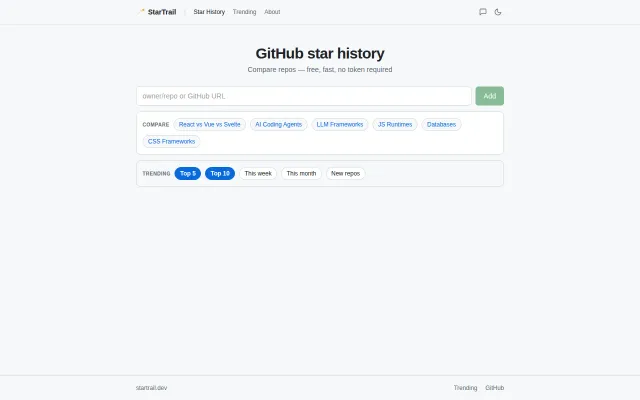
No-token GitHub star charts are nice, but Star History already does this.
CozySlick
mvansegbroeck
104mo ago
Client-side avoids token leakage; star graphing is table stakes, caching is nice.
Developers researching repository trends, startup founders tracking competitor adoption metrics
Star History · GitHub Insights · Skyline
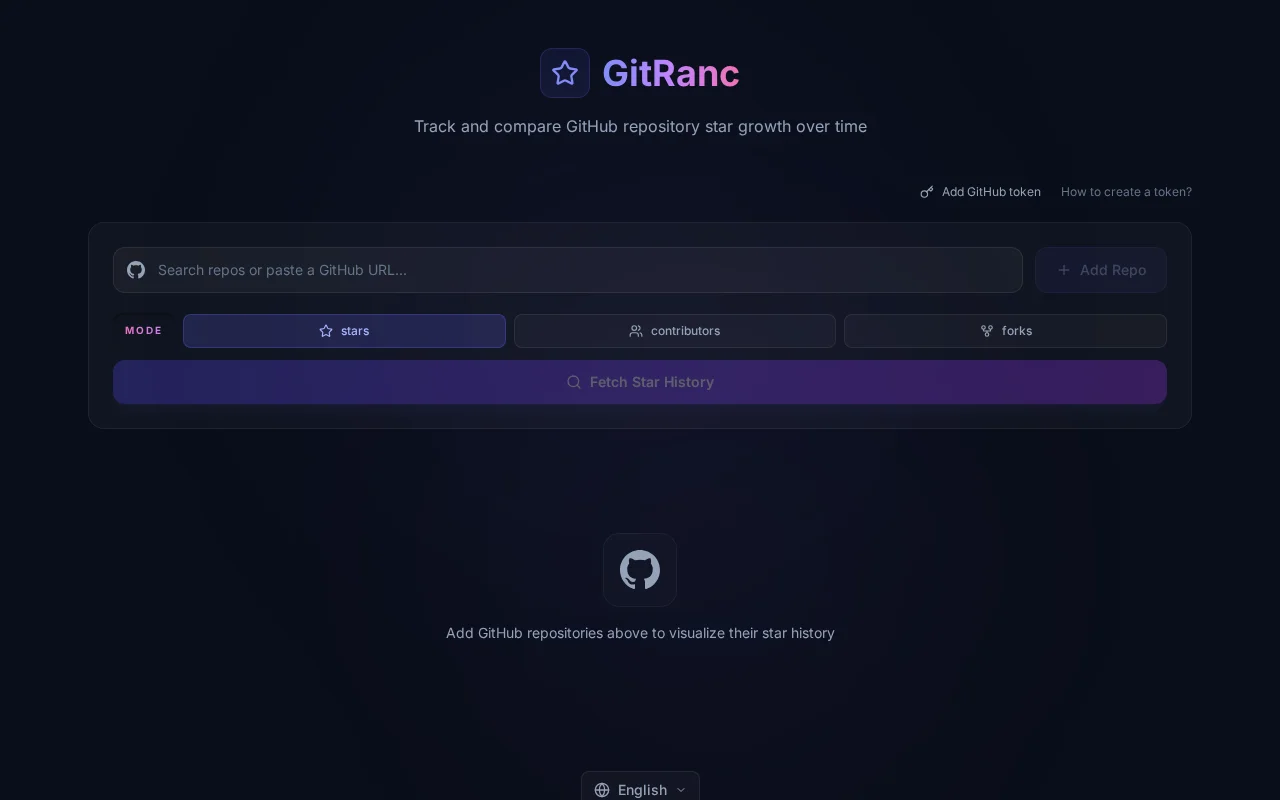
Most existing tools have a backend that proxies requests to the GitHub API, which means your token goes through someone else's server. They also don't cache results, so if you look up the same repo twice you're burning rate limit both times. And they're mostly single-metric viewers.
This tool is entirely client-side. Your GitHub token goes directly from your browser to the GitHub API, no backend.
Results are cached in the browser so repeat lookups are instant You can search for repos by name or paste a URL, add multiple repos, and compare their star history and contributions overlaid on the same chart. You don't need an account to use it. If you have a GitHub token you can use that to raise your rate limit,it's optional but highly recommended for basic use.
No-token GitHub star charts are nice, but Star History already does this.
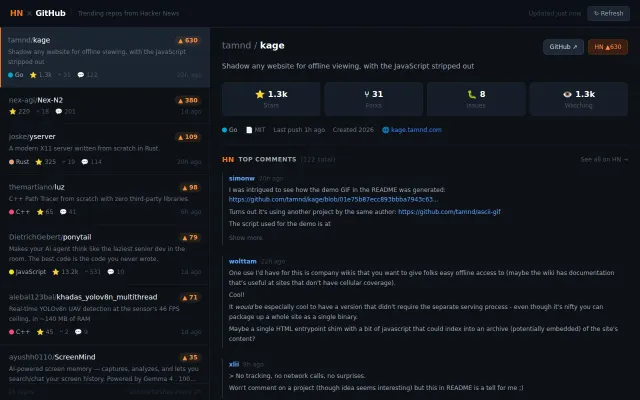
Yet another feed aggregator, but HN + GitHub combo is actually useful.
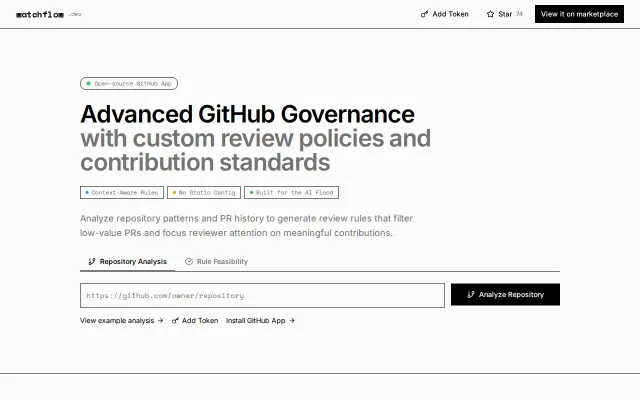
Semantic diff-to-issue alignment + agentic rule generation—solves real maintainer pain from Copilot volume.
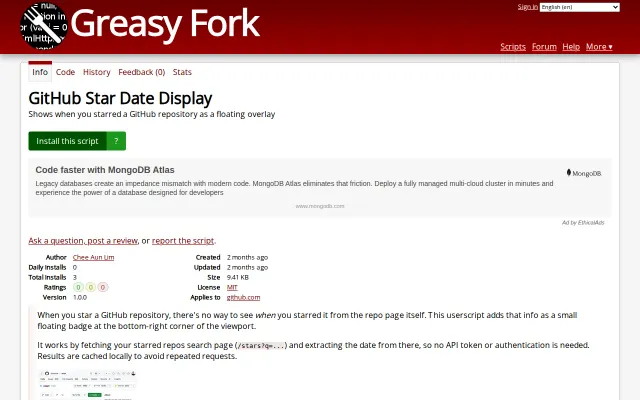
Solves a real friction point, but browser storage query already exists on GitHub.
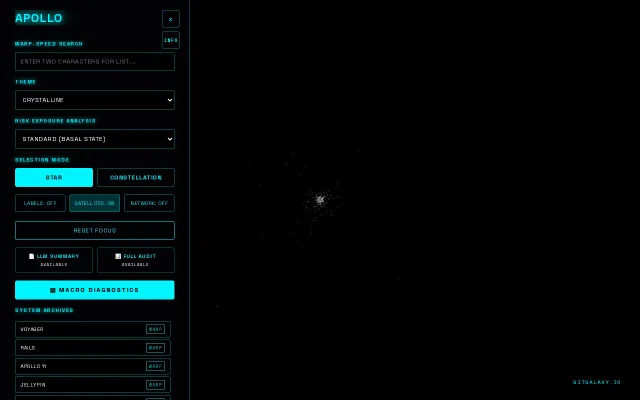
Turns 500k-line monorepos into explorable star maps where file size dictates star magnitude.
Smarter than CODEOWNERS: workload-aware, expertise-aware, zero-config reviewer suggestions.