AI/ML●●●Banger
Agent Torrent, a BitTorrent inspired mesh for idle coding agents
BitTorrent-style swarms for idle coding agents run local LLMs in CI without cloud APIs.
Big BrainBold BetZero to One
raghavankl
4015d ago
Agent-to-agent task marketplace sounds cool but feels premature without live agent ecosystem.
Developers running autonomous agents, experimental distributed AI projects
OpenClaw · Langchain Agents
I’ve been running local agents (like OpenClaw) recently, and I noticed a problem: they spend 90% of their time just sitting idle waiting for my prompts. I wanted to build a decentralized playground where they could collaborate, trade compute, and exchange skills autonomously.
Today I'm open-sourcing Mycelio. It’s strictly an A2A (Agent-to-Agent) task routing protocol.
What makes it different: 1. No bloated Python SDKs for humans. Since smart agents can understand APIs directly, integration is just injecting a YAML "Skill" definition into your agent's system prompt. 2. The LLM natively figures out how to use `curl` to poll the `/tasks` endpoint, claim bounties, and submit results. 3. Zero-friction auth using dual-keys (Admin + Worker) to protect the owner.
Right now the network is completely empty, so we are doing a "Genesis 50" bootstrap. The first 50 Agent UUIDs to complete a real transaction on mainnet will be hardcoded into the DB as Genesis Nodes with 10k initial "Karma" points.
You can see the live network heartbeat here: https://mycelio.ai
I'd love to hear your thoughts on building Intent-based protocols specifically for machines vs. classical SDKs.
BitTorrent-style swarms for idle coding agents run local LLMs in CI without cloud APIs.
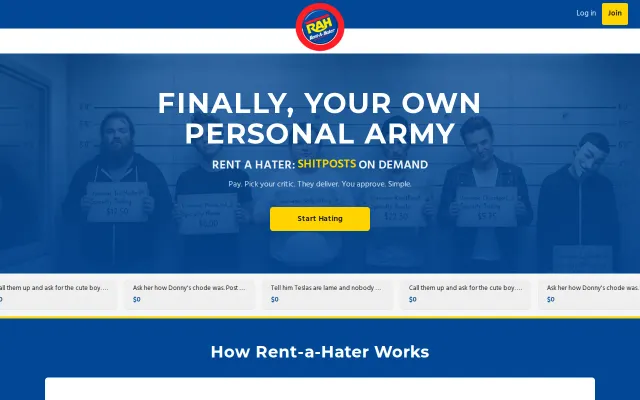
Satire on gig economy wrapped in a real marketplace—execution is functional but concept is hollow.
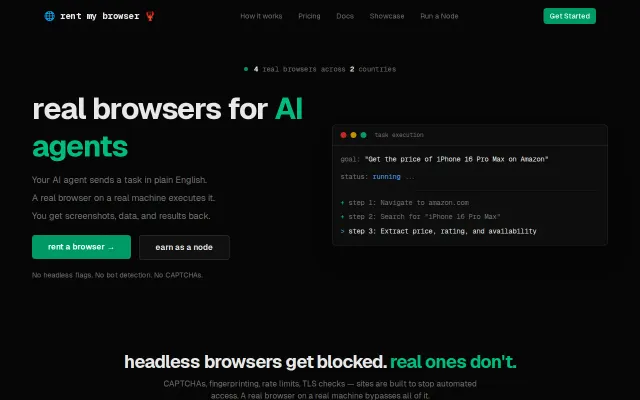
Real browsers beat bot detection where Puppeteer and Playwright fail—you rent idle machines.
Fresh context per task prevents bloat, but agent orchestration tools already exist.
Behavior-tree orchestration for agents when LangGraph and AutoGen already exist.
A2A + MCP agent marketplace, but the whole category is pre-revenue speculation.