SaaS●●Solid
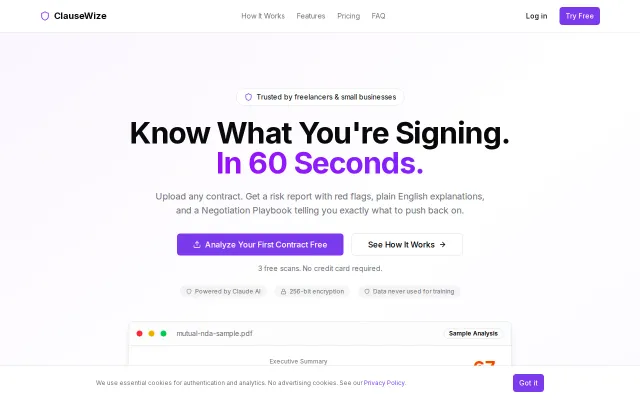
ClauseWize – Upload a contract, get risk score and negotiation language
Specific counter-language generation beats generic risk summaries.
Solve My ProblemSlick
pratikdoshi01
102mo ago
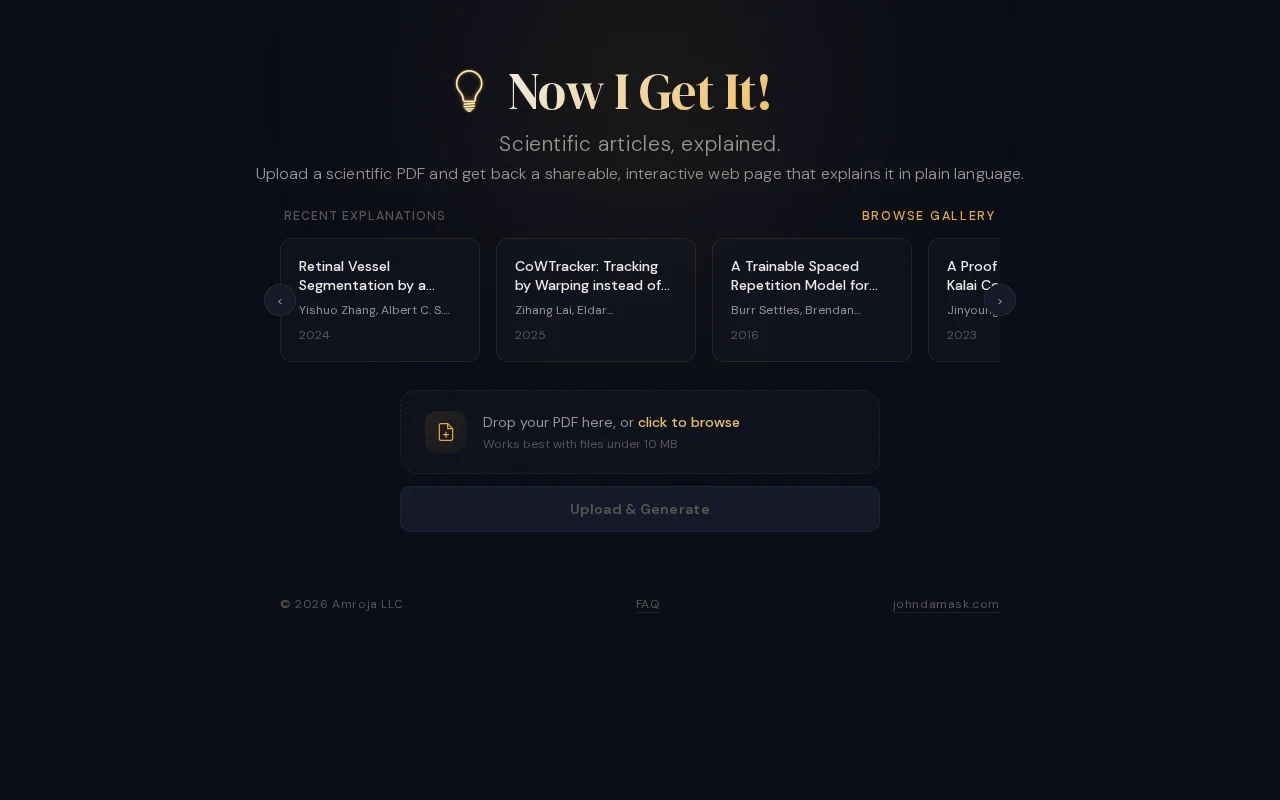
Solid on-ramp for paper skimming, but Claude with a saved prompt does the same.
Researchers, academics, students, and domain experts across scientific fields
Claude · ChatGPT · Perplexity
Enter, Now I Get It!
I made this app for curious people. Simply upload an article and after a few minutes you'll have an interactive web page showcasing the highlights. Generated pages are stored in the cloud and can be viewed from a gallery.
Now I Get It! uses the best LLMs out there, which means the app will improve as AI improves.
Free for now - it's capped at 20 articles per day so I don't burn cash.
A few things I (and maybe you will) find interesting:
* This is a pure convenience app. I could just as well use a saved prompt in Claude, but sometimes it's nice to have a niche-focused app. It's just cognitively easier, IMO.
* The app was built for myself and colleagues in various scientific fields. It can take an hour or more to read a detailed paper so this is like an on-ramp.
* The app is a place for me to experiment with using LLMs to translate scientific articles into software. The space is pregnant with possibilities.
* Everything in the app is the result of agentic engineering, e.g. plans, specs, tasks, execution loops. I swear by Beads (https://github.com/steveyegge/beads) by Yegge and also make heavy use of Beads Viewer (https://news.ycombinator.com/item?id=46314423) and Destructive Command Guard (https://news.ycombinator.com/item?id=46835674) by Jeffrey Emanuel.
* I'm an AWS fan and have been impressed by Opus' ability to write good CFN. It still needs a bunch of guidance around distributed architecture but way better than last year.
Specific counter-language generation beats generic risk summaries.
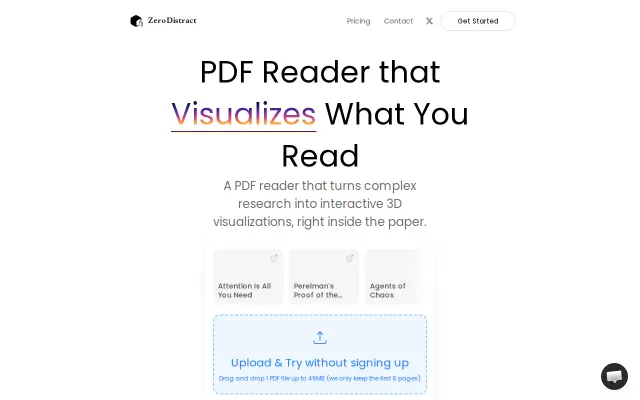
Interactive 3D visualizations inside PDFs—slick, but unclear if LLM-generated visuals aid actual comprehension.
Empirical OCR vs. image embeddings shootout for scientific PDFs reveals complementary bottlenecks.
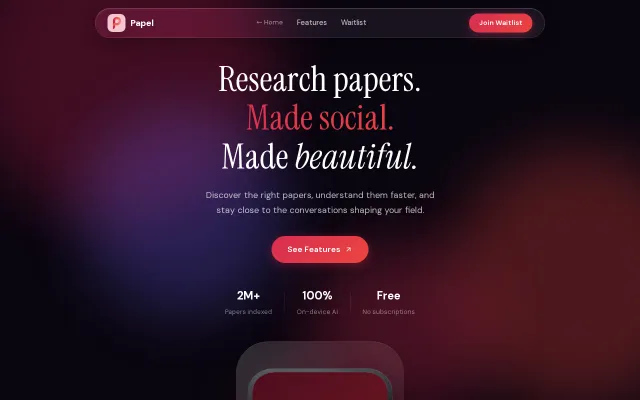
TikTok for papers sounds fun, but researchers need citations, not streaks.
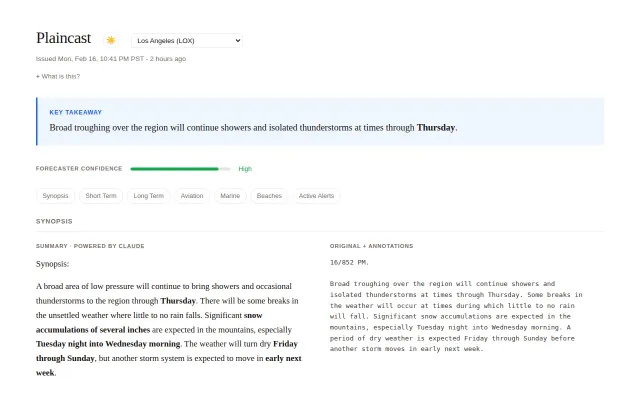
Turns impenetrable weather jargon into readable English, covering 19 NWS offices.
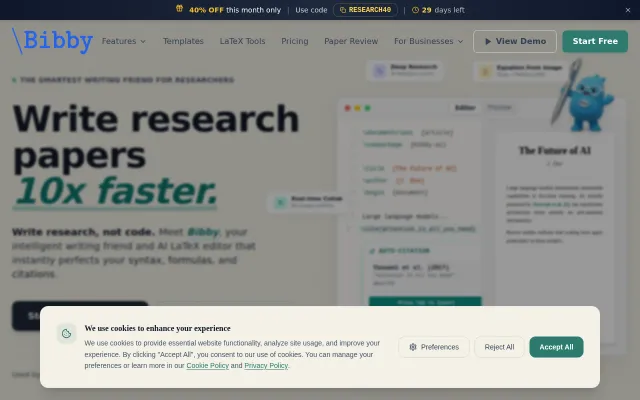
Cursor for research papers—polished LaTeX tooling with real researcher adoption (9920 users).