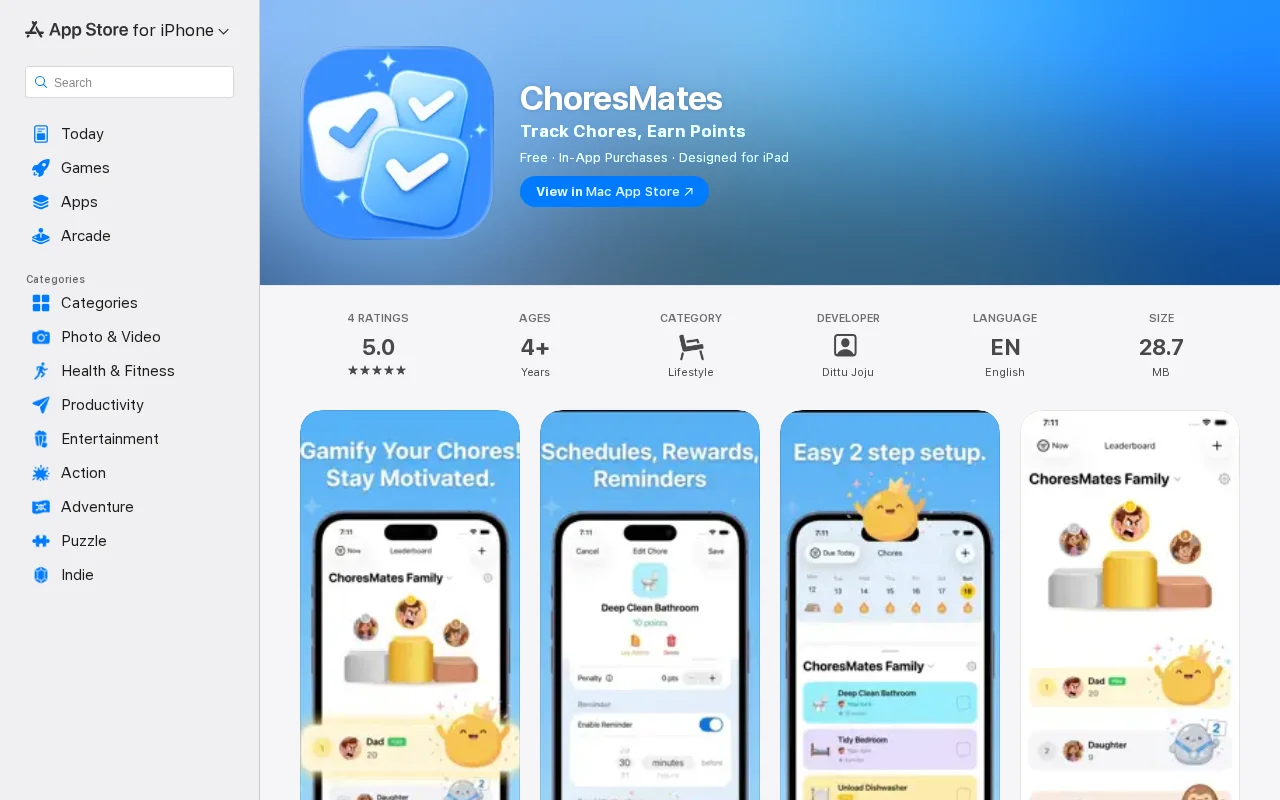
Hey HN, I built ChoresMates to solve a problem every couple and roommate knows: the "I do more around the house" argument.
The idea is simple — every chore gets a point value based on effort (cooking dinner = 8 pts, loading the dishwasher = 2 pts). When you complete a chore, you log it and earn points. A real-time leaderboard shows who's actually pulling their weight. The numbers replace the argument.
A few things that make it work in practice:
Effort-weighted points — Not all chores are equal. Scrubbing the bathroom is worth more than wiping a counter. This prevents gaming the system with a bunch of tiny tasks.
Overdue penalties — Procrastinating on an assigned chore costs you points per day. Creates just enough pressure to get things done.
Photo proof — Solves the "I did it but you didn't notice" problem.
Rotation scheduling — Automatically rotates who's responsible for recurring chores, so there's no negotiation.
Comes with 100+ chore templates covering everything from couples to families with kids to college dorms, with sensible default point values and schedules.
Tech stack: Swift/SwiftUI on iOS, Kotlin on Android, Rails 7 API backend on AWS ECS, PostgreSQL. Auth via Sign in with Apple, Google, or email.
Free tier covers most households (1 group, 10 members, 25 chores). Pro is $0.99/mo or $19.99 lifetime.
Would love feedback from the HN community — especially on the point-value system and whether the gamification angle resonates or feels gimmicky.
iOS: https://apps.apple.com/us/app/choresmates/id6757452488
Android: https://play.google.com/store/apps/details?id=com.choresmate...