Productivity●●●Banger
I improved my handwritten math OCR (now preserves derivations)
Math OCR that preserves derivation structure, not just transcription—solves a real student pain.
Solve My ProblemEye CandyShip It
mrajatnath
144mo ago
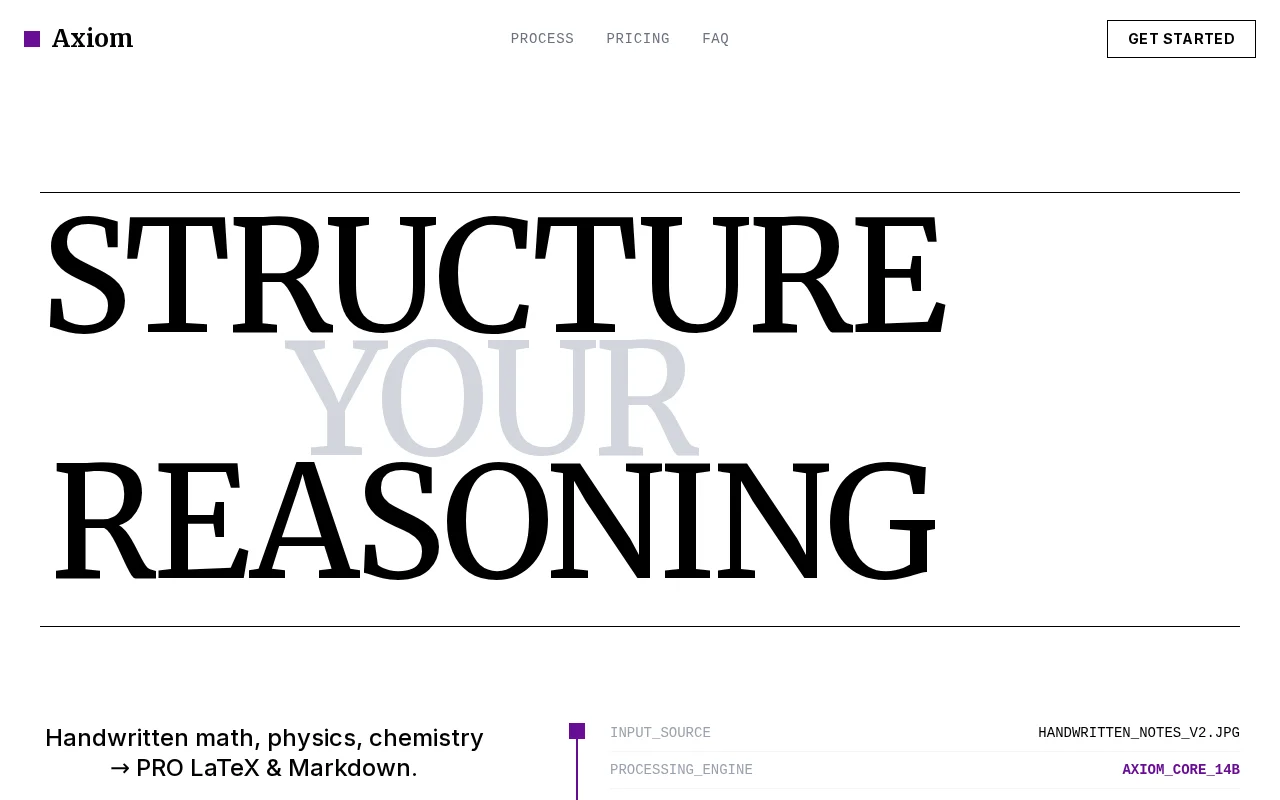
Structural OCR for handwritten math—preserves alignment, tables, equations where standard OCR fails.
Students, researchers, scientists with handwritten lab notebooks and problem sets
On paper, everything looks clean — equations aligned, steps grouped properly, tables laid out clearly. But the moment I scanned those pages and ran them through OCR (including LLM-based tools), the structure would fall apart. The characters were mostly correct, but the layout — which is what actually makes math readable — was gone.
Aligned equations would lose alignment. Multi-step derivations would collapse into a single paragraph. Numbered problems would merge together. Tables would turn into plain text. Technically it was “extracted,” but practically it was unusable without manually fixing everything in LaTeX.
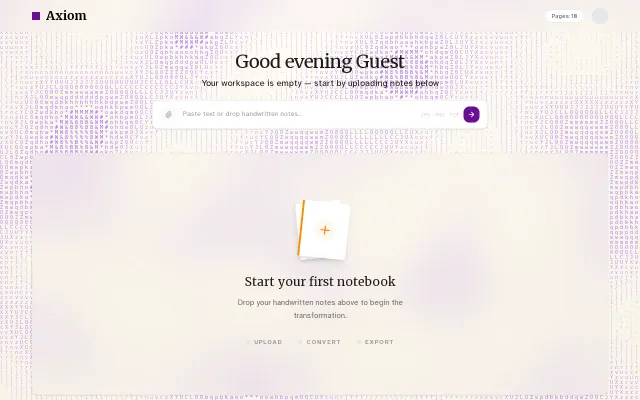
That gap is what Axiom tries to solve.
Instead of focusing purely on transcription accuracy, I focused on structural preservation. The current pipeline looks roughly like this:
1. OCR from image or PDF.
2. A structural prompt tuned specifically for math alignment, derivation grouping, numbered block preservation, and table detection.
3. A post-processing layer that normalizes LaTeX/Markdown output, merges math blocks, protects numbering tokens, and stabilizes table columns.
4. Export as compile-ready LaTeX, Markdown, or searchable PDF.
The hardest part wasn’t getting the characters right. It was preventing structural drift — especially with aligned equations and multi-line derivations. I added alignment pattern detection, atomic pagination for LaTeX environments, and normalization passes to keep math blocks intact across pages.
The goal isn’t “AI transcription.” It’s making handwritten STEM notes survive digitization without losing their mathematical structure.
It runs entirely in the browser:
Math OCR that preserves derivation structure, not just transcription—solves a real student pain.
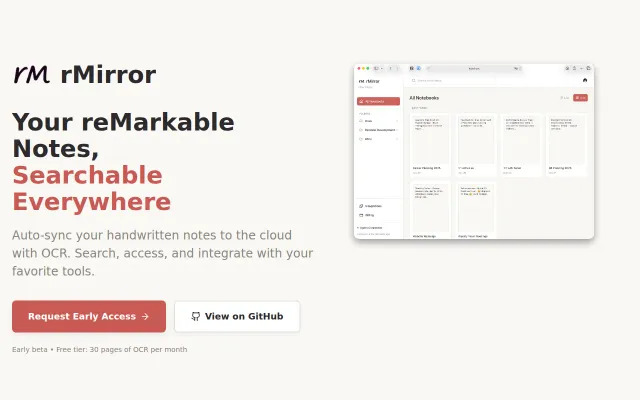
Claude-powered OCR for messy handwriting, but macOS-only and reMarkable's audience is niche.
Local-first Tauri app turning AI chat into structured notes with MCP support.
Parses zero-punctuation medical shorthand into SOAP notes faster than voice AI for noisy hospitals.
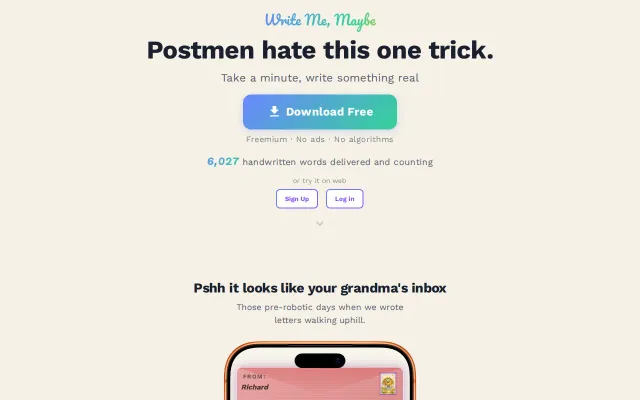
Nostalgic handwriting app when dozens of similar tools already exist.
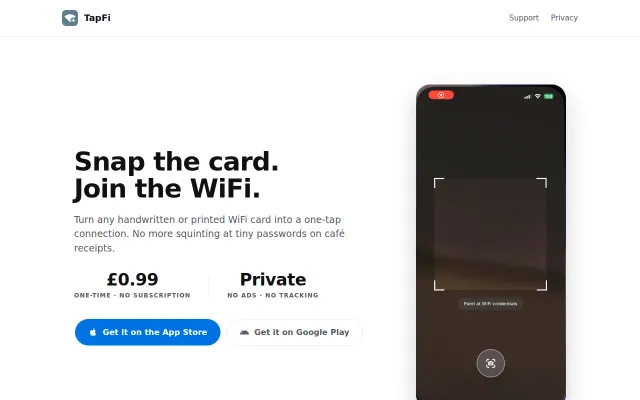
Handwriting OCR for WiFi cards, but Google Lens already does this for free.