Security●●●Banger
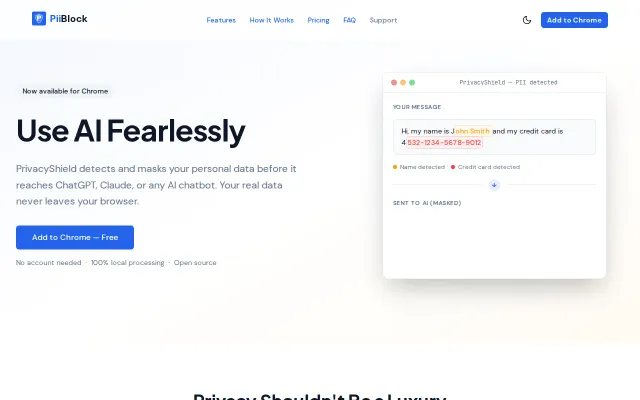
PrivacyShield – Mask your PII before it reaches ChatGPT/Claude
Solves a real, growing pain (PII leakage to AI APIs) with zero-friction UX.
Solve My ProblemSlick
BuddhikaR
204mo ago
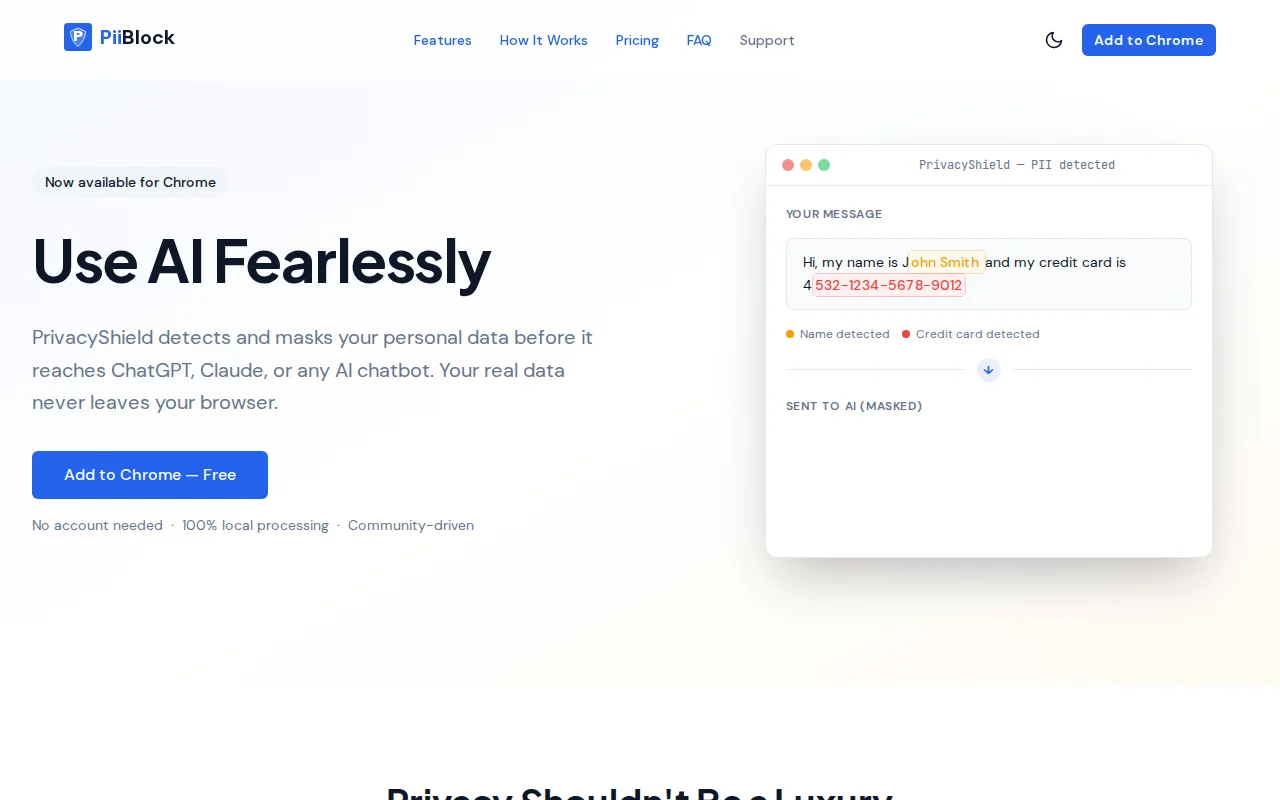
Local PII masking for ChatGPT—free and zero-server, but detection accuracy unverified.
Individual AI users, freelancers, professionals handling sensitive data
Ghostery · Privacy Badger · DuckDuckGo extension
It detects 15+ types of PII as you type, masks them with placeholders like [PERSON_A] before sending, then unmasks the AI's response. Everything runs locally — no servers, no data collection, zero network requests. You can verify in DevTools.
Built as a solo project using Claude Code.
Chrome Web Store: https://chromewebstore.google.com/detail/privacyshield/nklgh...
This is v0.1 — would love feedback. Bugs: [email protected] or GitHub issues.
Solves a real, growing pain (PII leakage to AI APIs) with zero-friction UX.
Isolated browser extension overlay intercepts keystrokes ChatGPT can't read—but users still trust OpenAI with unmasked context.
Yet another PII masker, but Presidio and Microsoft already do this better.
Phonetic embeddings catch ASR-mangled names across cultures before LLM sees them.
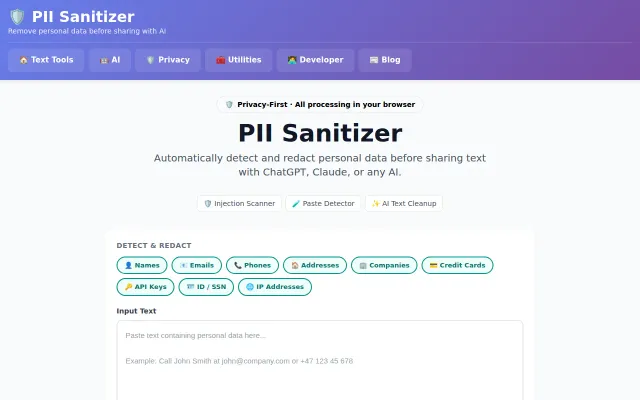
Runs fully in the browser for regex-based redaction of structured PII (emails, cards, phones, API keys, IPs, SSNs) and offers an optional Claude step to catch names/addresses patterns miss. Clear placeholders like [NAME] and a privacy toggle make it practical for quick, manual workflows, and I like the Norwegian NIN/phone support. It's useful and thoughtfully privacy-first but not novel — the real win would be integrations (batch processing, editor/extension) or independent accuracy metrics for the AI step.
Regex-based PII masking for ChatGPT leaks, but detection is intentionally basic.