Design●Mid
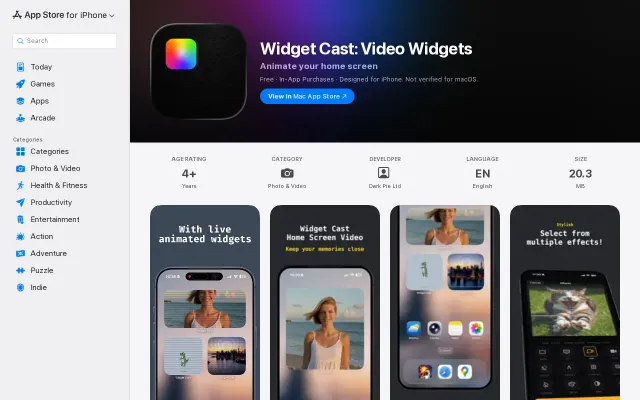
Widget Cast – Video Widgets for iOS
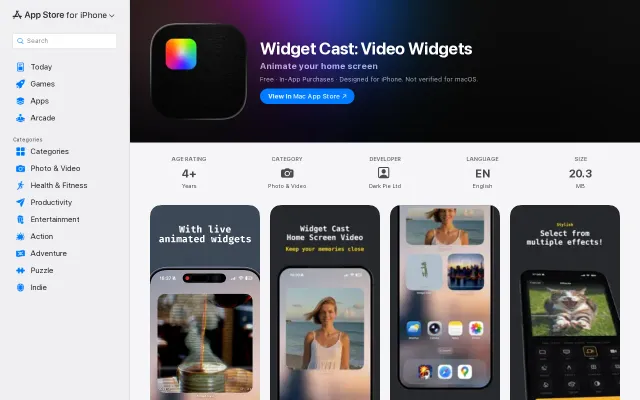
CRT and thermal filters for widgets, but iOS already supports Live Photos natively.
CozyEye Candy
kingofspain
201mo ago
Screen casting utility
One CLI handles YouTube, files, screen—transcodes to lowest-common-denominator codec every TV actually accepts.
Linux users wanting hassle-free TV casting without Chrome/Chromecast dependency
Chromecast CLI · Miracast wrappers · Airplay CLI tools
I built qast because I couldn’t find a tool that “just works” for casting content to a TV. Some TVs support YouTube natively, some do screen mirroring, and only a handful actually show up in Chrome's cast menu. Even when you do get a connection, one TV might accept MKV but not WebM, while another just drops the audio entirely.
qast sidesteps the compatibility problem. It takes whatever you give it -- a local file, a YouTube URL, your desktop screen, a specific window, or a webpage rendered via headless Chromium -- and transcodes it on the fly to H.264/AAC. Because practically every smart TV in the last decade supports this lowest common denominator, it just works.
(Note: You currently need to be running Linux to use it. macOS/Windows support is on the roadmap).
Under the hood:
Written in Python.
Relies on ffmpeg for the heavy lifting (transcoding, window capture).
Uses yt-dlp for extracting web video streams.
Uses Playwright to render web dashboards in a headless browser before casting.
Auto-discovers Chromecast, Roku, and DLNA devices on your local network.
Mostly, I want to get some early feedback. If you have experience wrestling with this problem (especially the endless DLNA quirks) or have ideas for other useful features, that would be fantastic as well.
CRT and thermal filters for widgets, but iOS already supports Live Photos natively.
Surf user-made YouTube channels on a CRT interface instead of algorithmic feeds.
YouTube summarization when Eightify and Firecrawl already do this better.
CRT and thermal filters on looping video widgets actually look surprisingly cool.
Single-purpose redirect extension when Unhook and DF Tube already block feeds.
CPU-only ONNX transcription when Whisper.cpp already handles this well.