Back to browse
SysNav – An Intelligent Cockpit for DevOps (Local-First)

SysNav – An Intelligent Cockpit for DevOps (Local-First)

by sys_ravi·Mar 3, 2026·1 point·0 comments

AI Analysis

●●SolidSlickSolve My Problem

Local-first terminal with AI context awareness—but AI-in-terminal is crowded, and claim of 30min savings is unverified.

Strengths
  • Genuine security architecture: PTY-level redaction + local credential handling prevents credential leakage before LLM contact.
  • Dual-mode (Ask vs. Agent) safety model gives users explicit control over autonomy vs. approval.
  • Native terminal performance (<100ms startup) competitive with iTerm2, Warp.
Weaknesses
  • AI-powered terminal space is increasingly crowded (Warp, GitHub Copilot in terminal, Continue CLI); unclear differentiation beyond local-first.
  • '30+ min per incident' claim lacks evidence; anecdotal without real production metrics or control group.
Target Audience

SREs, DevOps engineers, infrastructure operators

Similar To

Warp · Cursor · GitHub Copilot for terminal

Post Description

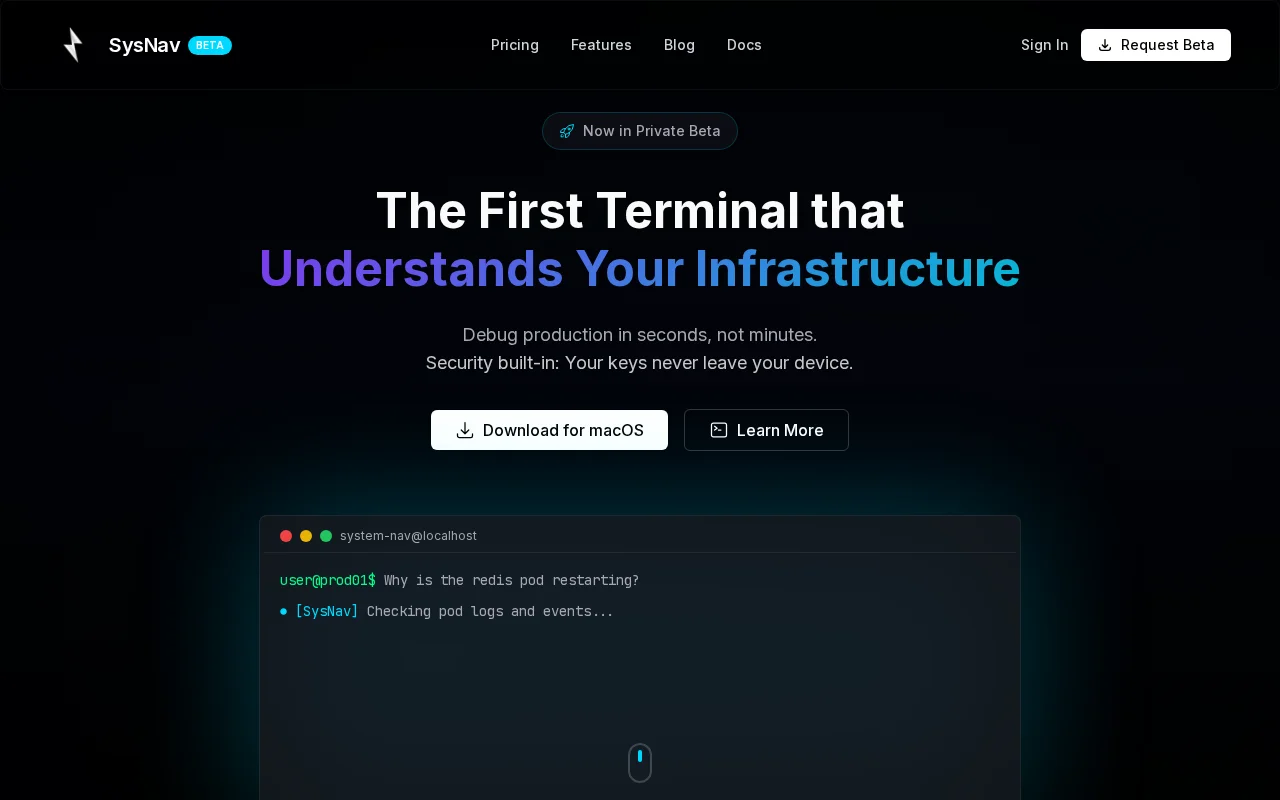
Hey HN, I'm Ravi, and I've spent the last few months building *SysNav* (https://sysnav.ai). It's an intelligent terminal workspace designed specifically for SREs who want the speed of a native shell but the context-awareness of an AI when things break.

**The Problem** I found myself constantly context-switching: run `kubectl`, see error, copy to LLM, sanitize PII manually, paste, get generic fix, modify for my variables... it was friction-heavy.

**The Solution: SysNav** I built SysNav as a "Assistant for DevOps and Ops". It wraps your terminal in a native "Intelligent Cockpit" interface:

1. **Ask Mode (Safe)**: You ask "Why is the redis pod crashing?". SysNav inspects the screen output (using a local PTY buffer), anonymizes PII, and sends *only* the context to the LLM. It returns a suggested command. **It creates a human-in-the-loop safety barrier.** 2. **Agent Mode (Autonomous)**: If you trust it, you can give it a goal ("Find all zombie processes and kill them"), and it will execute the steps one by one, stopping if it encounters an unexpected error.

**Security Architecture (The "Paranoia" Check)** This was the most important part for me. SysNav uses a **Local-First Architecture**: * **SSH Keys & Env Vars**: Never leave your machine. They are stored in your release of the Electron app. * **Context**: We only send the text buffer of the terminal (logs/errors) to the inference layer. We have a redact-pii step that runs locally before network requests.

**Status** We are currently in **Public Beta**. The core terminal is "fast-enough" (<100ms startup), and the AI context awareness is saving me about 30 minutes per incident.

I'd love for you to roast the architecture or tell me what features would make you actually trust an AI in your production environment.

Check it out: https://sysnav.ai (Download available for macOS/Linux/Windows)
Similar Projects

EducationPass

Scraped 100 FAANG DevOps Interview Questions

It's a no-frills, topic-organized dump of 106 real-world DevOps questions (folders for docker, kubernetes, linux, networking, security) with video explanations — exactly the sort of thing you bookmark the week before interviews. What it lacks is originality: this is an aggregated study bundle, not an interactive trainer or curated rubric, so its value is practical and immediate rather than novel or deeply analytical.

Crowd PleaserSolve My Problem
amuradov
204mo ago
Education●●Solid

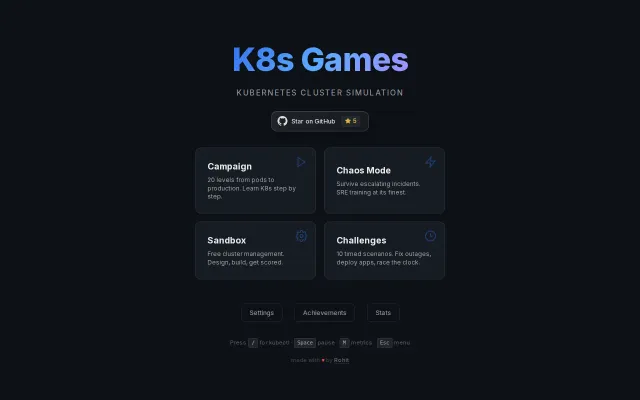
I built a 3D game to learn Kubernetes runs in the browser, no install

You can edit YAML or drop into a kubectl prompt while watching Pods, Deployments and Services animate in a 3D cluster — that concrete mapping of K8s primitives to game objects is clever and educational. Campaigns, a chaos/incidents mode, and timed challenges give it real pedagogical structure instead of being a gimmick. It’s an impressive browser-side engineering demo, but expect the game to gloss over some of the messy, real-world CLI details you’ll hit on a real cluster.

WizardryEye Candy
rohitghumare
104mo ago
Infrastructure●●Solid

Faultline – Open-source AI agent for infrastructure debugging

It wires an autonomous agent (Python FastAPI + MCP clients) into real observability tools — Sentry, New Relic, PagerDuty, GitHub, etc. — and runs iterative queries to cross-reference signals and surface a likely root cause. Nice pragmatic architecture (Rails + Vue frontend, Sidekiq workers, separate agent service), but the payoff depends heavily on integration coverage and how well it avoids model hallucinations.

Niche GemShip It
pranav_rajs
313mo ago