Education●●Solid
AI Guided 3D atomic orbital simulation
Clean 3D quantum viz, but PhET simulations already cover this ground without AI.
SlickCozy
plumocracy
3124d ago
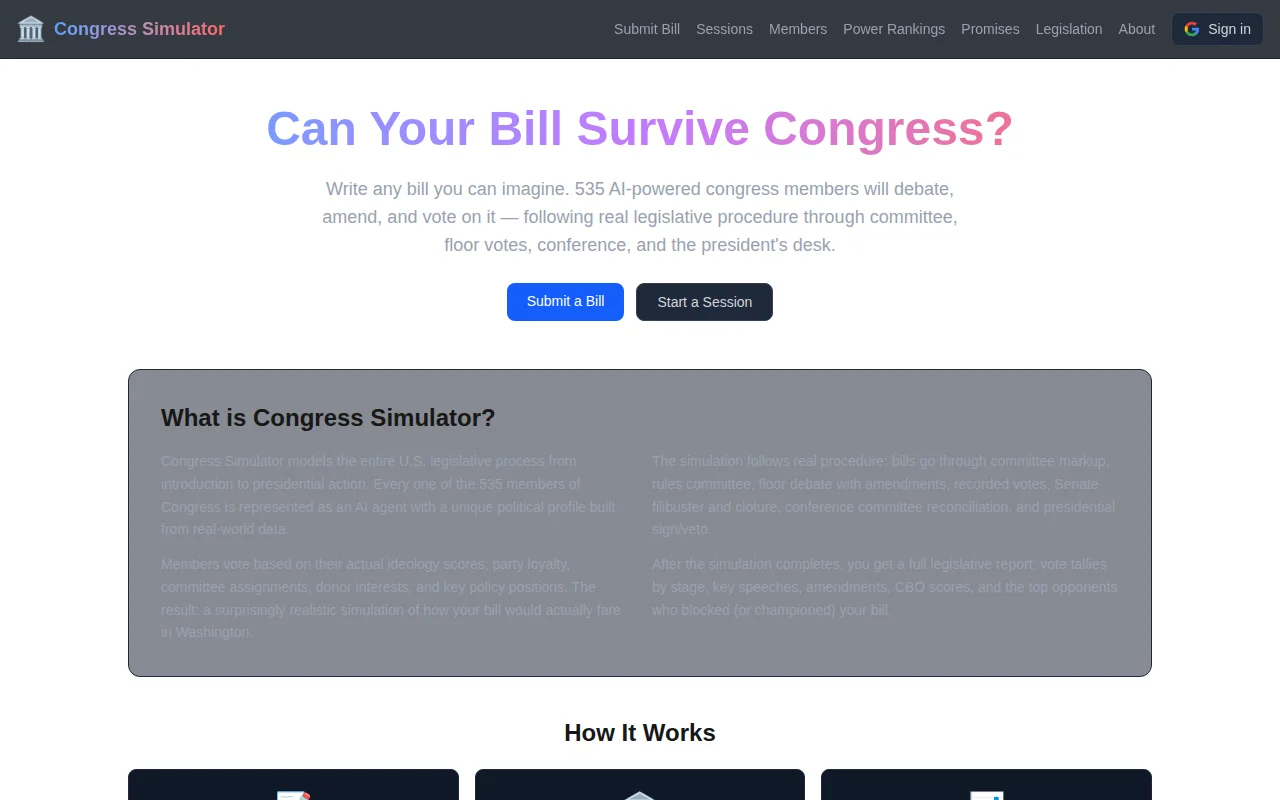
AI Congress simulation exposes why rational bills die—add realistic incentives, bills mysteriously fail.
Policy enthusiasts, civics educators, researchers exploring legislative dynamics, people curious about how Congress actually works
Niskanen Center's legislative forecasts · FiveThirtyEight's election models · Academic agent-based legislative simulations
I’ll share more detail soon, but here’s what surprised me.
In the first version, the agents were simple: voting records, public statements, committee assignments, donor data, and constituent polling. Then I let them vote.
Bills that have stalled for decades sailed through. Getting money out of elections passed with 95% approval. Banning insider trading for members of Congress hit 98%. Ending continuing resolutions cleared 95%.
Turns out, if you model lawmakers as mostly rational actors responding to inputs, they behave… rationally.
To make it realistic, I had to add self-preservation, incentives, and a strong sense of “the other side.”
Now those same bills die in committee. As expected.
Clean 3D quantum viz, but PhET simulations already cover this ground without AI.
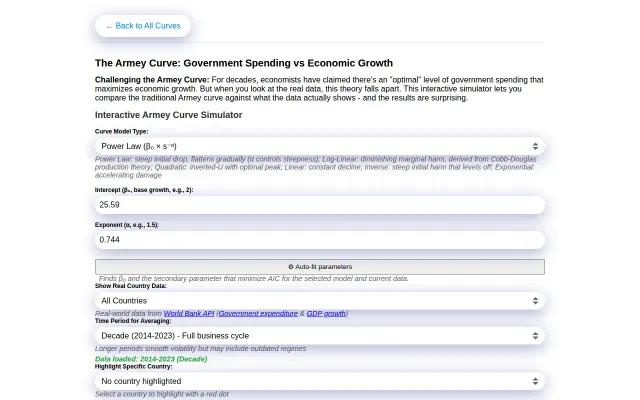
Challenges the Armey Curve theory using live World Bank data and client-side AIC fitting.
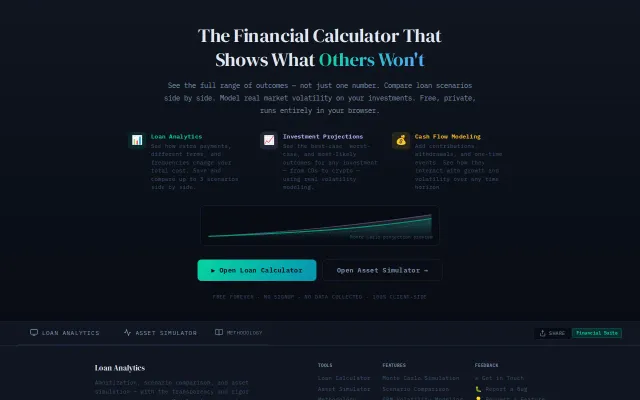
Browser-based GBM modeling keeps your financial data private while running simulations.
Stateless CLI + MCP bridge designed for agents, but already faces incumbent idb and simctl.
Linux namespaces avoid Docker overhead, but jitter kills performance past eight clients.
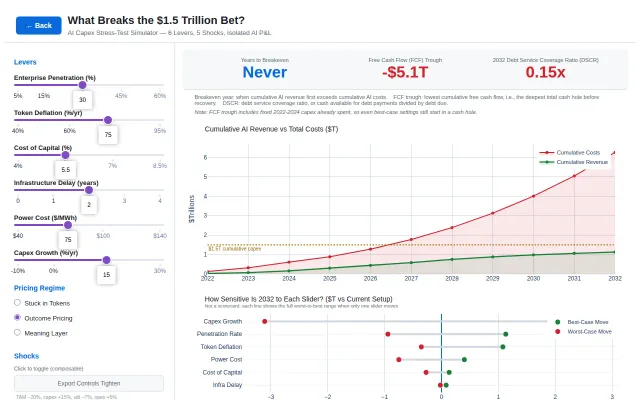
Stress-test the AI capex bubble with six adjustable levers and five economic shock scenarios.