Social●Mid
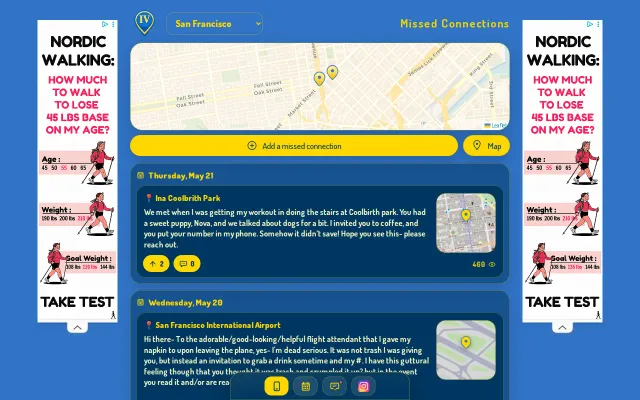
Missed Connections Site Replacing Craigslist
Cleaner Craigslist missed connections, but dating apps already solved this problem.
Ship ItCozy
Loyae
301mo ago
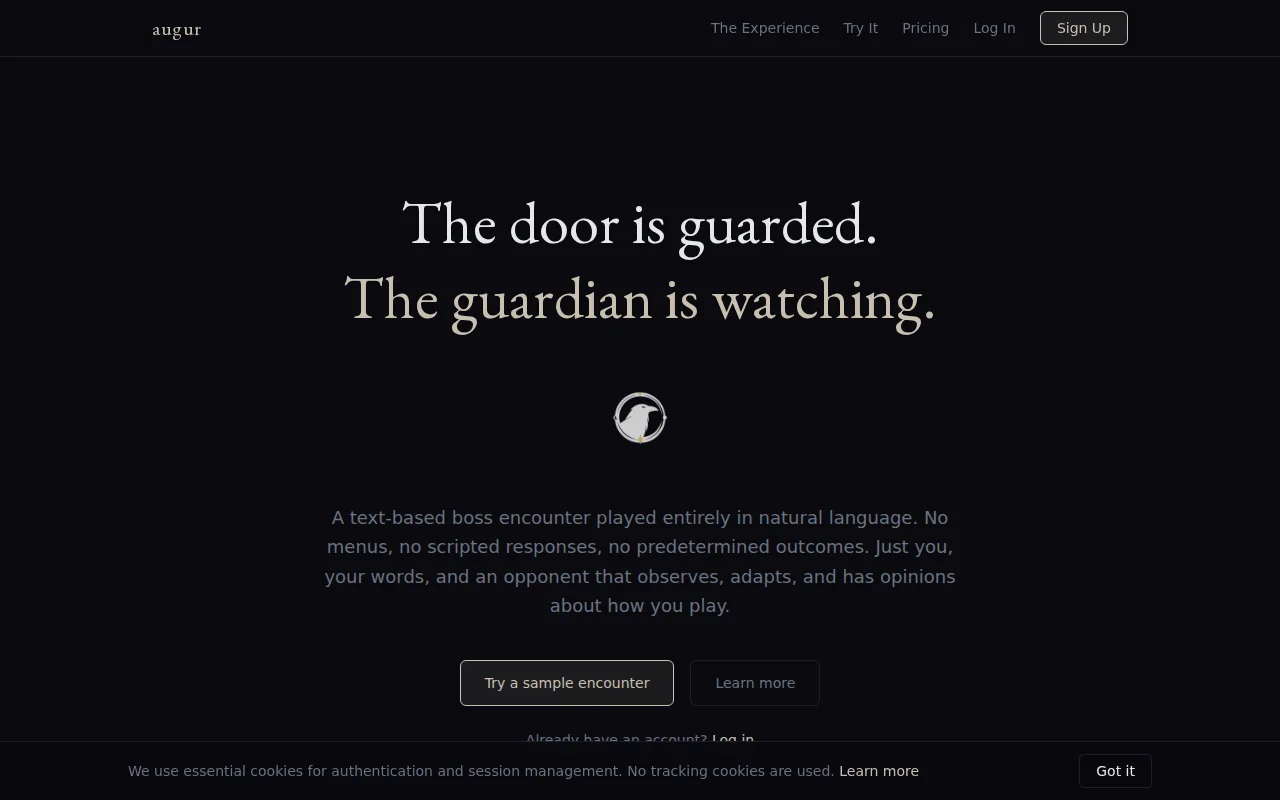
Adaptive AI boss that learns across encounters, no HP bars—injuries actually matter mechanically.
Indie game enthusiasts, interactive fiction fans, players seeking narrative-driven combat with meaningful consequences.
AI Dungeon · Latitude.io (AIDungeon successor) · Zork I/Adventure (textual predecessor)
The core idea is simple: you play a text-based boss encounter against a character called the Architect, set in a strange library. You can fight, sneak, persuade, or try something I haven't thought of. Turns are mechanically resolved with d100 rolls, conditions track injuries instead of HP, and objects in the world have physical properties the LLM reasons about. The "engine" is property-based instead of tables of rules, and I've found that to yield some novel gameplay.
The part I'm most interested in exploring is the learning. The Architect builds impressions from what it actually perceived during an encounter, stores them as vector embeddings, and retrieves relevant ones at the start of future encounters. It's lossy on purpose — more like human memory than a database lookup. If a tactic keeps working, the Architect starts recognizing the pattern. If you sneak past undetected, it remembers losing but not how.
The technical foundation for all of this is a dual-LLM turn loop. Each turn makes two model calls: an engine model that sees full game state and resolves mechanics, then an architect model that only receives what it has actually perceived (line of sight, noise, zone proximity). The "information asymmetry" is structural and deliberate — the architect model literally cannot access state the engine doesn't pass through the perception filter.
I tried the single-LLM approach first and it didn't work. No matter how carefully you prompt a model to "forget" information sitting in its context window, it leaks. Not to mention the Architect had the habit of adopting God Mode. So splitting the roles made the whole thing feel honest in a way prompt engineering alone couldn't.
This is my first HN post, and this is a real launch on modest infrastructure (single Fly.io instance, small Supabase project), so if it gets any traffic I might hit some rough edges. There's a free trial funded by a community pool, or you can grab credits for $5/$10 if you want to keep going. It's best experienced in a full desktop browser, but it's passable on the two mobile devices I've tested it on.
Playable here: https://www.theaugur.ai/
I'm happy to go deeper on any of the internals — turn flow, perception gating, memory extraction, cost model, whatever is interesting.
Cleaner Craigslist missed connections, but dating apps already solved this problem.
Self-play trained bots bring genuine challenge to this asymmetric mythological strategy game.
Blunt dating app positioning, but Tinder, Feeld, OkCupid already own casual markets.
Agent self-reporting is clever, but the X post lacks proof or actual product details.
Zero-dependency proxy handles 429s better than writing custom retry logic in your app.
Human-in-the-loop for agents but currently just pages one person named Oleh.