Education●Mid
Python 100 days (translated from Chinese)
Translation of existing Chinese Python course—useful but nothing technically new here.
Niche Gem
tamnd
104mo ago
Valuable operational learnings but this is a blog post, not a product.
Backend and data engineers
High Scalability blog posts · Engineering blog learnings
Stack: Python asyncio, Kafka in KRaft mode, ClickHouse, k3s. Cloudflare Tunnel handles ingress.
Some things that broke along the way:
ORDERBOOK GAPS Exchanges skip sequence numbers sometimes. Your local book drifts and you dont notice until something goes wrong. Had to build per-symbol gap detection with automatic snapshot recovery. Each exchange does sequencing differently so thats four separate implementations.
CLICKHOUSE INSERTS Started with small batches, ClickHouse was at 30% CPU just doing merges. Bumped batch size to 5000 rows with 2 second intervals, dropped to 8%. Also moved inserts to an async queue so the Kafka consumer never blocks.
LOGGING At 500 msg/s the logger was allocating thousands of strings per second. OOM killer got us twice before I figured it out. Set everything on the data path to WARNING and it went away.
Current numbers: - 120M+ messages/day - P50: 250ms, P95: 400ms latency - >99.8% data coverage - 5 months, no major incidents
If anyone wants to poke around the data:
qalypto.com/data-lab
CSV samples, no signup needed.
Happy to answer questions.
Translation of existing Chinese Python course—useful but nothing technically new here.
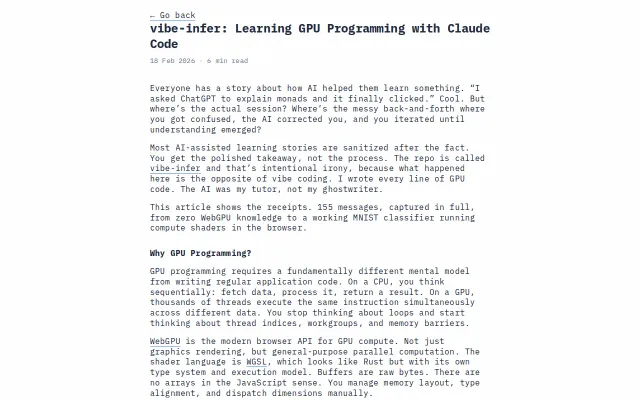
GPU learning transcript beats sanitized AI stories, but lacks replayable tooling.
AI-driven lattice design circumvents SIMP's degeneracy, solving a real physics paradox.
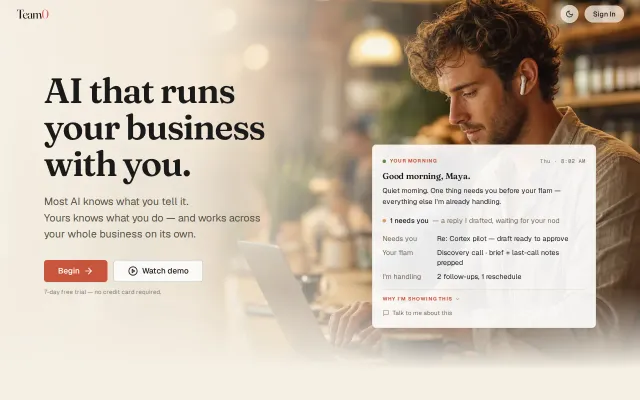
Yet another AI business assistant when Notion AI and Zapier already exist.
Another visual ML builder when KNIME, Ludwig, and Azure ML Designer already exist.
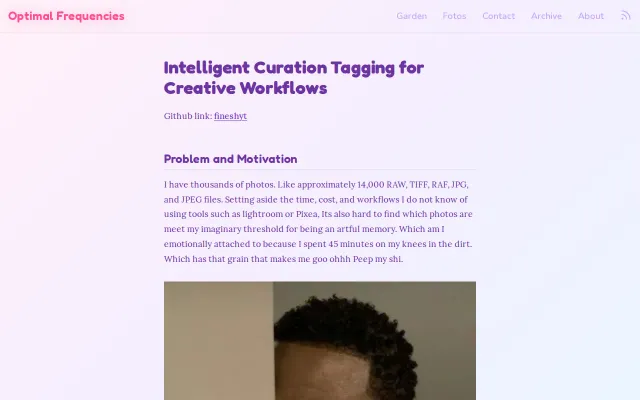
CLIP + Ridge Regression beats LLaVA for learning personal taste from ratings.