Data●Mid
News metadata dataset for media bias research
Small 7k row dataset for media bias research when larger corpora already exist.
Ship It
MarcellLunczer
101mo ago
Multi-source synthesis with claim-level traceability, but Substack newsletters and newsletters do this too.
News readers seeking balanced perspective without opening multiple tabs or defaulting to single outlets
Ground News · Substack's analysis newsletters · The Conversation
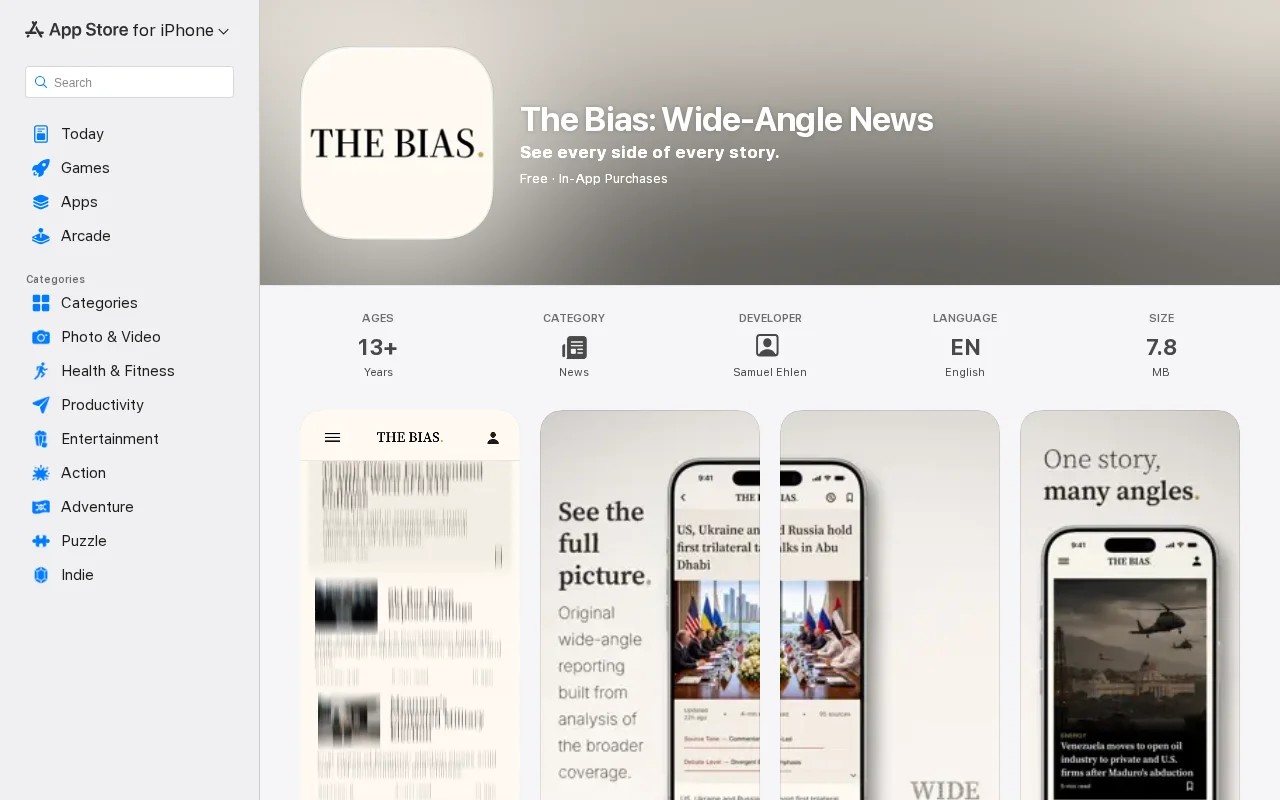
We started The Bias because we found traditional news feeds frustrating: one outlet gives you one framing; opening ten tabs gives you breadth but no synthesis. We wanted a way to understand major events quickly, without spending hours reading or defaulting to a single outlet’s perspective.
For each real-world event we publish a single write-up that makes it clear:
• What coverage converges on (core facts)
• Where perspectives or framing differ
• What’s disputed or still uncertain
• Where specific claims came from (full source list + claim-level traceability for key statements)
• How media around the world reported on the event — which can look very different from domestic coverage. This is especially interesting right now with the situation in Iran, where coverage diverges significantly across regional and international outlets.
How it works (high level):
• Ingest ~5,000–15,000 articles/day from 600+ sources
• Cluster articles by semantic similarity to group reports about the same underlying event
• Extract structured elements (facts, opinions, consequences, speculation, prior context)
• Group and annotate that information
• Generate a first draft with LLMs
• Run the draft through a multi-stage pipeline (coverage completeness checks, contradiction handling, perspective balancing, source traceability, uncertainty labeling, etc.)
• Human review of the final article focused on misrepresentation, hallucination, and missing major viewpoints
We also publish a weekly “rundown” (~25 min read) that summarizes the week, personalized to a user’s interests, using roughly the same process.
The product exists today on iOS and can be used immediately:
• Methodology: https://thebias.co.uk/policies/what-we-do
• About: https://thebias.co.uk/policies/about-the-bias
Free download; limited reading without a subscription. Subscription removes limits and unlocks features like claim traceability and international outlook.
We’re especially interested in feedback on:
• Does this feel faster than reading multiple outlets, or just different?
• What would make you trust (or distrust) a synthesis like this?
• Is claim-level traceability enough, or would you want stronger signals?
• Is this meaningfully different from using Ground News?
• If you think this is a bad idea, we’d genuinely like to know why.
Happy to answer questions about the pipeline, trade-offs, or mistakes we’ve made so far.
— Charlie and Sam
Small 7k row dataset for media bias research when larger corpora already exist.
Bias meters on news sources—Ground News and AllSides already do this.
Custom NPS-inspired basemap actually renders offline, unlike CalTopo's webview hack.
Adversarial debate between models beats single-model groupthink, but crowded code-review space.
Async multi-LLM synthesis with critique—cuts latency via parallel calls, not sequential voting.
200K users in 3 months, but habit-blocking exists (Freedom, BePresent, Digital Wellbeing).