Security●●●Banger
Phi-Redactor – HIPAA Phi Redaction Proxy for OpenAI/Anthropic APIs
Wire-protocol proxy masks PHI before cloud, restores locally—genuine HIPAA compliance.
Solve My ProblemZero to One
dilawargopang
113mo ago
Adaptive PHI de-identification for streaming multimodal data: exposure-aware, stateful and audit ready
Stateful, exposure-aware de-ID over time—novel framing, but repo is research-only with synthetic data.
Healthcare AI/ML researchers, privacy engineers, HIPAA-compliance teams
A name fragment that's harmless in record #1 becomes identifying when it co-occurs with a location in record #47 and a timestamp in record #203. Static masking can't see that.
This project treats de-identification as a stateful control problem instead. The system maintains a per-subject exposure graph across time and modalities, computes rolling re-identification risk, and dynamically escalates masking strength only when cumulative exposure justifies it.
The core idea: privacy protection as a feedback loop, not a preprocessing step.
A few things I found interesting building this: - Cross-modal linkage (text + ASR + image proxy + waveform headers) creates non-obvious re-ID surfaces - Pseudonym versioning on risk escalation lets you contain linkage continuity without global reprocessing - The privacy–utility tradeoff is actually controllable if you model exposure state explicitly
All experiments run on synthetic streaming data (no real PHI). Reproducible from source. Colab demo included.
Repo: https://github.com/azithteja91/phi-exposure-guard
Happy to discuss the architecture, the RL policy design, or the tradeoffs vs. existing de-ID approaches.
Wire-protocol proxy masks PHI before cloud, restores locally—genuine HIPAA compliance.
Specialized medical coding API with MCP server, not just a generic LLM wrapper.
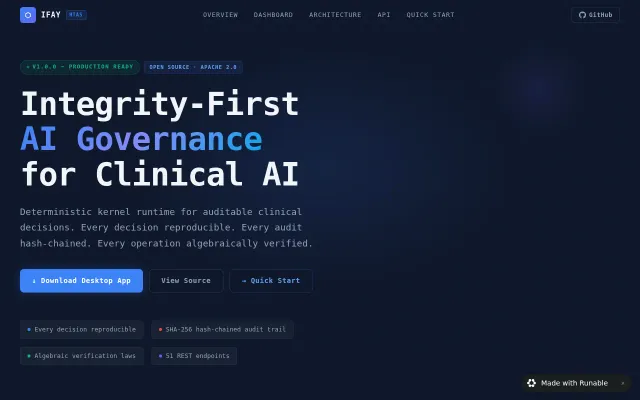
Four-tier stack with algebraic verification feels over-engineered compared to K9 Audit.
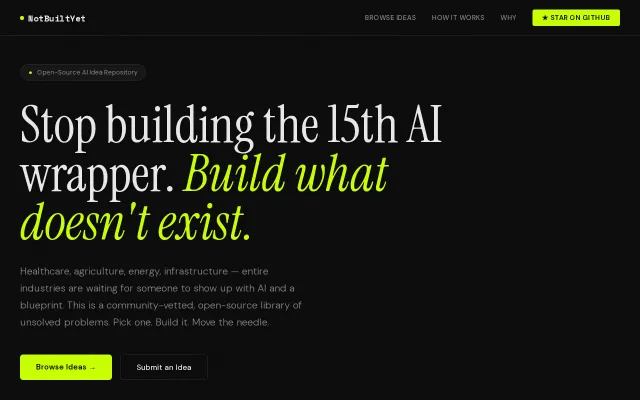
Problem curation is solid; execution is a README with 4 ideas and zero traction so far.
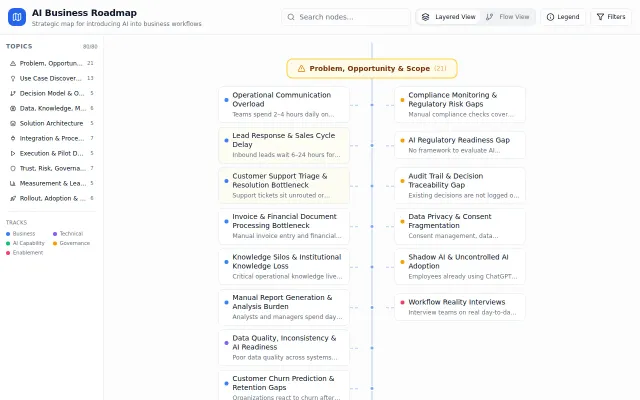
Consulting framework visualization when strategy decks already handle this.
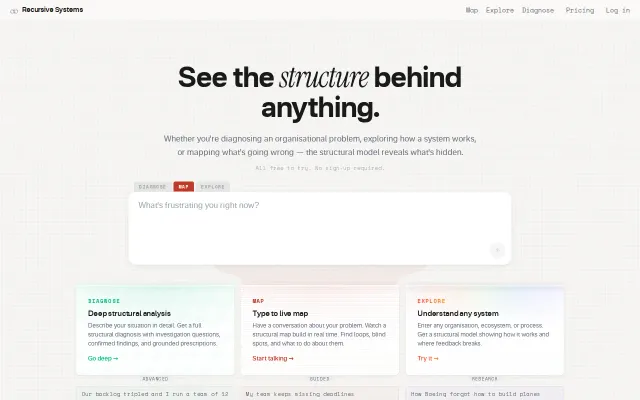
Fifty-year-old cybernetics theory meets AI for organizational problem mapping.