Developer Tools●●Solid

Fleet – I built a multi-agent dev team that runs as a bash script
Bash script orchestration for AI agents is clever but the space is getting crowded fast.
Big BrainShip It
christiangraf
311mo ago
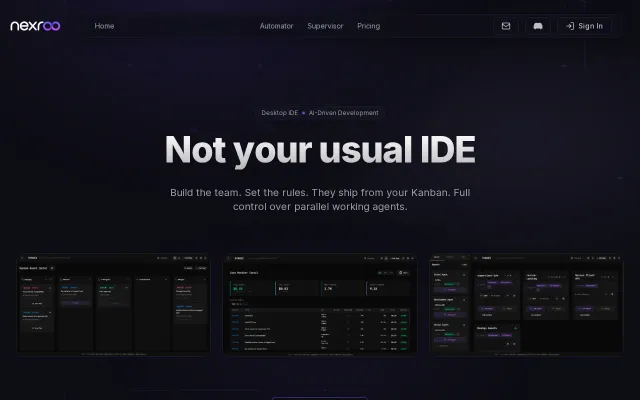
The AI Agent Workforce Platform — where teams scale beyond headcount. Give every team member an AI agent squad.
Kanban-driven multi-agent fleet orchestration beats single-chat-per-agent tools.
Teams running multiple AI coding agents, enterprise dev teams needing agent coordination
Continue · Cursor · GitHub Copilot Workspace
Most tools assume one agent, one chat. In practice, I wanted something closer to “a small team”: multiple agents working on different parts of a project, with clear task ownership, visibility, and an easy way to supervise and coordinate them.
What it does
- Spin up multiple remote dev sessions (e.g., Claude Code / Codex / Gemini CLI / OpenCode) and access them from the browser (desktop + mobile). - Assign work via a Kanban board: each ticket maps to an agent/session so work stays scoped and trackable. - Agent collaboration channel: see activity and share context across agents while they work. - Scheduled/repetitive agent jobs (e.g., “run nightly dependency updates”, “daily bug triage”). - Self-host / bring-your-own-infra option with basic runner/health visibility.
Why I made it When I tried running 3–5 agents at once, the biggest problems weren’t “prompting” — they were coordination and supervision:
- keeping tasks from overlapping - tracking what each agent changed - sharing the right context without dumping everything - knowing when an agent is stuck or doing something risky
AgentsMesh is my attempt to make multi-agent work feel more like managing a small engineering team.
How it works (high level)
- Each agent runs in its own isolated session/environment (often backed by separate worktrees/branches). - Tickets are the unit of work; sessions attach to tickets. - The UI focuses on observability: what each agent is doing, what changed, and where attention is needed.
Links
- Website: https://agentsmesh.com - Docs: https://agentsmesh.com/docs - Repo (if open source): https://github.com/AgentsMesh/AgentsMesh - Demo video: https://www.youtube.com/watch?v=FZrUO0tim0U
I’d love feedback on: 1. Where this breaks down in real workflows 2. Security/isolation expectations when supervising agents 3. What features are “must have” for coordinating multiple coding agents
Maker here — happy to answer questions.
Bash script orchestration for AI agents is clever but the space is getting crowded fast.
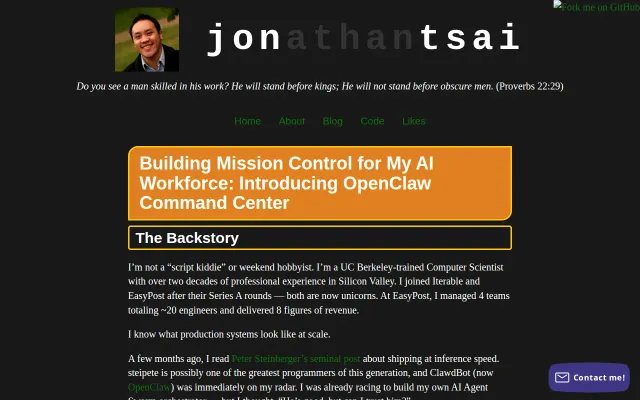
One person's 1000x productivity story—but lacks shipping discipline and user-independent product.
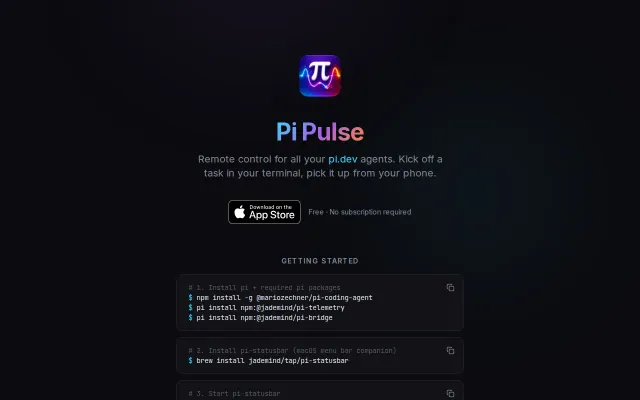
Mobile control for pi.dev agents—but only works if you already use pi.dev.
Yet another agent orchestrator in a field crowded by LangGraph and CrewAI.
File-system driven agent config is clean, but OpenClaw and LangGraph already solve this.
It wires practical, product-focused features together—scoped agent permissions, automatic context injection from apps, persistent background agent sessions, and Kanban-driven ticket pickup that spawns branches/worktrees and auto-opens PRs. Useful, pragmatic feature set for teams that want to run many LLM workers without chaos, but its ultimate value will hinge on integrations, security/permission guarantees, and how well it handles real-world scale and noise.