Back to browse
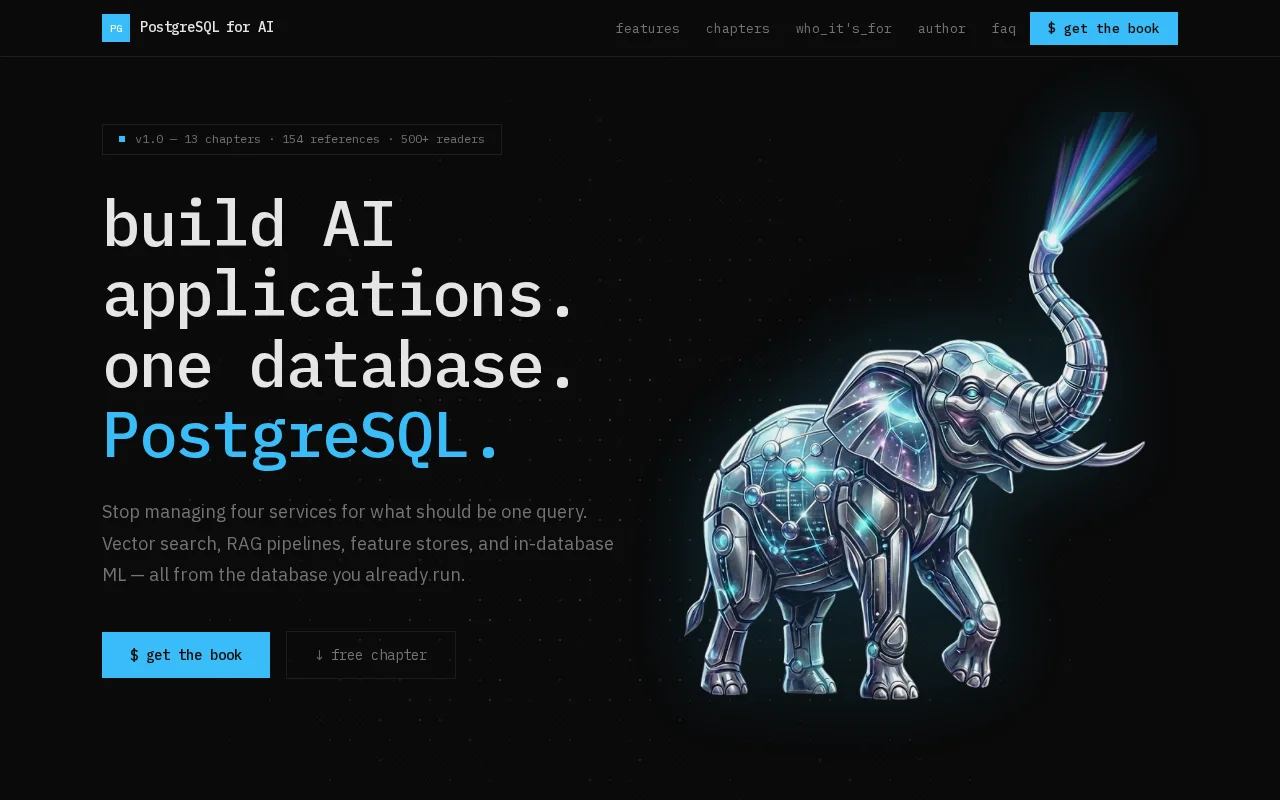
PostgreSQL for AI – A book on pgvector, RAG, and in-database ML

PostgreSQL for AI – A book on pgvector, RAG, and in-database ML

by zeybek·Mar 5, 2026·2 points·1 comment

AI Analysis

●●SolidSolve My ProblemBig Brain

PostgreSQL-native RAG without external vector databases—smart consolidation, not novel architecture.

Strengths
  • Concrete runnable SQL examples (HNSW indexing, RAG queries, feature pipelines) with real performance metrics.
  • Solves genuine operational pain: replaces four services (vector DB, cache, feature store, ML platform) with pgvector + pgml + native SQL.
  • Production-focused: covers point-in-time correctness, RLS, CDC, monitoring, and GDPR—not just theory.
Weaknesses
  • Book, not open-source tool—evaluates on educational value, not novel technology or implementation.
  • PostgreSQL-for-AI is a growing but already-served niche: pgvector, pgml, and Supabase documentation cover much of this terrain.
Category
Target Audience

Backend engineers, data scientists, and ML engineers building AI features who want to consolidate infrastructure around PostgreSQL.

Similar To

Supabase AI guides · PostgreSQL official pgvector docs · pgml.ai tutorials

Similar Projects

Infrastructure●●Solid
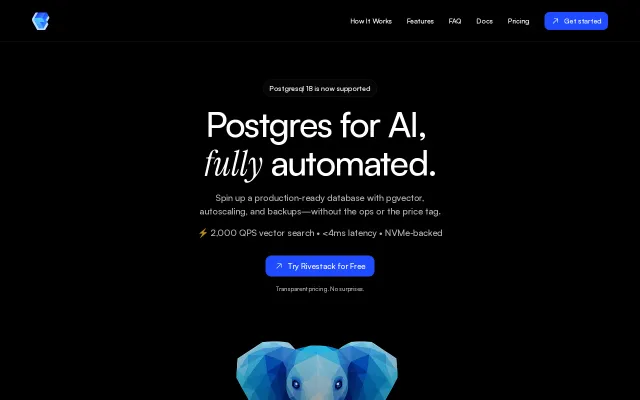
Rivestack – Managed PostgreSQL with pgvector, $29/mo

It spins up dedicated Postgres instances with pgvector pre-installed, uses Patroni for HA and pgBackRest for snapshots, and publishes concrete vector benchmarks (2k QPS @ <4ms for 10k vectors; 252 QPS at 1M). The stack choices (Hetzner NVMe, read replicas, HNSW) feel pragmatic for teams who don't want serverless/shared trade-offs, though I'd want clearer SLA/multi-region details and independent benchmarks at larger scales before moving critical workloads.

Niche GemSolve My Problem
stranger90
103mo ago