Developer Tools●●Solid
Catching breaking interface changes in TypeScript refactors (AST-based)
TypeScript AST contracts feed LLMs correct props; stops AI from hallucinating missing fields.
Big BrainNiche Gem
AmiteK
205mo ago
Risk-driven chaos experiment scheduler. Ranks which microservice to break next using service topology and incident history. 9.8x faster weakness discovery vs random selection.
Replaces gut-feel chaos picks with principled risk ranking: 9.8x faster weakness discovery.
Chaos engineering teams, SREs managing complex microservice systems
Gremlin · LitmusChaos
ChaosRank takes your Jaeger trace export and incident history CSV and produces a ranked list of services to target, with a suggested fault type and confidence level for each.
The risk score combines two signals: - Blast radius: blended PageRank + in-degree centrality on the dependency graph (captures both deep chains and shallow-wide hubs) - Fragility: per-incident traffic-normalized severity with exponential decay (normalization order matters — post-hoc normalization produces ranking inversions at high traffic differentials)
Evaluated on the DeathStarBench social-network topology (31 services) from the UIUC/FIRM dataset (OSDI 2020). Found seeded weaknesses in 1 experiment on average vs 9.8 for random selection across 20 trials.
Output formats: Rich terminal table, JSON, and LitmusChaos ChaosEngine YAML (pipeable directly to kubectl apply).
To try it without your own traces — sample data is included:
pip install chaosrank-cli git clone https://github.com/Medinz01/chaosrank cd chaosrank chaosrank rank \ --traces benchmarks/real_traces/social_network.json \ --incidents benchmarks/real_traces/social_network_incidents.csv
Known limitations: async dependencies (Kafka, SQS) don't appear in trace spans so blast radius is underestimated for event-driven architectures. Jaeger JSON only for now — OTel OTLP is next.Happy to discuss the algorithm design, particularly the PageRank direction choice and why per-incident normalization matters.
TypeScript AST contracts feed LLMs correct props; stops AI from hallucinating missing fields.
Selective retries and local caching save tokens when agent steps fail mid-task.
Kubernetes root cause via dependency graphs, but kubectl debug and observability tools already solve this.
Execution-path analysis beats text search and embedding RAG for refactor safety.
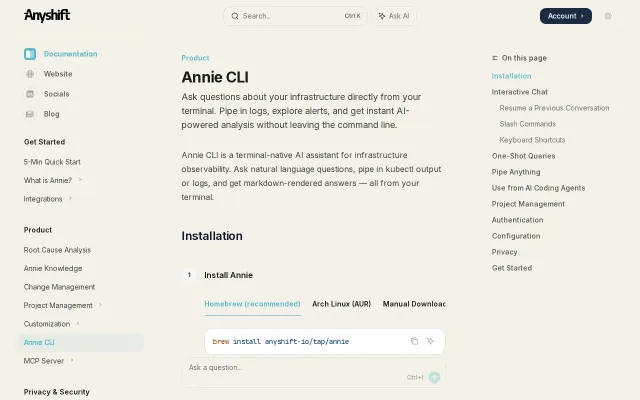
Pipes kubectl logs into an AI agent that actually knows your infrastructure dependency graph.
Backstage alternative running in 30MB RAM with native MCP for AI agents.