Developer Tools●●Solid
Durable, asynchronous LLM workflow engine in Rust
Continuation-passing durability with live/batch switching, but LangGraph and Temporal already own this space.
Big BrainNiche Gem
rescrv
204d ago
Production Rust libraries for AI agents and financial systems — zero panics, typed errors, aerospace-grade test coverage
Impressive Rust substrate layer, but crate collection without proof of integration or adoption.
Rust systems engineers building distributed AI agents, quantitative trading platforms, edge computing systems
tokio ecosystem · actix-web · Tauri (for distribution)
Everything is zero-panic enforced at the lint level, typed errors with thiserror throughout, no unnecessary dependencies. The crates are designed to compose, the orchestrator runs the agents, memory stores what they know, the graph understands relationships between what they know, the budget governs what they spend, sync keeps 24 agents consistent without locks.
The orchestration engine that coordinates all of this is tokio-prompt-orchestrator, which I've been running with 24 simultaneous Claude Code agents.
Continuation-passing durability with live/batch switching, but LangGraph and Temporal already own this space.
Another customer data platform wrapper, but this one targets AI agents instead of human dashboards.
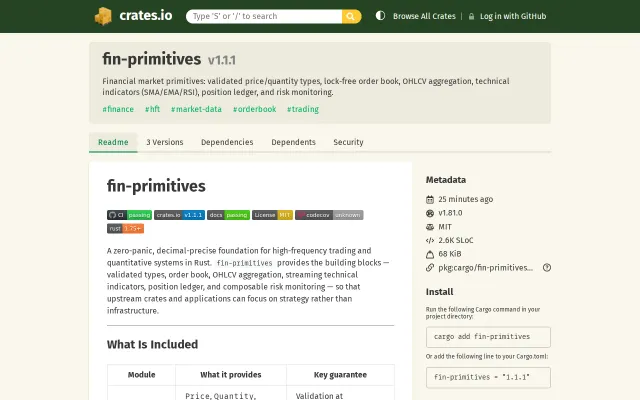
Invalid Price values literally cannot exist at runtime — type-level guarantees for trading systems.
Agent-friendly animation library cuts $2k motion design work to 4 hours via Remotion primitives.
Waitlist-only IaC agent competing with Terraform and Pulumi.
Fixes real agent deployment pain — but Replicate, Modal, and Railway already do this well.