Developer Tools●●Solid
Automated QA, Performance Tracking
Replay-to-test automation closes the loop better than LogRocket's manual workflows.
SlickSolve My Problem
godelshalt
2017d ago
Session replay to test converter, but Replay.io and LogRocket already pivot toward this.
QA engineers, full-stack developers, product teams running web applications
Replay.io · LogRocket · Chromatic
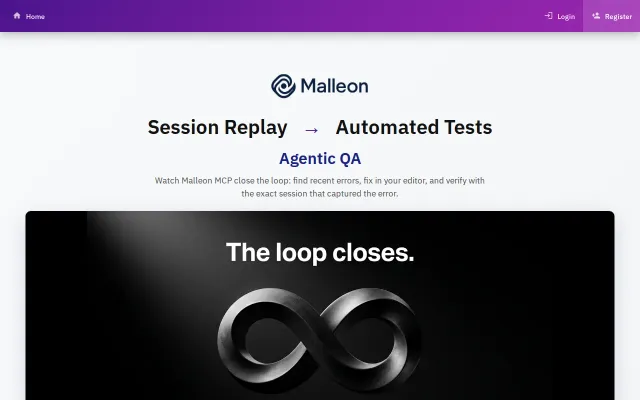
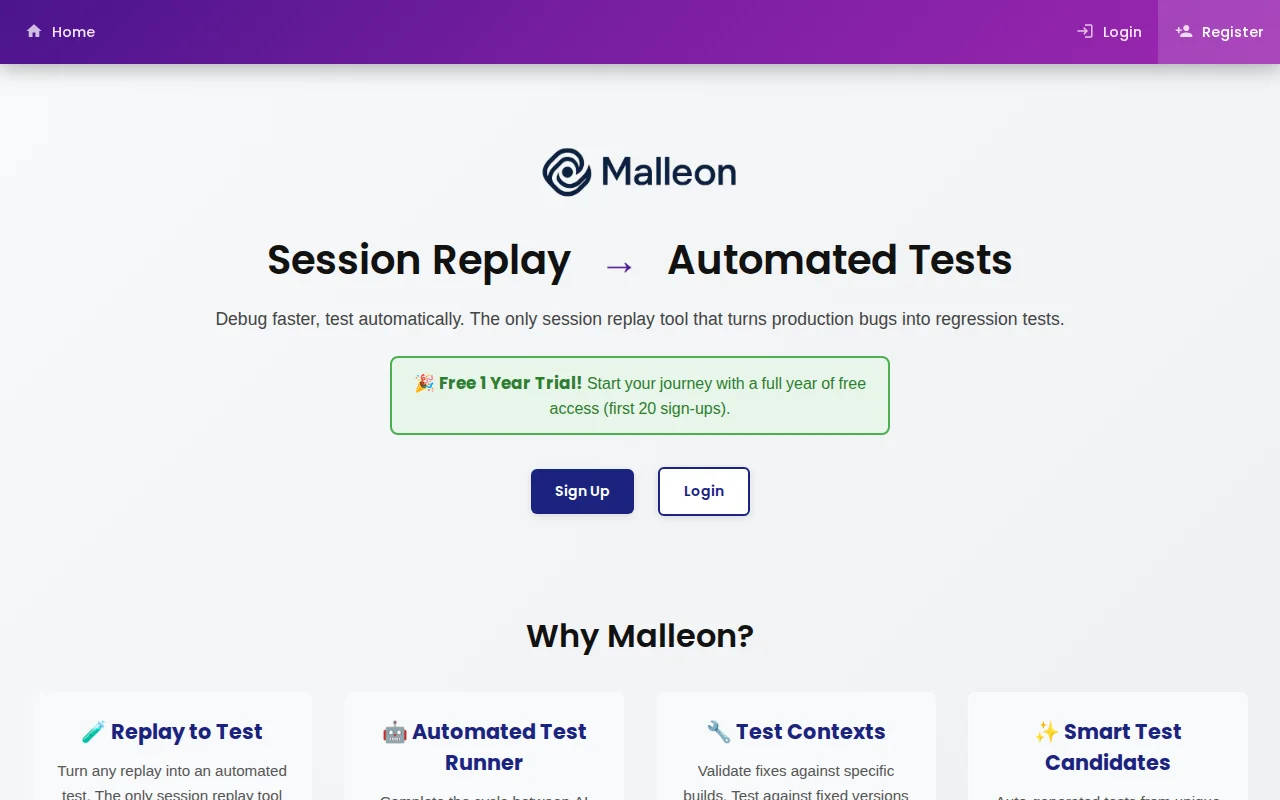
I've been building a tool called Malleon because I got tired of e2e tests that don't reflect what users actually do. And I have long been obsessed with using real user sessions for load testing. Having worked with tools like Tsung and Gatling for load testing, I often wished I could just replay yesterday's traffic x2 or x5 instead of using synthetic sessions. Malleon started as an attempt to bridge those two worlds.
The basic idea is: instead of writing tests from scratch, record real user sessions and turn them into replayable tests.
The SDK records things like: - DOM interactions - network requests - console output - timing between actions
The replay isn't a video. It reconstructs and replays the actual browser interactions against your app.
So a real user session becomes a reproducible test case.
Typical flow looks like: - drop a small JS SDK into your app - users interact with the site normally - sessions get recorded - you browse replays and find something interesting (bug, error, weird behavior) - turn that session into a test and run it in CI
The test runner is self-hosted. You pull the Docker image and run it wherever you want. It drives a browser (headless or headful) and replays the interaction sequence.
Some things that turned out to be surprisingly tricky while building this: - replaying interactions when the DOM has changed since recording - handling viewport/layout differences - making network replay transparent to the app - keeping timing realistic without making tests slow
The system also collects logs, errors, and request timings so sessions are searchable and you can track network performance, see p90/p95/p99 stats, all that good stuff.
Links: - Malleon: https://malleon.io - Replay SDK: https://www.npmjs.com/package/@malleon/replay - Replay CLI: https://www.npmjs.com/package/@malleon/replay-cli - Docs: https://github.com/malleonio/malleon-documentation
Free tier available.
Curious if anyone else has run into the "our tests don't reflect what users actually do (or how they scale)" problem.
Replay-to-test automation closes the loop better than LogRocket's manual workflows.
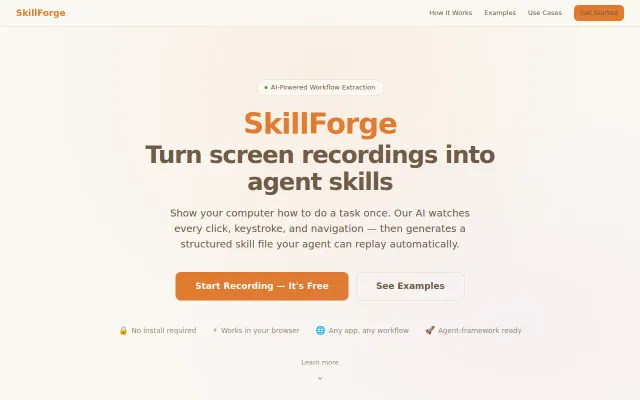
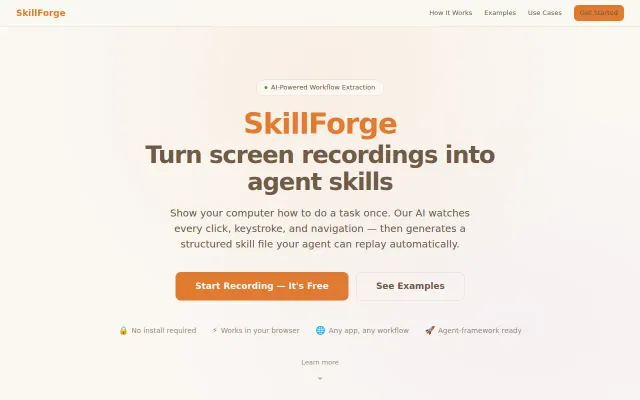
SkillForge turns the old 'show, don't tell' trick into code: record a task, and their AI teases clicks, keystrokes and navigation out of pixels into a stepwise skill file you can edit and export. The ability to trim video, rewrite steps via AI, and output a SKILL.md for agent frameworks is a practical, opinionated workflow that could shortcut lots of brittle RPA scripting — my main questions are reliability across dynamic UIs and privacy/recording controls, but the product direction is smart and tangible.
It records you doing a task, then auto-extracts clicks, keystrokes and navigation into a human-editable, step-by-step workflow and a SKILL.md you can feed to agent frameworks — that demo-to-skill UX is a real 'oh nice' moment. The landing page shows practical examples (spreadsheet entry, research, crypto checks) and an inline editor, but I want clarity on robustness: how it handles dynamic selectors, cross-app gestures, and sensitive data in recordings.
Records clicks, keystrokes and app switches in-browser, then extracts them into an editable, step-by-step workflow you can trim, reorder and export as SKILL.md for agent frameworks. The UX reads thoughtfully — no-install browser recording, review/edit and Markdown export are practical — but the page shows polished examples rather than edge-case behavior; robustness across UI changes, element matching and secure credential handling are the unanswered hard problems here.
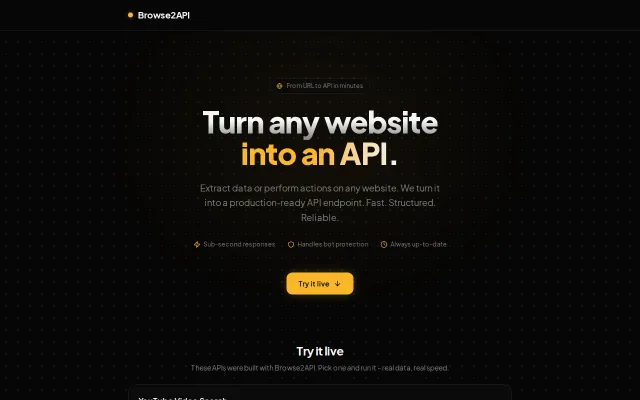
Browser-driven API generation beats manual scrapers, but Apify, Cheerio, and Puppeteer already solve this.
Replaces manual Playwright scripting, but Claude-generated tests and GitHub Copilot already cover this.