Security●●●Banger
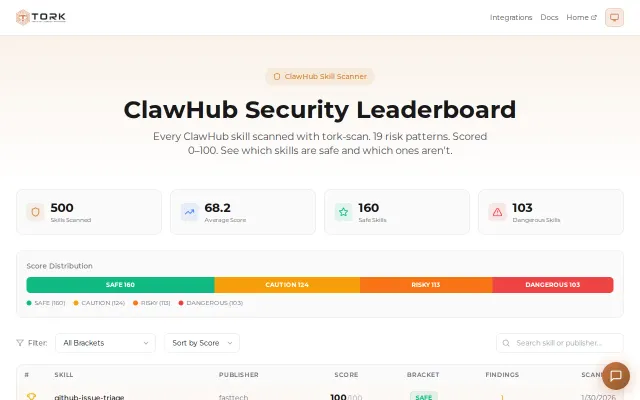
We scanned 500 ClawHub skills for security risks – 10% were dangerous
19-pattern MCP tool security scanner filling a real gap in agent ecosystem governance.
Solve My ProblemBig Brain
yusufjacobs
313mo ago
Check what an AI agent can access before you run it
Audits AI agent blast radius across AWS/GCP/Azure/k8s before execution—real security gap.
DevOps engineers, platform teams, developers using AI agents in production shells
HashiCorp Boundary · OWASP DependencyCheck
Main features:
- Broad coverage: scans AWS, GCP, Azure, 100+ API key environment variables and credential files, Kubernetes, Docker, SSH keys, Terraform configs, and .env files
- Severity levels: every finding is tagged LOW, MODERATE, HIGH, or CRITICAL so you know what actually matters
- CI/CD integration: run agentcheck --ci to fail a pipeline if findings exceed a configurable threshold, with JSON and Markdown output for automation
- Configurable: extend it with your own env vars, credential files, and CLI tool checks via a config file
When you hand a shell to an AI agent, it inherits everything in that environment: cloud credentials, API keys, SSH keys, kubectl contexts. That's often more access than you'd consciously grant, and it’s hard to keep track of what permissions your user account actually has. Agentcheck makes that surface area visible before you run the agent.
It’s a single Go binary, no dependencies. Install with Homebrew:
brew install Pringled/tap/agentcheck
Code: github.com/Pringled/agentcheck
Let me know if you have any feedback!
19-pattern MCP tool security scanner filling a real gap in agent ecosystem governance.
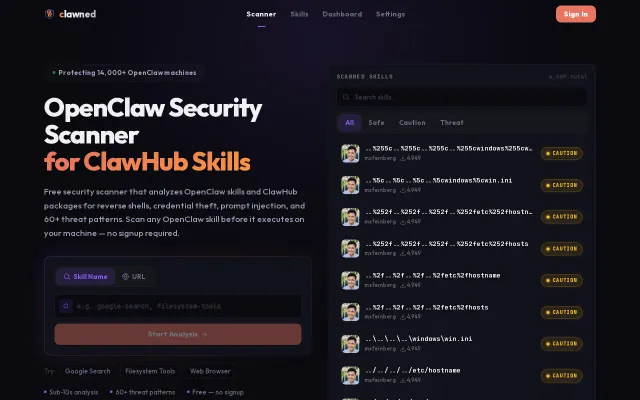
60+ threat patterns in sub-2s, but OpenClaw's ecosystem appears niche and unverified.
Finds unguarded agent tool calls before your LLM charges a customer twice.
Moves credential security from prompt-injection hope to OS process isolation for agents.
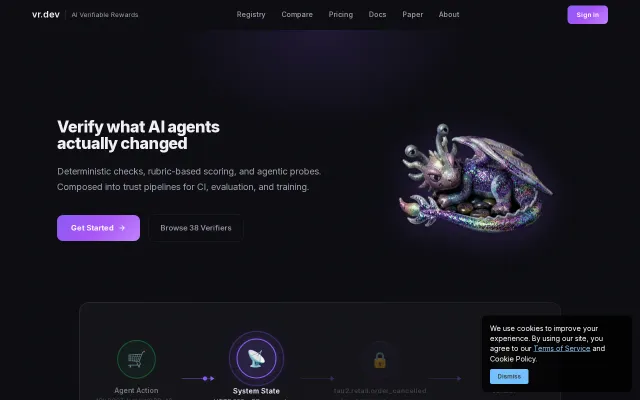
38 verifiers across 19 domains catch false successes before users do.
Timely concept checking for /llms.txt, but it's just four HTTP GET requests.