Developer Tools●●Solid
Pitstop-check – finds the retry bug that turns 429s into request storms
Found real retry bugs in OpenClaw's 323k-star repo that ignored Retry-After headers.
Niche GemSolve My Problem
SirBrenton
342mo ago
A lightweight TypeScript library that makes GraphQL resolvers truly lazy by default. Developers define models using getter methods, and the library ensures only the requested fields are computed at runtime.
Proxy-based lazy GraphQL field resolution saves unnecessary database calls.
Backend developers building GraphQL APIs with TypeScript
Apollo GraphQL · GraphQL-JS · DataLoader
The problem: In a typical GraphQL API, your resolver computes all fields for an object, even if the client only asked for 2 out of 15. This means unnecessary database calls, API requests, and CPU time — all thrown away.
The solution: LazyQL uses JavaScript Proxy to intercept field access. You write a class with getter methods (getStatus(), getCustomerEmail(), etc.), and LazyQL ensures each getter only runs when GraphQL actually reads that field.
@LazyQL(OrderDTO) class Order { constructor(private id: number, private db: Database) {}
getEntityId() { return this.id; } getStatus() { return this.db.getOrderStatus(this.id); } async getCustomerEmail() { return this.db.getCustomerEmail(this.id); } async getShippingAddress() { return this.db.getShippingAddress(this.id); } }
// Query { entity_id, status } → only getEntityId() and getStatus() run // getCustomerEmail() and getShippingAddress() never execute
In my benchmarks, a query requesting 3 out of 10 fields made 6 calls instead of 35 with the traditional approach.Key design decisions: - Works transparently with Apollo, Mercurius, or any GraphQL server — they don't know LazyQL exists - Naming convention maps snake_case DTO fields to getCamelCase methods automatically - @Shared() decorator caches expensive operations that multiple getters depend on - Validates at startup that all required DTO fields have matching getters (fail fast) - Zero runtime dependencies beyond reflect-metadata
It's been running in production for a few weeks now with zero issues. The whole point was to build something invisible — it sits there, does its job, and doesn't interfere with anything.
~400 lines of code, MIT licensed. Would love to hear your thoughts.
Found real retry bugs in OpenClaw's 323k-star repo that ignored Retry-After headers.
Stateless Go proxy routes LLM requests by model name to vLLM backends.
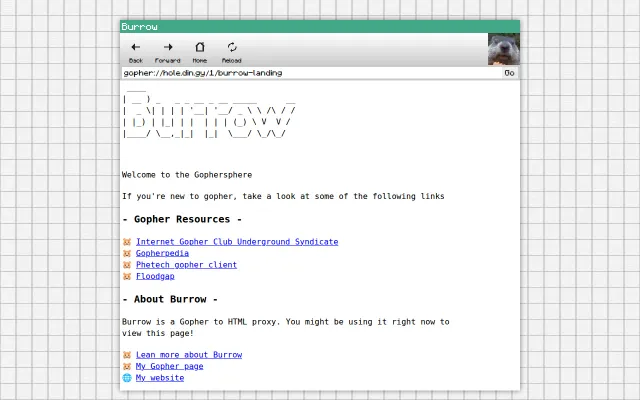
Gopher-to-HTML proxy brings the dead protocol to modern browsers.
Yet another PII redaction proxy when Lakera and Portkey already dominate this space.
Rust proxy with hot-reload config, but mitmproxy already does request logging.
Yet another signals library when Preact and Solid already dominate the space.