Developer Tools●●●Banger
Python DSL for system programming with manual memory and linear types
Linear types and LLVM IR bring C-level safety to Python syntax.
WizardryBig BrainNiche Gem
1flei
302mo ago
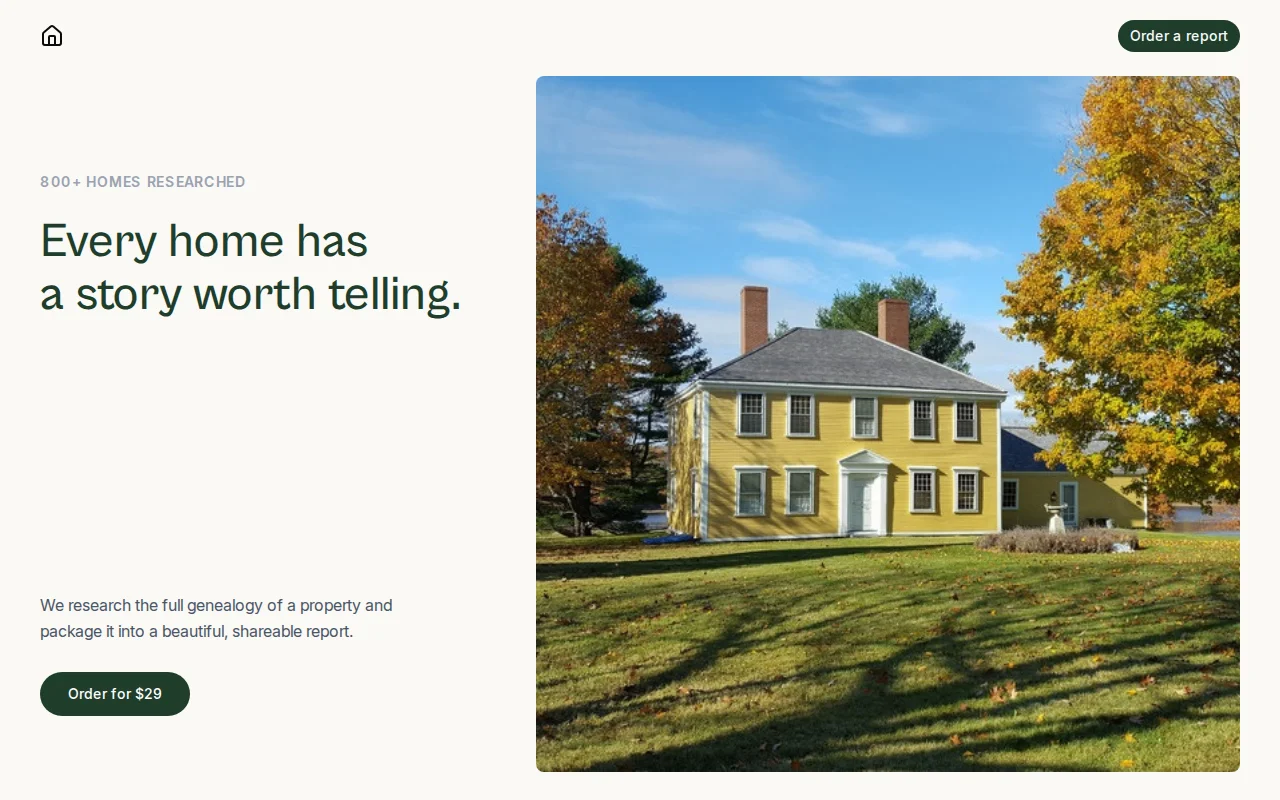
Beautiful reports, but this is manual research—not a scalable tech product.
Homeowners, real estate agents, history enthusiasts
PropertyShark · HistoricBridges
My great-grandparents owned a small summer cottage which my grandma inherited. After COVID, my family stopped visiting so much and it fell in disrepair. With no one to care for it, my grandma decided to sell it.
On a whim, I did some digging and found that the cottage was actually listed as “culturally significant” by the Massachusetts Historical Commission. It had 150 years of incredible history we never knew. I put together a nice report, presented it to my family, and well now I’m writing this from that very cottage with a 5th generation (my son) next to me.
From that experience, I started HomeLore to help other people learn the history behind their homes and hopefully inspire a passion like mine. The concept is pretty simple.. we research homes (incl ownership, architecture, history, images, etc) and package the results into a beautiful, shareable online report that reads more like a narrative than a spreadsheet.
The idea of a “carfax for homes” seems so obvious but likely hasn’t been done due to lack of unified data. I keep costs low ($29) but still donate 50% of all proceeds to the local historical orgs I use in hopes of improving their infra or making them more interested in data. Hence the .org tld.
Would love to hear thoughts, find collaborators, or just chat with anyone about their homes stories! Find it at homelore.org
Linear types and LLVM IR bring C-level safety to Python syntax.
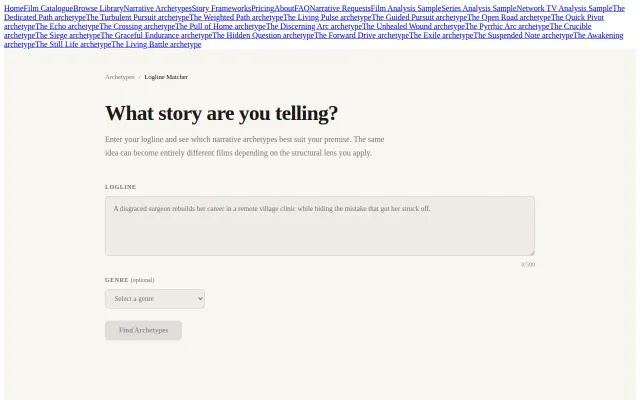
Framework-to-tool pipeline ships two weeks after HN framework post with working matcher.
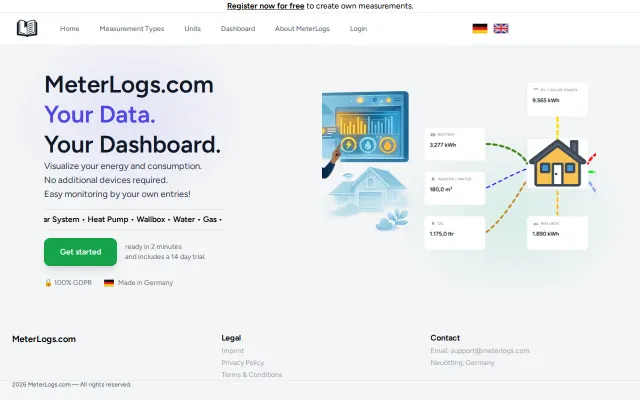
You enter monthly meter readings and MeterLogs turns them into grouped yearly dashboards (electricity, water, gas, solar production/feed‑in) — a deliberately pragmatic, no-hardware play. The site leans on trust signals (GDPR, Made in Germany) and a tidy starter flow, but it'd win more converts with CSV import, easier mobile entry, or optional utility integrations.
JSON config for nginx is nice, but Caddy already does auto-SSL simpler.
TypeScript to Dafny verification with 123 lemmas proving invariants on real apps.
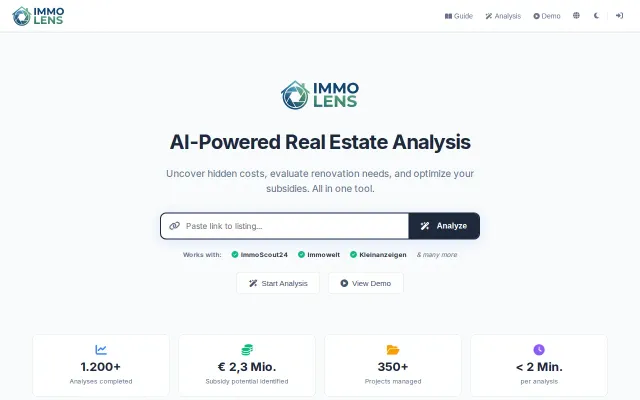
It automatically reads exposés and Energieausweis data to flag hidden costs and map suggested measures to specific German subsidy programs — that subsidy-matching is the concrete, useful twist that lifts it above generic 'property AI' demos. The site also bundles a financing stress-test and risk checks, which makes it feel like a working toolbox rather than a toy; my main questions are about ML transparency, pricing of remediation items, and robustness on messy PDFs/listings.