Developer Tools●●Solid
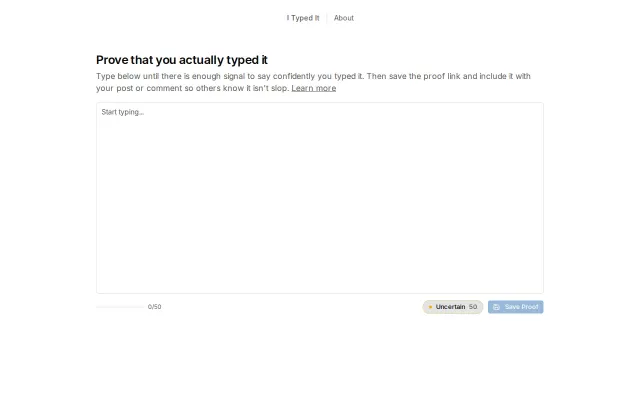
Prove that a human wrote it
Tackles real frustration (AI slop in comments), but typing signals are easily spoofed.
Ship ItNiche Gem
ttamslam
304mo ago
Real-time 3D character animation engine with 8 elemental shaders, 160+ gestures, WebGL rendering, and emotional state system
Eight elemental shaders from scratch—ice uses Snell's law refraction with dispersion.
Frontend developers, game developers, UI designers adding animated mascots
Three.js · Rive · Lottie
Open-source character animation engine, MIT licensed. About 6 months of work. Renders animated mascots in Canvas 2D or WebGL 3D.
For v3.4.1 I wrote 8 elemental shader systems from scratch: fire, water, ice, electricity, earth, nature, light, void. Each one has its own GLSL fragment shader, GPU-instanced models, an overlay that paints onto the mascot mesh, bloom control, and atmospherics. Ice does Snell's law refraction with chromatic dispersion. Electricity is 3-scale 3D Voronoi edge-distance. Fire decouples color from alpha so additive stacking doesn't wash out.
I didn't need 8. I built them to see if the architecture actually repeats. Every element follows the same template: factory, instanced material, overlay shader, gesture configs, registration. 161 gestures across all 8, composed from about 12 archetypes (crown, helix, vortex, barrage, pillar, etc).
The idea is that you can clone one element, swap colors and models, and have something working in days. If you write shaders, go deep on the material. If you don't, the defaults are fine.
Hit shuffle in the demo. Press G for the GPU monitor.
`npm install @joshtol/emotive-engine`
Tackles real frustration (AI slop in comments), but typing signals are easily spoofed.
Animal-themed AI chatbots with shelter integration planned, but standard LLM wrapper underneath.
CSS-only Animate.css scroll triggers, but browser support for scroll-triggered animations is limited.
Cute pixel art wrapper around Cursor's existing agent status indicators.
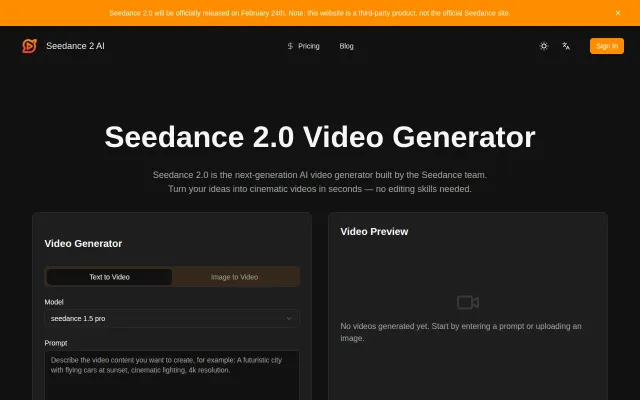
The site sells a specific trick — consistent character motion and physics-aware animation across frames — and surfaces sensible UI controls (model, resolution, duration, credits) instead of hiding them. Biggest gap: the landing leans on confident claims (style lock, realistic physics, multimodal inputs) but the preview area is empty and there are no on-page demos or technical notes to prove it; show side-by-side before/after clips, latency numbers, or model details and this jumps from neat to convincing.
Seven animated ASCII patterns for web backgrounds, but mostly a novelty with limited utility.