AI/ML●Mid
Adaptive Runtime – AI agent layer, no GPU, crash recovery
Agent runtime infra, but 0 stars and crowded with LangGraph and Temporal.
Ship ItBold Bet
StateflowsLabs
3120d ago
Semantic side-effect tracking for AI agents.
Five effect kinds drive recovery strategy — irreversible writes escalate to humans, never re-execute.
Developers building AI agents that take real-world actions
LangGraph · CrewAI · Temporal
effect-log is an embeddable Rust library (with Python bindings) that solves this with two ideas:
1. Every tool declares an *effect kind* at registration: ReadOnly, IdempotentWrite, Compensatable, IrreversibleWrite, or ReadThenWrite.
2. A write-ahead log records intent before execution and completion after. On recovery, the effect kind drives the strategy — reads replay for fresh data, idempotent writes safely retry, irreversible writes return sealed results (never re-execute), and unknown states escalate to human review.
The entire recovery logic is a pure function that fits on one screen.I'd love feedback on: Is five effect kinds the right number? Are there tool types that don't fit? What failure modes have you hit with agents taking real-world actions?
Agent runtime infra, but 0 stars and crowded with LangGraph and Temporal.
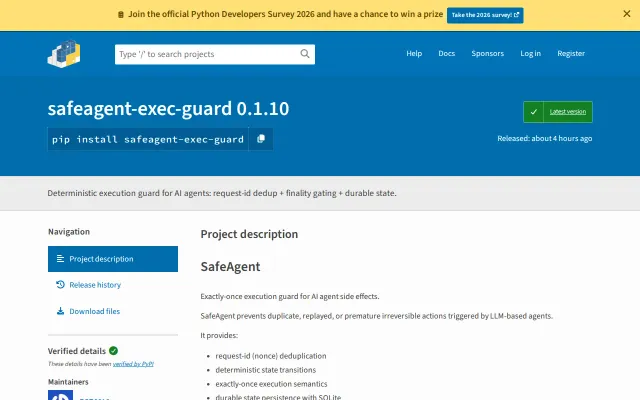
Idempotency guards for AI agents prevent duplicate payments when retries inevitably happen.
Exactly-once execution for AI agents—solves duplicate payments, emails, trades from retries.
Yet another signals library when Preact and Solid already dominate the space.
Two decorators add crash recovery when LangGraph requires full rewrites.
Yet another Android keyboard skin with paid themes in a saturated market.