Developer Tools●Mid
Tickstem – Python SDK for cron, uptime and heartbeat monitoring
Consolidates cron and uptime SDKs, but Cronitor and Healthchecks.io already own this space.
Ship ItSolve My Problem
m_barsukou
201mo ago
30 free monitors at 2-minute checks beats UptimeRobot's 5-minute free tier limit.
Indie developers, small teams running scheduled tasks and background jobs
Healthchecks.io · UptimeRobot · Cronitor
UptimeRobot's free tier checks every 5 minutes, Cronitor charges extra for status pages, BetterStack starts at $29/mo.
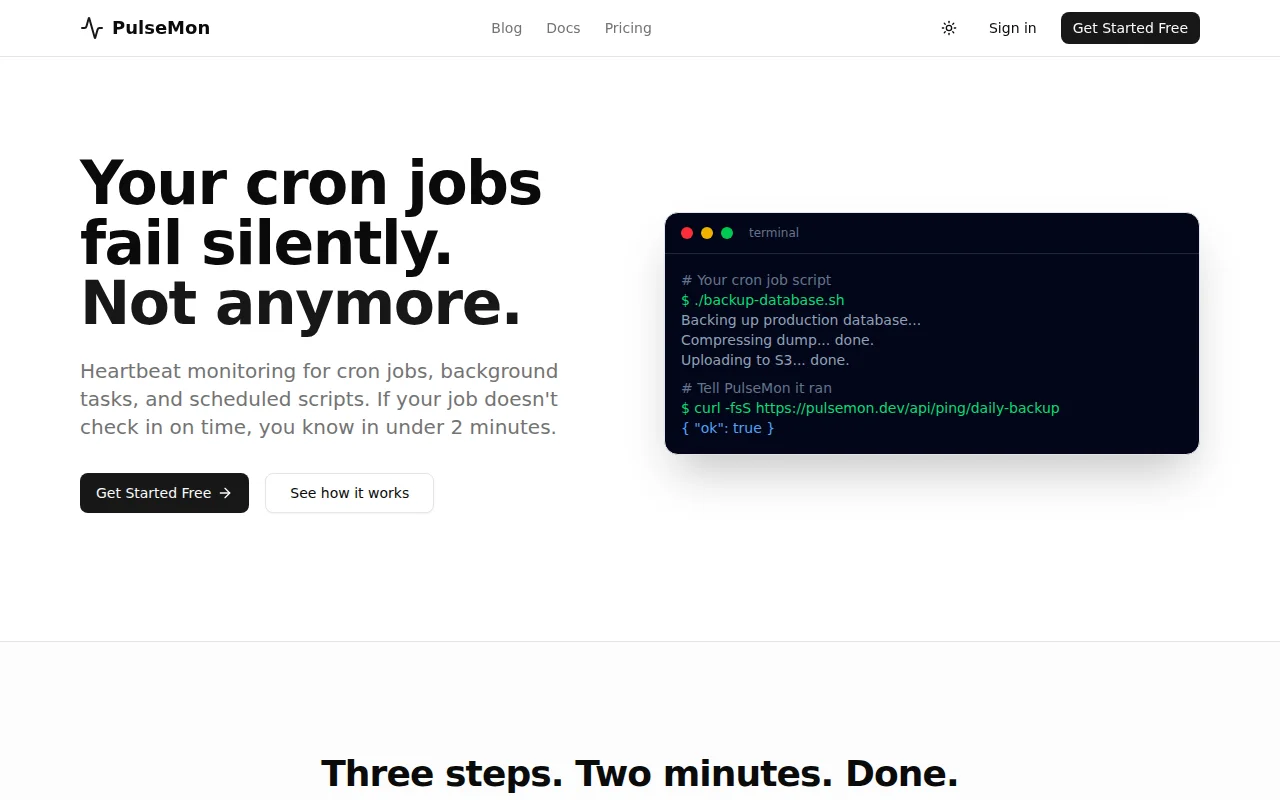
So I built PulseMon.
What it does:
- Heartbeat/cron job monitoring. Drop a ping URL into your cron job, get alerted when it stops - Full REST API with API key auth if you want to manage monitors programmatically - Alerts via email, Slack, Discord, or signed webhooks (HMAC-SHA256)
A few things worth knowing:
- 30 free monitors at 2 min intervals. Most competitors cap free tiers at 5 min - Pro tier goes down to 10s checks - No silent recoveries. If the recovery alert fails to send, the incident stays open until it does
Just launched, would love feedback from people who've actually dealt with this problem. What am I missing, what would make you switch from whatever you're using now?
Consolidates cron and uptime SDKs, but Cronitor and Healthchecks.io already own this space.
Yet another uptime monitor, but $3/month undercuts Pingdom and UptimeRobot significantly.
Uptime monitoring with 1-minute free checks, but UptimeRobot and Better Uptime already exist.
Heartbeat monitoring without the 4-tool sprawl, but early-stage and unproven at scale.
This is a clean, no-nonsense uptime monitor: 1‑minute checks, Slack/Discord/webhook alerts, custom-domain status pages and a usable free tier (3 monitors) — everything you actually expect from a monitoring starter kit. Nicely executed UX and sensible pricing make it an easy switch from UptimeRobot or Better Uptime, but the product doesn’t show a clear technical edge or novel feature to make it stand out in a crowded category.
Groups failing checks into single incidents so you stop ignoring alerts.