Developer Tools●●Solid
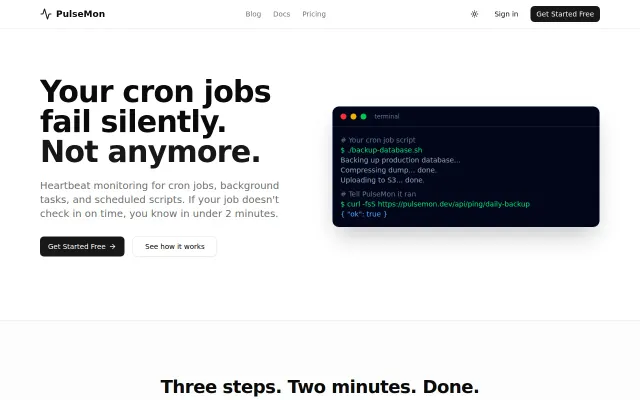
I built a heartbeat and uptime monitoring for developers
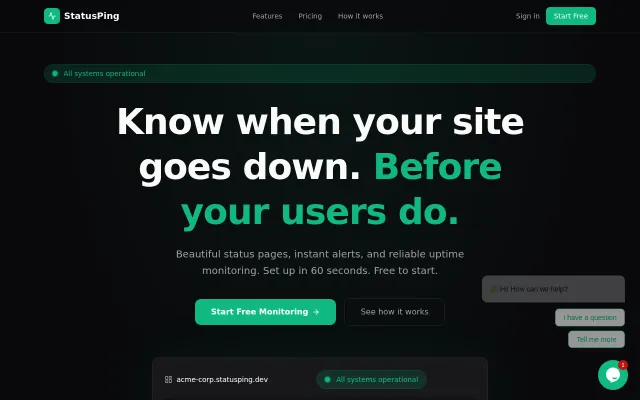
30 free monitors at 2-minute checks beats UptimeRobot's 5-minute free tier limit.
Solve My ProblemSlick
ramgale
304mo ago
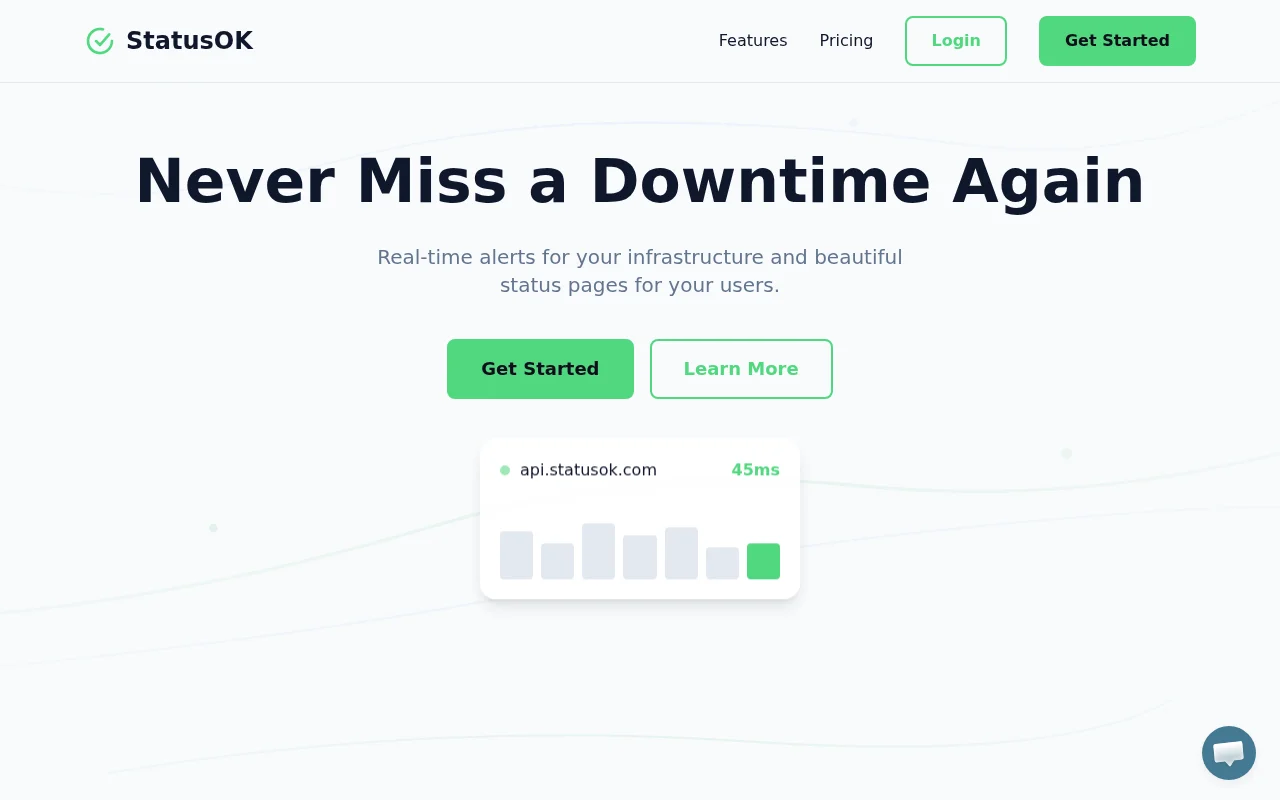
Uptime monitoring with 1-minute free checks, but UptimeRobot and Better Uptime already exist.
DevOps engineers, SREs, small business owners
UptimeRobot · Better Uptime · StatusCake
30 free monitors at 2-minute checks beats UptimeRobot's 5-minute free tier limit.
This is a clean, no-nonsense uptime monitor: 1‑minute checks, Slack/Discord/webhook alerts, custom-domain status pages and a usable free tier (3 monitors) — everything you actually expect from a monitoring starter kit. Nicely executed UX and sensible pricing make it an easy switch from UptimeRobot or Better Uptime, but the product doesn’t show a clear technical edge or novel feature to make it stand out in a crowded category.
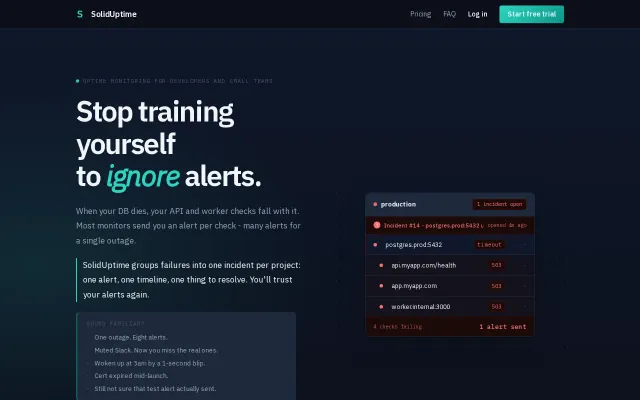
Groups failing checks into single incidents so you stop ignoring alerts.
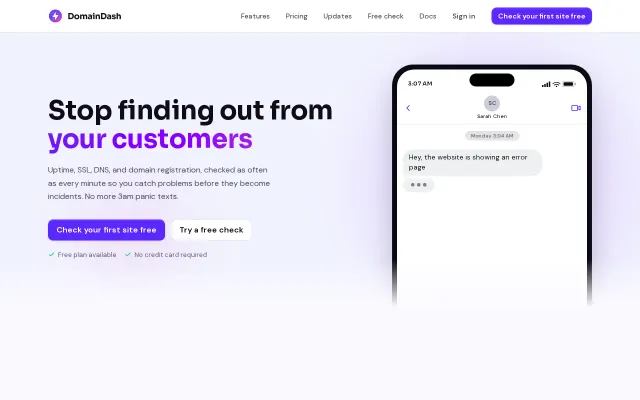
Plain English SSL alerts for freelancers tired of 3am panic texts.
Single Go binary beats Uptime Kuma for CLI-first teams who hate containers.
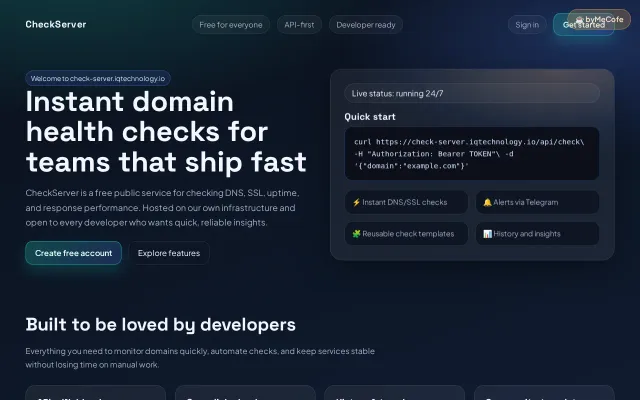
Instant DNS/SSL/uptime checks plus an API, webhooks and reusable check templates make this a handy tool to fold into CI and lightweight automation. It's not reinventing monitoring — think UptimeRobot/Pingdom-lite — but being free, API-first and run on the author's infra gives it practical appeal for teams that want quick programmatic checks and Telegram alerts. To become a standout it needs multi-region probes, richer alert routing/SLO exports and clearer scaling/retention guarantees.