AI/ML●●Solid
CongaLine – Self-hosted isolated AI agent fleet (OpenClaw, Hermes)
Per-agent container isolation with separate networks beats shared-instance chaos.
Big BrainSolve My Problem
zhendershot
402mo ago
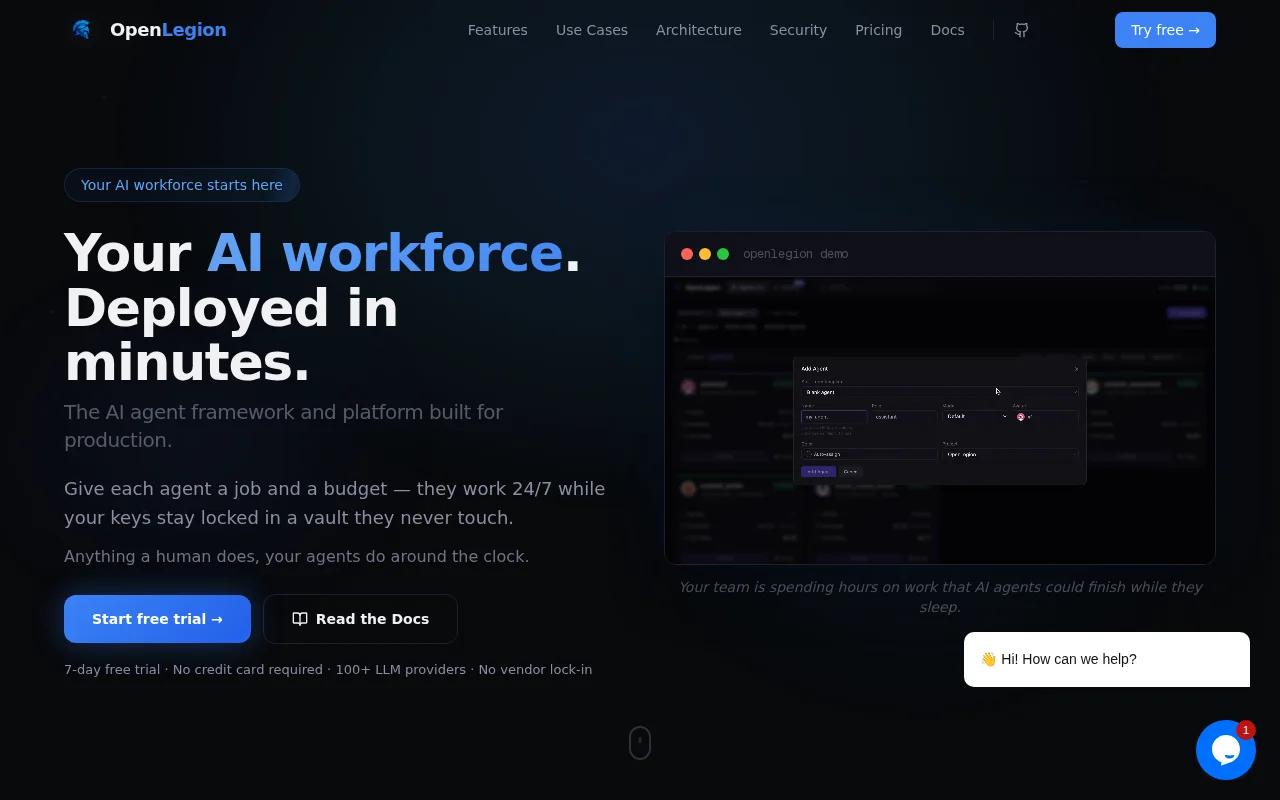
Vault proxy injects credentials at the network layer so agents never touch your keys.
Backend engineers, CTOs, DevOps teams deploying AI agents to production
LangGraph · CrewAI · SmythOS
The short version of what I built:
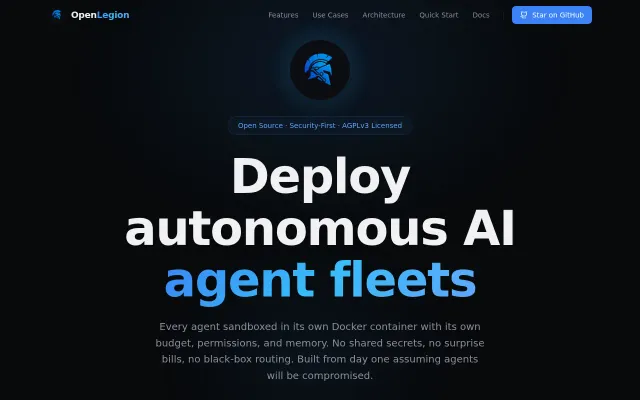
Security: Every agent runs in its own Docker container or microVM. A vault proxy sits between agents and every LLM call — the agent sends a request, the proxy injects the credential at the network layer, the agent gets back a response. Keys never exist inside the container. Six independent security layers on by default, including per-agent ACL matrices and Unicode sanitization to block invisible-character prompt injection.
Cost control: Per-agent daily and monthly budgets with a hard cutoff enforced at the vault proxy. The agent physically cannot make an LLM call that exceeds its budget. Zero markup on LLM usage — you pay your provider directly at their rates. 100+ providers via LiteLLM with configurable failover chains.
Orchestration: Deterministic YAML DAG workflows. No LLM deciding what runs next. Four patterns: sequential, parallel, supervisor, hierarchical. Every execution path is predictable and auditable.
The rest: Camoufox stealth browser (C++-level anti-detection, CAPTCHA solving), persistent per-agent vector+BM25 memory with temporal decay, MCP tool support, real-time fleet dashboard, Telegram/Discord/Slack/WhatsApp channels, cron + webhook triggering, agents can write and hot-reload their own Python skills at runtime.
The engine is ~30,000 lines of Python with 2,100+ tests. Self-hosted runs on one machine — no Redis, no Kubernetes, just Python 3.10+, Docker, and an API key. Three commands to start.
For context: the dominant framework in this space is OpenClaw (200K+ stars). CVE-2026-25253 was reported in February — critical RCE, 42,000 exposed instances with no authentication, 341 malicious skills confirmed stealing user data. I'm not trying to replace it, but that's why I think this gap exists.
We launched in February 2026. Zero CVEs. BSL 1.1 license — source-available, not open source, and I want to be clear about that. Managed hosting starts at $19/month with a 7-day free trial. Self-hosted is free.
Happy to get specific about the security model or architecture — genuinely curious where people think the threat model breaks down.
Per-agent container isolation with separate networks beats shared-instance chaos.
Agent fleets in hardened Docker with per-agent budgets—assumes agents will be compromised.
Host-side credential enforcement for containerized agents before they leak your AWS keys.
The plugin-proxy split is smart: credentials live in a backend (Keychain/1Password/Vault/etc.) and a separate proxy injects auth headers over a UDS so the agent process never handles raw keys. It autosurveys plugin configs and channels to migrate plaintext secrets and even ships a Docker image and CLI for local setups — very practical for anyone already on OpenClaw, though it’s narrowly focused and adds an extra trusted component that deserves an audit.
Single Go binary: Telegram → Claude agents in isolated Docker with swarms, memory, Nix.
Yet another Docker wrapper for AI agents, but drops all Linux capabilities by default.