Education●●Solid
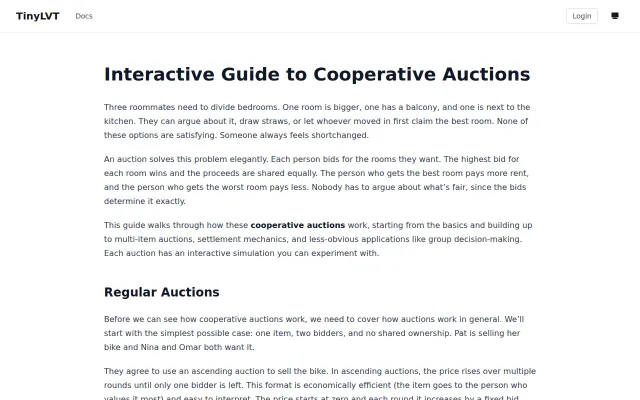
Interactive Guide to Cooperative Auctions
Interactive simulations explain cooperative auctions for rent splitting and resource allocation.
Niche GemBig Brain
yumbaya
303mo ago
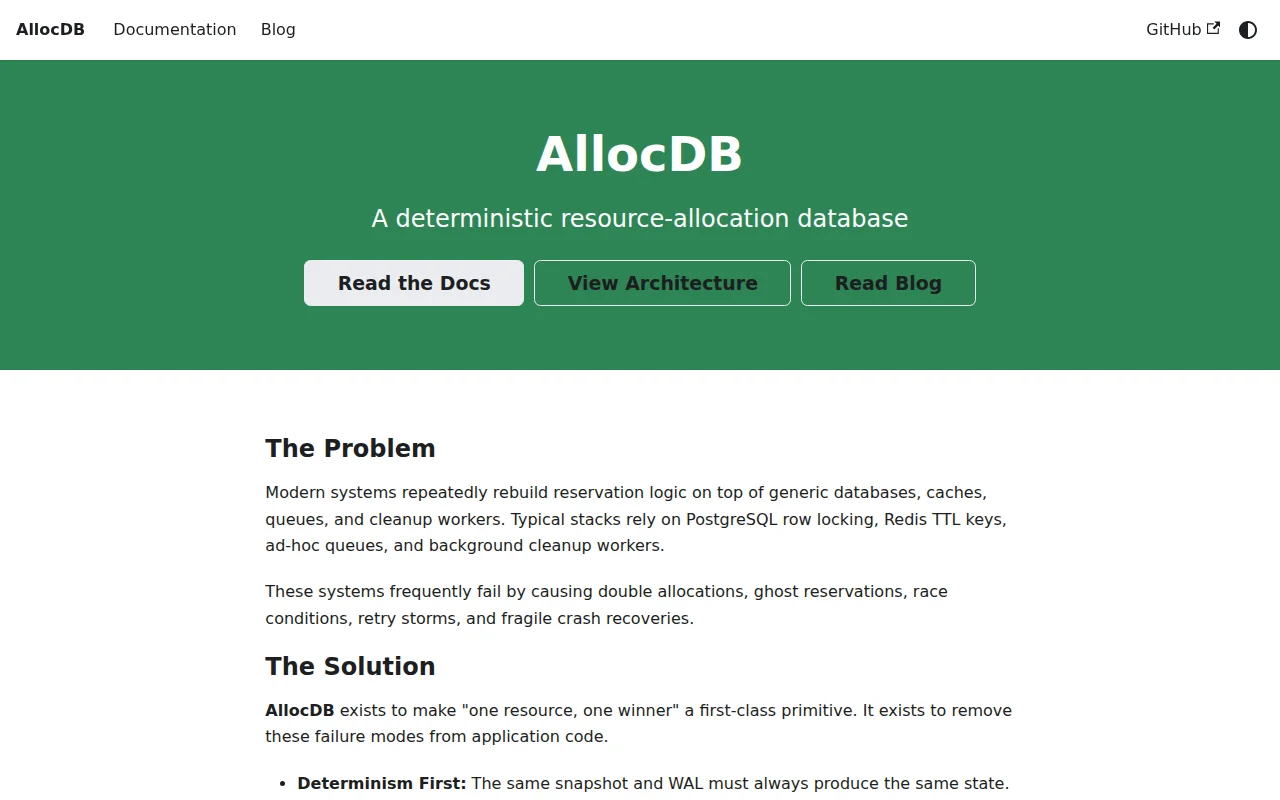
First-class allocation primitive beats Postgres row locking for reservation systems.
Backend engineers building reservation systems, distributed systems developers
FoundationDB · etcd · Redis
I’m a DevOps engineer who wanted to test whether an LLM could build high-quality systems code if guided by a strong architectural mental model?
I guided Codex to build AllocDB (a "one resource, one winner" database) using TigerStyle principles—strict determinism, zero-allocation hot paths, and logical time.
Because I didn't trust the AI (or my own coding skills), I had it build a Jepsen harness using my homelab's KubeVirt infrastructure to "bully" the database into failing. After a number of iterations, it now passes a 15-scenario Jepsen matrix.
Would love to hear from the community if this is interesting to you, and if you have any suggestions for how to improve the system or the testing harness!
Interactive simulations explain cooperative auctions for rent splitting and resource allocation.
Landing page is a Cloudflare bot check—no demo, no code, no way to evaluate claims.
Resumable agent workflows with JSON schema validation beats raw Codex scripting.
ORM that skips decorators—but Prisma, Sequelize, TypeORM already solve this better.
Deterministic multi-agent evolutionary benchmark with SHA-256 reproducible capsules for agent testing.
Zero-alloc embedded DB for .NET, but SQLite bindings already dominate this niche.