AI/ML●Mid
theta-spec - a humble harness agnostic configuration spec
Another config standard for AI agents when each harness already has its own format.
Ship It
ivanbelenky
106d ago
Portable, vendor-agnostic agent harness for project-specific skills, workflows, and agent teams aligned with your codebase, conventions, and engineering standards.
Portable .agents spec keeps skills separate from specific IDE plugins.
Engineering teams implementing AI agent swarms
CrewAI · AutoGen · LangGraph
Looking at current prompts and skills, a few recurring problems show up: missing critical library versions, vague personas like you are a senior engineer, and bloated prompts that burn tokens without improving outcomes.
oh-my-agent addresses this by introducing a structured protocol to keep agents aligned with real project constraints.
Key Ideas: 1. Clarification protocol: Analyzes requirement ambiguity to decide whether to proceed, offer options, or stop for clarification.
2. Difficulty guide: Adjusts protocol depth based on task complexity.
3. Context budget: Enforces token limits per model to prevent unnecessary usage.
OpenAI’s Symphony release this March reinforced the importance of this approach. Symphony is powerful for autonomous workflows, but it performs best when the codebase is designed to be AI-friendly.
OpenAI refers to this as harness engineering: structured documentation like ARCHITECTURE.md, AGENTS.md, and WORKFLOW.md that agents can reliably interpret. oh-my-agent is built around these principles. Instead of just sending prompts, it provides the structural harness agents need to understand project context and operate autonomously.
Currently supports: Antigravity, Claude Code, Codex CLI, and Cursor.
The core idea: Using AI agents effectively isn’t about clever prompts—it’s about the engineering structure around them.
Another config standard for AI agents when each harness already has its own format.
OCI-backed .agent archives beat zip files for sharing agent setups.
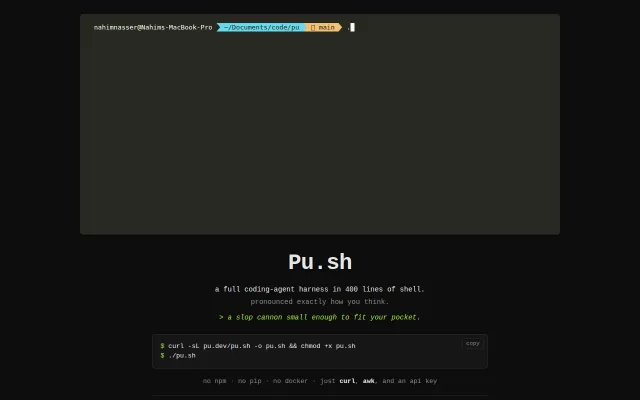
Parsing JSON and managing agent state in pure awk is absolute terminal wizardry.
Cyberpunk terminal aesthetic can't hide the vague multi-agent orchestration underneath.
Finally forces AI agents to prove their work with real test gates instead of hallucinated confidence.
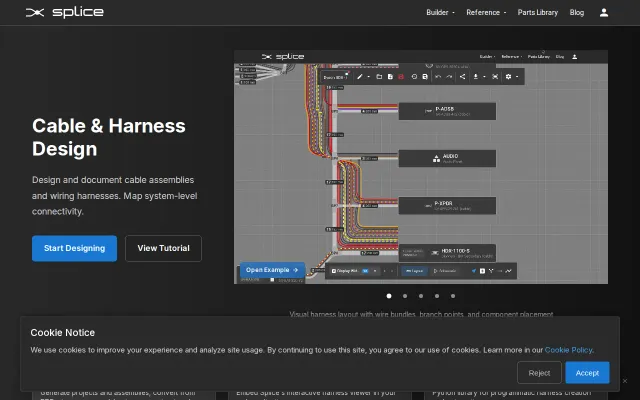
Web CAD for wiring harnesses that lets AI agents generate assemblies via MCP.