AI/ML●●Solid
ABES – a memory architecture for belief revision in AI agents
15-phase belief scheduler with decay mechanics, but unproven in production agent pipelines.
Big BrainWizardry
bradkinnard
103mo ago
Thermodynamic memory decay beats passive vector search—90% token reduction claimed.
AI agent developers, LLM application builders
Mem0 · LangChain Memory · Zep
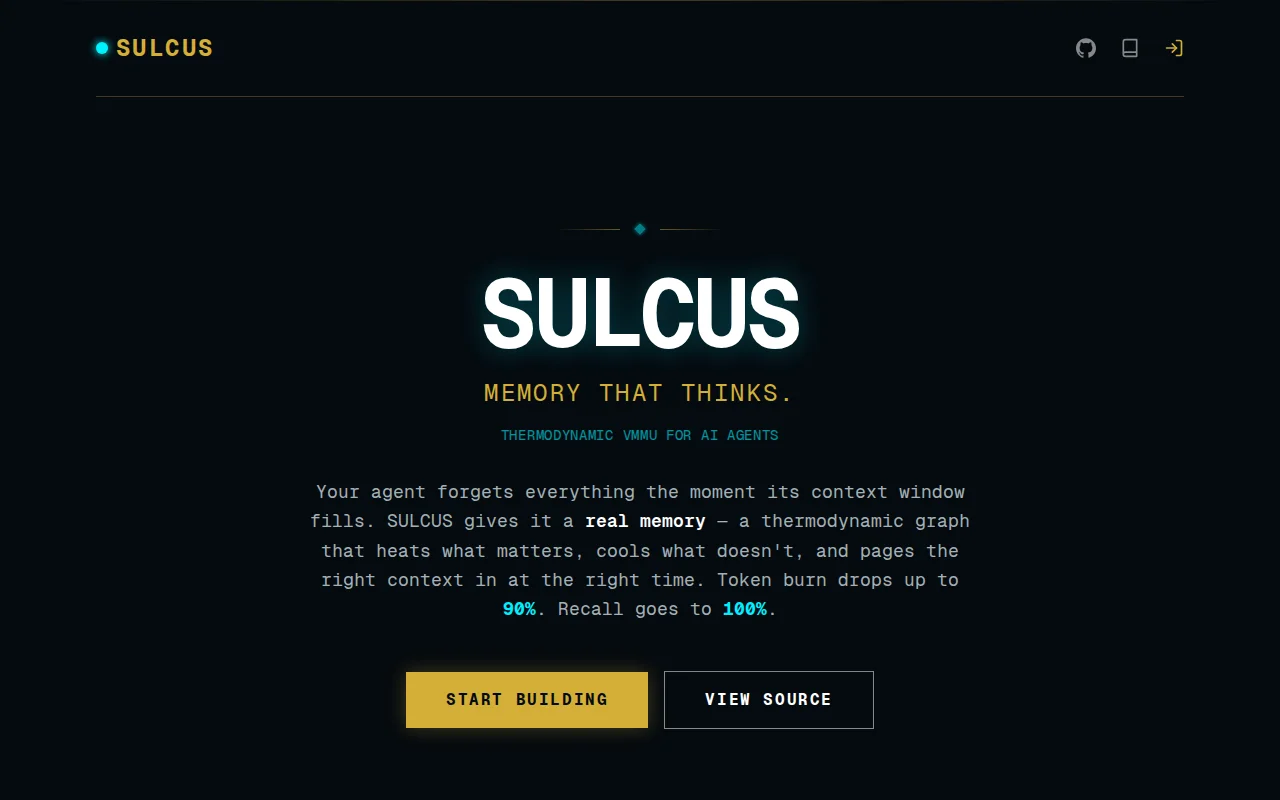
Sulcus moves AI memory from a passive database (search only) to an active operating system (automated management).
The Core Shift Current memory (Vector DBs) is static. Sulcus treats memory like a Virtual Memory Management Unit (VMMU) for LLMs, using "thermodynamic" properties to automate what the agent remembers or forgets.
Key Features Reactive Triggers: Instead of the agent manually searching, the memory system "talks back" based on rules (e.g., auto-pinning preferences, notifying the agent when a memory is about to "decay").
Thermodynamic Decay: Memories have "heat" (relevance) and "half-lives." Frequent recall reinforces them; neglect leads to deletion or archival.
Token Efficiency: Claims a 90% reduction in token burn by using intelligent paging—only feeding the LLM what is currently "hot."
The Tech: Built in Rust with PostgreSQL; runs as an MCP (Model Context Protocol) sidecar.
15-phase belief scheduler with decay mechanics, but unproven in production agent pipelines.
ACT-R decay and Hebbian learning as native primitives, not vector hacks.
Single-file energy modeling with phase-by-phase heat economics.
Explainable retrieval with decision traces beats Mem0 and Zep on transparency.
Temporal memory with contradiction detection—Claude finally remembers job changes.
Bundled 7MB embedder means zero network calls or model downloads for agent memory.