Security●●Solid
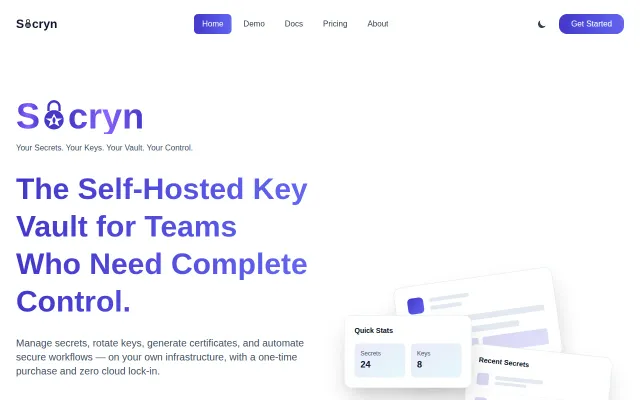
Secryn – a self-hosted secrets vault for dev teams (public demo)
HashiCorp Vault alternative that cuts cloud lock-in with one-time pricing instead of subscriptions.
Solve My ProblemNiche Gem
chintanb
514mo ago
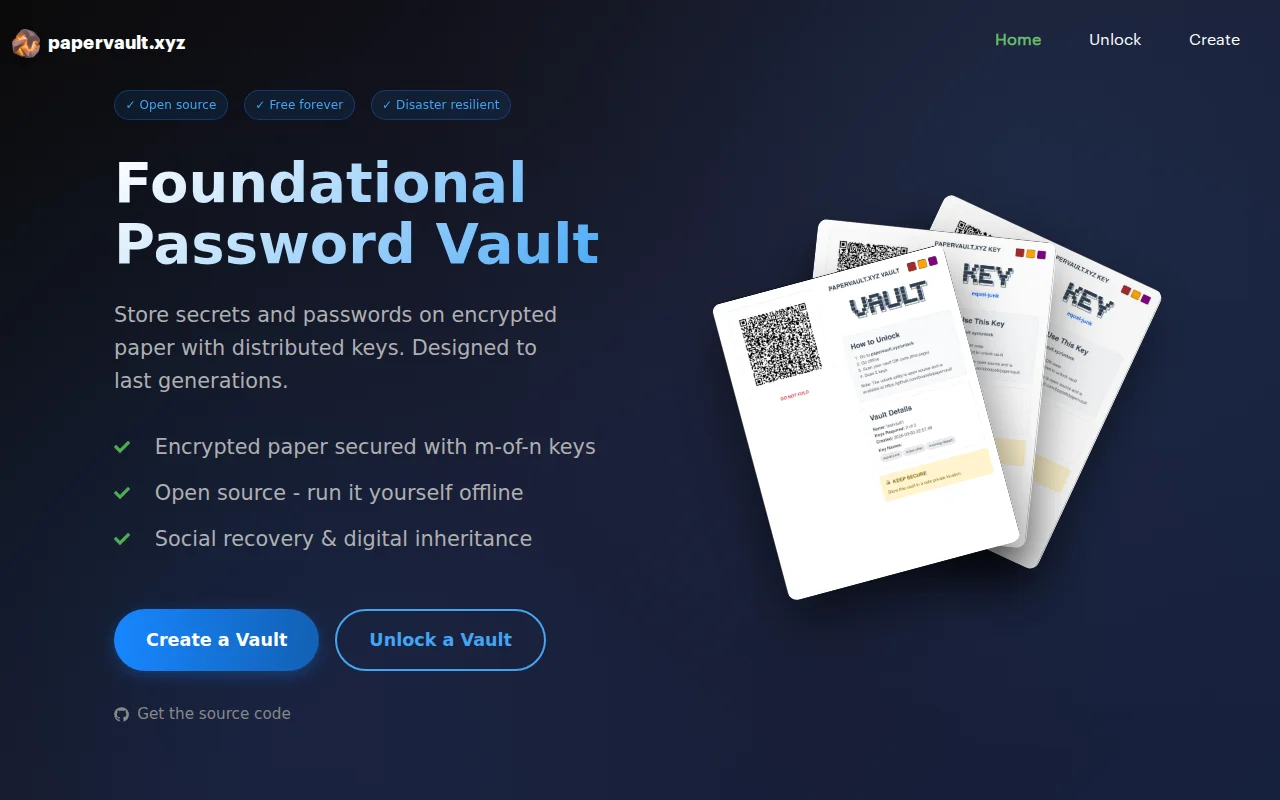
Shamir's Secret Sharing on paper solves digital inheritance without trusting a cloud service.
Security-conscious individuals, crypto holders
SeedQR · Unchained Capital · Cryptosteel
I built PaperVault because I needed a way to store secrets (like 2FA recovery codes, hard disk encryption keys, and seed phrases) without depending on any device, cloud service or company surviving.
I needed something my family could access in an emergency without exposing them directly to the passwords or burdening them with having to secure everything correctly over the course of many years.
PaperVault encrypts your data with AES-256-GCM, with the decryption key split into shares using Shamir's Secret Sharing. You pick how many keys to create and how many are needed to unlock, e.g 3-out-of-5. The vault and keys are printed as QR codes on paper.
Everything runs in the browser with no server involved. It's designed to work offline on an air-gapped machine.
Source: https://github.com/boazeb/papervault
Live Demo: https://papervault.xyz
Happy to answer questions about the implementation or the design choices.
HashiCorp Vault alternative that cuts cloud lock-in with one-time pricing instead of subscriptions.
CyberArk alternative for teams priced out, but still marked development-in-progress.
Printable QR + human-readable fallback for offline recovery, no cloud dependency.
Medium article behind Cloudflare gate with no code or demo to evaluate.
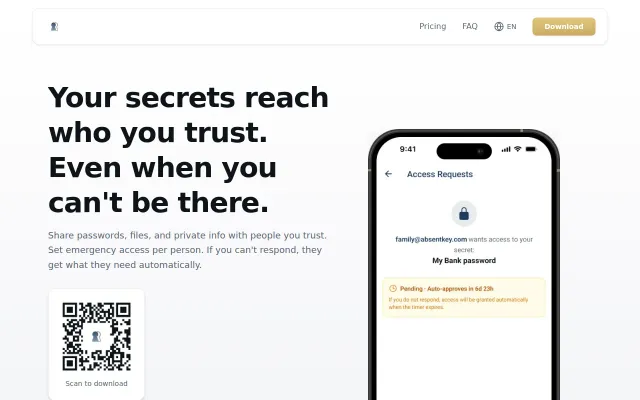
Timer starts when someone requests access — no false positives from vacation check-in failures.
Agents never see credentials — brokered access beats retrieval for prompt injection safety.