AI/ML●Mid

ChatGPT is finally good for frequent travelers
Travel context aggregator that depends on manual data entry or scraping.
Solve My Problem
skyler1537
304d ago
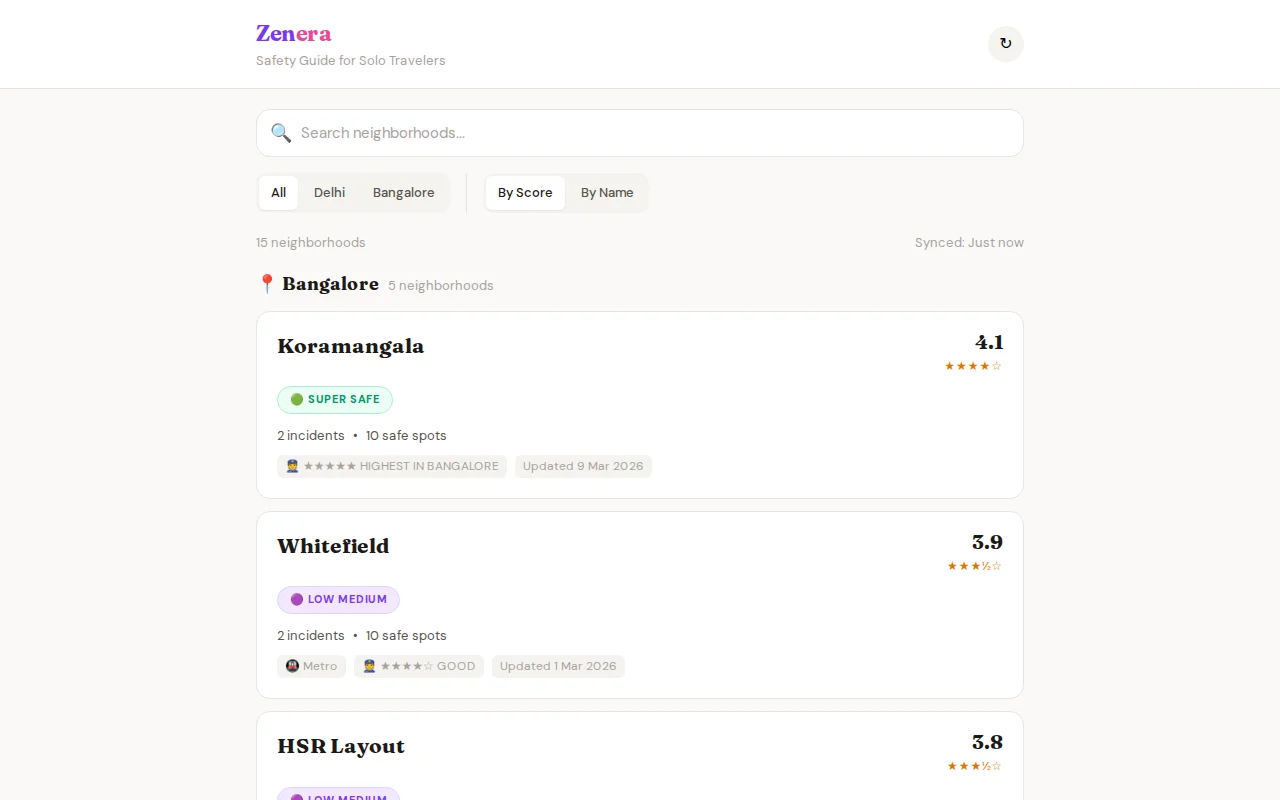
Neighborhood safety scores from 1000+ traveler reports, but only covers 4 Indian cities.
Solo travelers, especially women traveling in India
Numbeo · Safeture · TravelSafe
Last year I was planning a solo trip and got so frustrated with vague warnings that I almost canceled. Then I realized - these articles aren't written by people who've actually solo traveled there recently. They're just recycling generic advice.
So I started going through actual accounts from solo travelers - Reddit posts, YouTube comments, Google Maps reviews. The detailed "I stayed in Hauz Khas alone and here's what happened" experiences. I spent 4 months analyzing 1000+ reports for Delhi and Bangalore.
What I found: safety is extremely neighborhood and time-dependent. Hauz Khas Village scores 4.5/5 during daytime (cafes, solo women everywhere), then drops to 2.5/5 after 9 PM (club-heavy, different vibe entirely). Same exact spot.
I built Zenera (https://app.zenera.fun/) to organize this data: time-based safety scores (1-5 scale), bystander intervention culture (will locals actually help if you're uncomfortable), solo-specific incident patterns, community-verified spots, peak solo hours.
Current coverage: Delhi and Bangalore neighborhoods. Planning to expand to more cities based on data availability.
How it works: No signup, just browse. Search a neighborhood, see safety scores at different times, read what other solo travelers experienced, check bystander culture ratings.
What's different: Most travel safety apps give generic city-level advice or focus on emergency features. Zenera provides neighborhood-level intel with time-based context - the kind of specificity I desperately wanted when planning trips but couldn't find anywhere.
Known issues: UI is rough, mobile experience needs work, data coverage is limited to two cities, some neighborhoods have sparse data. This is very much beta.
What I'm looking for: Feedback on usefulness vs noise. Am I solving a real problem or just feeding my own anxiety with spreadsheets? Is time-based data actually helpful or too granular? What's missing?
Also open to technical feedback - current architecture is simple but wondering about scaling as I add more cities and real-time data.
Happy to answer questions about the data collection methodology, scoring formula, or why I chose this weird tech stack.
Travel context aggregator that depends on manual data entry or scraping.
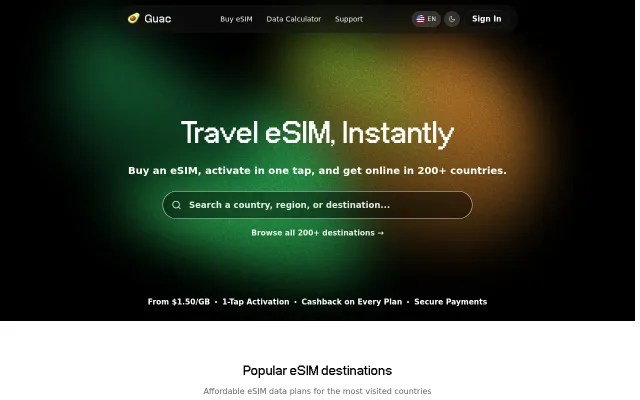
Undercut Sims.io and Holafly on price; unclear if unit economics work long-term.
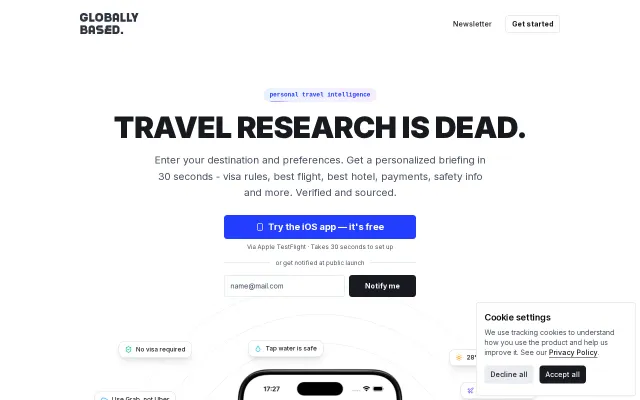
AI travel briefings when Wanderlog and Google Flights already exist.
Hobby project from a 90-country traveler — but Google Flights and Kayak cover this already.
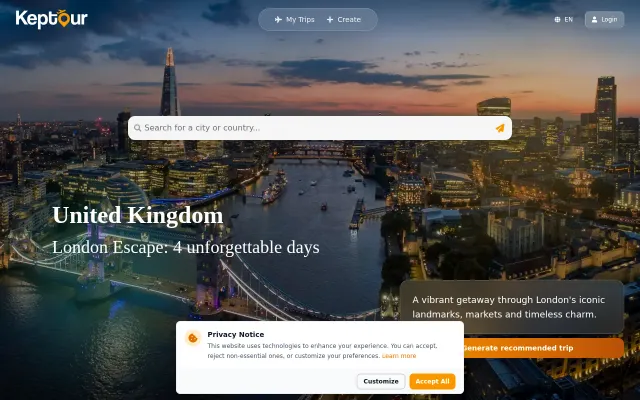
Another AI travel planner competing with Google Travel and Wanderlog.
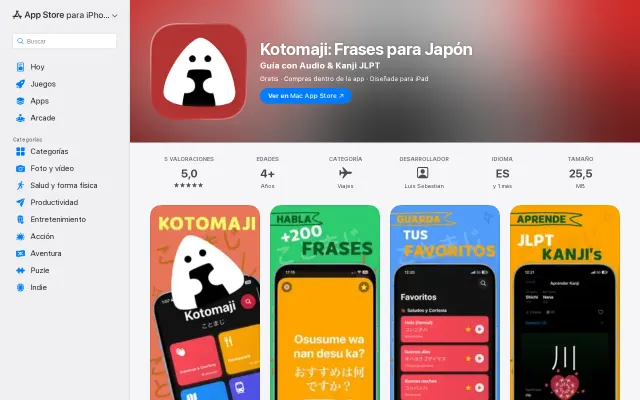
The real stunt here isn't the phrasebook — it's the developer workflow: a never-sleeping Mac + SSH + persistent shells to trigger remote TestFlight builds while living out of a backpack. The app is practical (offline, pre-generated ElevenLabs audio, dynamic-number phrases, JLPT kanji and one‑time IAP), so the demo isn't vaporware — it's a neat example of shipping under extreme constraints rather than a novel product idea.