Infrastructure●●Solid
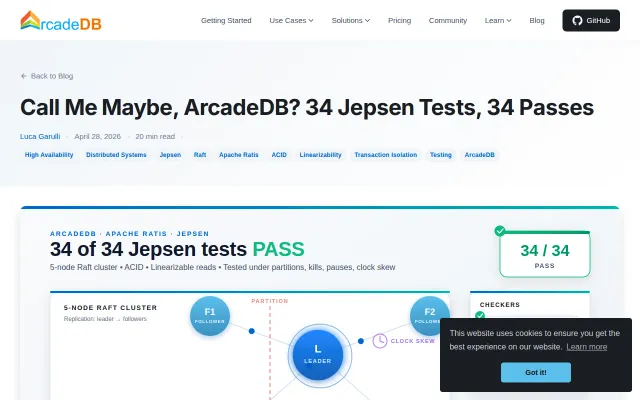
Distributed-correctness tests using Jepsen tooling pass on ArcadeDB
Passing self-run Jepsen tests is a strong signal, even without Kyle's stamp.
Ship It
lvca
101mo ago

Low-pass sequencing for $49 beats microarray chips used by 23andMe and Ancestry.
Biohackers, health-conscious consumers
23andMe · AncestryDNA · Nebula Genomics
I'm Miguel, an engineer at Gencove.
We've just launched a new consumer product that provides genetic insights using low-pass sequencing rather than traditional microarrays.
For now we offer 9 polygenic risk scores based on the eMERGE network paper: https://www.nature.com/articles/s41591-024-02796-z
After receiving results, you can download your VCF directly (no need to go through support).
Happy to answer questions about the tech, accuracy tradeoffs, or how this compares to array-based approaches.
Passing self-run Jepsen tests is a strong signal, even without Kyle's stamp.
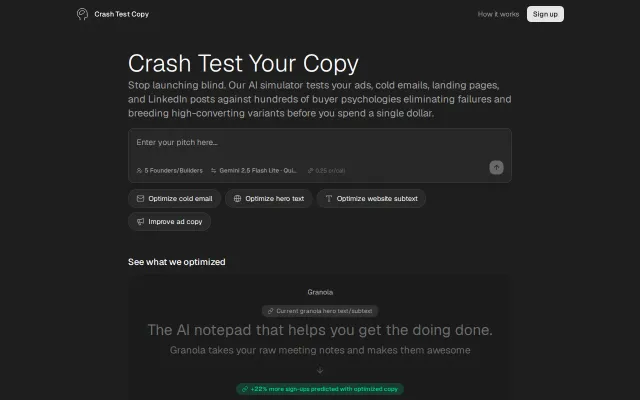
Genetic algorithms meet LLM personas to stress-test landing page copy.
Extraordinary physics claim with 1,225 tests but zero peer review.
LLM-generated attack personas beat static scanners, but Burp Suite + custom rules solve this already.
This is a compact, dependency-free TestBed<MyModel> harness that forces models to predict next-step bitset inputs with deterministic seeds — clever for reproducible, low-level experimentation. Execution is pragmatic (header-only, quick compile, clear API), but there's no showcased model that actually passes the tests and the scope is deliberately narrow, so it’s more of a useful lab tool than a breakthrough benchmark.
HarfBuzz-powered text rendering with 891k Unicode tests passed for Unity.