Health●●Solid

OpenClaw for Your Health
iMessage-native health coaching with group challenges beats standalone apps.
Solve My ProblemCozy
willhay
543d ago

Predicts satellite reentries 471 days out using trajectory geometry instead of atmospheric drag models.
Aerospace engineers, data scientists
Celestrak · Space-Track.org
Results on 257 confirmed reentries: V1=250.6x basin separation, Recall=1.000, mean detection lead 471 days.
Applied to 15,170 operational satellites: 108 fire the reentry signal. Not in the deorbit campaign. BSTAR is normal — signal is trajectory geometry. 23 are above 600km where drag is negligible.
Prior work (Oliveira et al. 2025, Frontiers) tracked SC25 effects on satellites that already reentered. This asks the forward-looking question: which operational satellites currently show precursor geometry?
Code runs on a clean clone. Reproducible 10/10. https://github.com/mojoatomic/stts.git
iMessage-native health coaching with group challenges beats standalone apps.
GitHub repo analyzer without hallucination; ships as CLI, library, REST API, and MCP server.
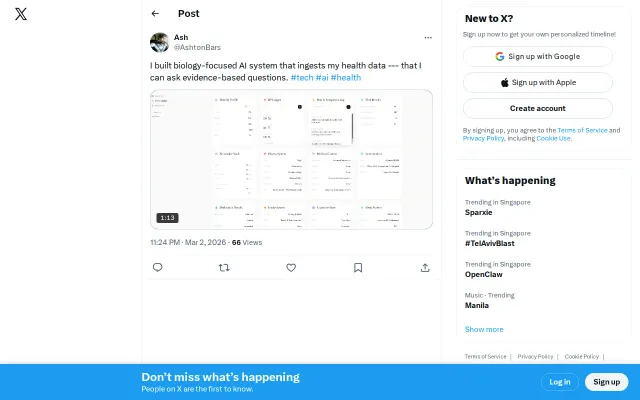
Local health AI, but no demo, no code, no proof it works better than ChatGPT.
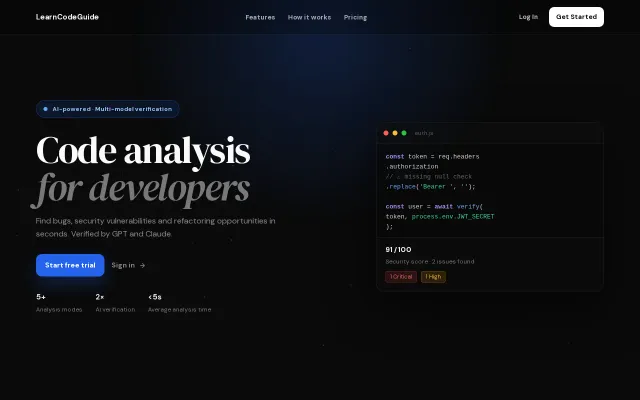
Code linter meets ChatGPT, but Sonarqube and GitHub Copilot already do this better.
Portfolio analyzer combining stocks and crypto when Morningstar already dominates.
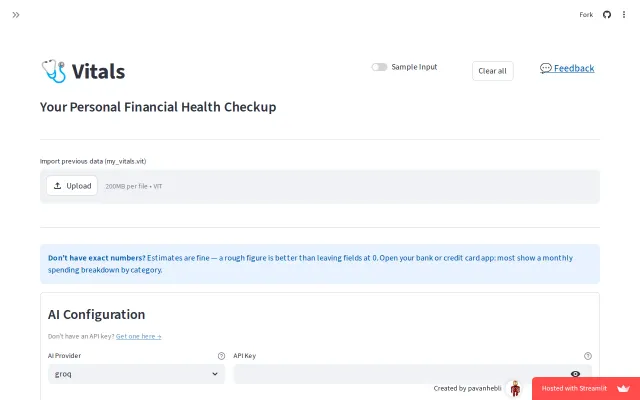
Manual financial health scoring with AI, but bank-sync apps already solve this.