Developer Tools●●Solid
SnapDrift – a pluggable visual regression workflow for GitHub Actions
Route scoping from changed files cuts noise versus Percy's blanket screenshot approach.
Niche GemShip It
ranacseruet
103mo ago
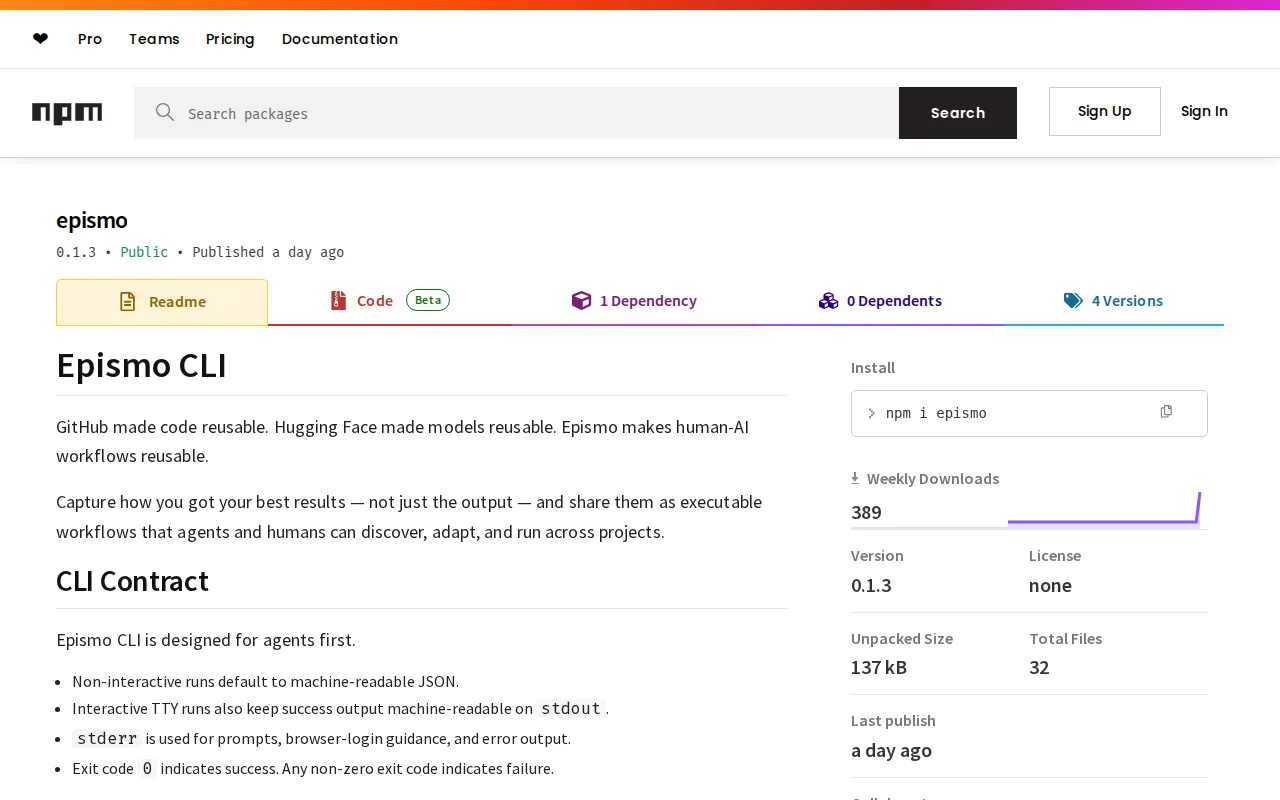
Agent-first CLI contract with proper stdout/stderr separation for workflow capture.
AI engineers and teams using Claude Code or similar agent tools
Cursor · Claude Projects · PromptBase
The problem: I got a great result in a Claude Code thread. A week later I couldn't reproduce how I got there. The real workflow lived across chat histories, tabs, tool settings, and tiny followup prompts. Prompts copy easily, but multi-step processes don't.
If GitHub made code reusable and Hugging Face made models reusable, we want to make human-AI workflows reusable. And there's a second problem emerging. Claude Code now orchestrates other agents like Codex. Ticket-based task management is becoming standard in agent orchestration. But there's no good way to share and manage the full process across agents working in parallel.
Epismo is a platform where agents and humans collaborate. You can save and share the full process of how you got your outcomes. The users aren't just humans. Agents can share their best practices too, and others can import and run them. Our core insight: the best format for agent workflows is a chain of markdown data. Once you import a workflow, your agent runs each step as a task. It turns scattered know-how into structured, repeatable execution.
The CLI is agent-native: - npm install -g epismo - epismo login --email [email protected] (no browser, OTP from terminal) - Works with Claude Code, Codex, and any agent with terminal access
Skills repo (MIT): https://github.com/epismoai/skills
Route scoping from changed files cuts noise versus Percy's blanket screenshot approach.
Humans and AI agents as equal peers on one workflow DAG with git commits.
Git for AI prompts, but missing actual code tracking and ecosystem adoption.
Workflow-as-package abstraction beats prompt libraries, but execution model and adoption unclear.
Tree-first UI makes it fast to break big projects into nested tasks and apply reusable 'contexts' or blueprints across branches. The built-in terminal (xterm.js) and right-click → send-prompt flow show the author thought about actual iteration with local or web AI tools; however, core differentiation vs. extensible outliners (Obsidian/Notion + prompt plugins) is mostly the desktop + blueprint ergonomics, and features like sync/collaboration aren't obvious yet.
Team-wide agent skill sharing via trace capture—nobody's solved this coordination problem yet.