Infrastructure●●●Banger
IEEE-754-Conformant FP64 on Metal (Apple Silicon)
Bit-exact f64 emulation on Metal GPUs where Apple's native double support is missing.
WizardryNiche Gem
guyfischman
111mo ago
Semantic search over videos using Gemini Embedding 2 or Qwen3-VL.
Local Qwen3-VL video embeddings beat API costs for dashcam and security footage.
Security teams, dashcam users, video archivists
Twelve Labs · Google Vertex AI Video Intelligence
Turns out Qwen3-VL-Embedding can natively embed video into the same kind of vector space, no API, fully offline. Runs on Apple Silicon (MPS) and NVIDIA GPUs (CUDA). The 8B model needs ~18GB RAM, or use the 2B model on smaller machines.
sentrysearch index /path --backend local
Also added: similarity threshold to suppress weak matches, and a Tesla metadata overlay that renders speed/location onto matched clips.
Details on the README.
Bit-exact f64 emulation on Metal GPUs where Apple's native double support is missing.
The repo does one practical thing well: quantify the real-world impact of Apple Silicon's unified memory on analytics by running six TPC-H queries plus a GPU-favorable QX and shipping the raw charts and code. It's specific and empirical — you get MLX vs NumPy vs DuckDB numbers and PNGs, not just hand-wavy claims — but it's narrowly scoped to M4 hardware and small-ish scales, so its conclusions are useful for experimentation rather than sweeping generalization.
Full MLX power in Ruby: lazy arrays, Metal GPU, transformer layers—but Ruby adoption risk.
Runs 4B-parameter image-to-3D on Mac without CUDA—Microsoft's original required NVIDIA only.
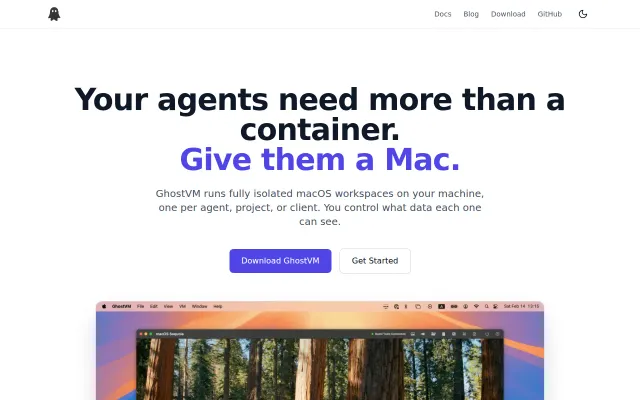
Native macOS VMs with APFS snapshots beat Docker for agent isolation.
MLX-powered local TTS plugin for OpenClaw—elegant but audience is Apple Silicon only.