SaaS●●●Banger
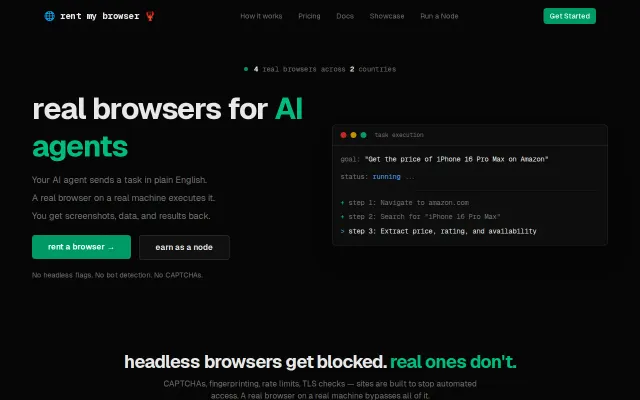
Rent Your Idle OpenClaw Browser to AI Agents
Real browsers beat bot detection where Puppeteer and Playwright fail—you rent idle machines.
Solve My ProblemBig Brain
0xpasho
103mo ago
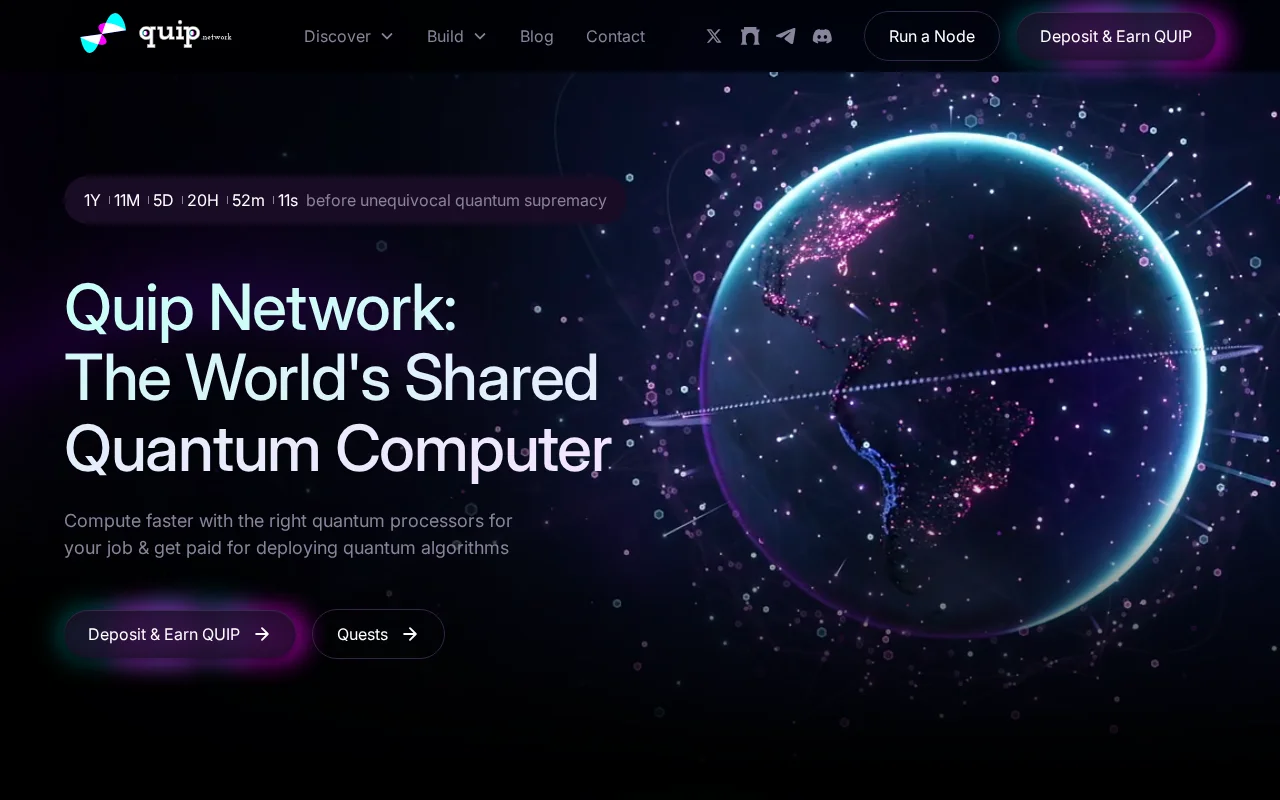
Marketplace for idle quantum hardware, but heavy crypto tokenomics distract from compute utility.
Quantum researchers, crypto miners, DePIN investors
AWS Braket · Render Network · Akash Network
The basic problem: quantum hardware is here and already competitive on certain optimization problems, but for most people, there's no way to access it. The machines cost millions and the hardware and research are gated by the companies who own them.
Also, quantum providers regularly have machines sitting idle because demand isn't consistent, and that's a problem because many architectures need to be cooled near absolute zero and can't just be turned off. There's currently no equivalent of spinning up an on-demand cloud instance for quantum compute.
So we're building one. Quip.Network is a spot clearinghouse and marketplace where quantum providers contribute excess capacity, developers deploy their best solvers to an open library, and anyone can submit a workload and get a result without needing to own or understand the hardware. Classical operators (CPUs, GPUs, TPUs) can also participate in solving and verifying.
The first quantum subnet was built in close collaboration with D-Wave, the world's leading quantum computing company. It focuses on optimization problems, the kind that appear across finance, logistics, and manufacturing. It runs on annealing QPUs and has demonstrated competitive performance on solution quality, speed, and energy cost relative to classical computing approaches. The mining protocol is designed around these benchmarks, so participants compete to find better solutions.
We had about 13,000 signups before launch. The codebase is fully open source because we think quantum advantage should be a verifiable result, not a marketing claim. We want people running nodes, challenging our implementations, and submitting proofs of work optimized for their own hardware.
Unlike GPU clusters where one more processor is a linear improvement, the value of adding just one more QPU to your cluster is exponential. It won't be enough to be just AWS, GCP, or IBM. To solve the toughest problems, we'll want to connect together every processor on Earth and have them operate as one giant quantum system. That's why we think a distributed system is the right approach, and that's why our mission is to build the worldwide quantum computer.
Happy to answer anything!
Docs: quip.gitbook.io/docs | GitHub: github.com/quipnetwork
Real browsers beat bot detection where Puppeteer and Playwright fail—you rent idle machines.
Decentralized GPU compute when Golem and Akash already dominate this space.
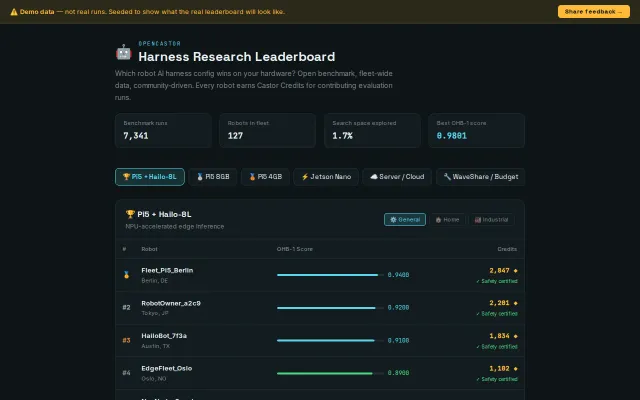
263k config search space benchmarked across robot fleets—nothing like this exists for robotics AI.
Another decentralized compute network competing with Golem, Akash, and iExec.
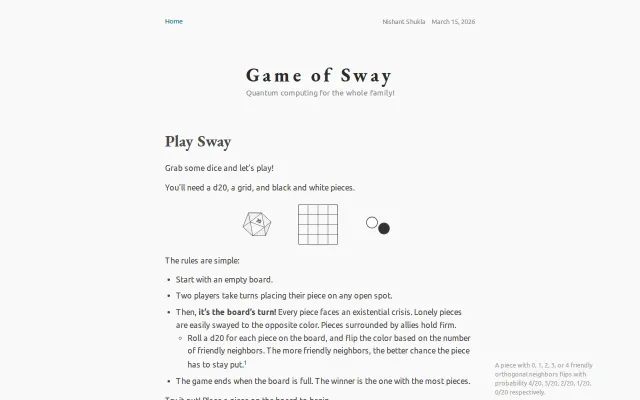
Inverted the usual approach: started with quantum structure, found the game inside it.
They shipped a lot: a native WinUI worker running ONNX Runtime, SignalR-backed real‑time task orchestration, and Stripe payments for a single repo — that’s a full marketplace stack, not a toy. The Windows‑only desktop client and choices like SQL Server/Azure + centralized payments make it less decentralized than projects like Golem or Vast.ai, but as an opinionated, deployable open source alternative it’s impressively ambitious.