Health●●Solid
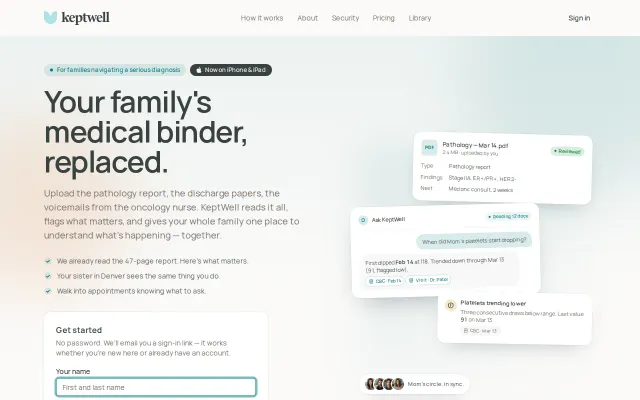
I built an AI medical-records hub after my mom's cancer diagnosis
Family medical hub that extracts lab values and preps appointment questions.
Solve My ProblemCozy
Shpigford
226d ago
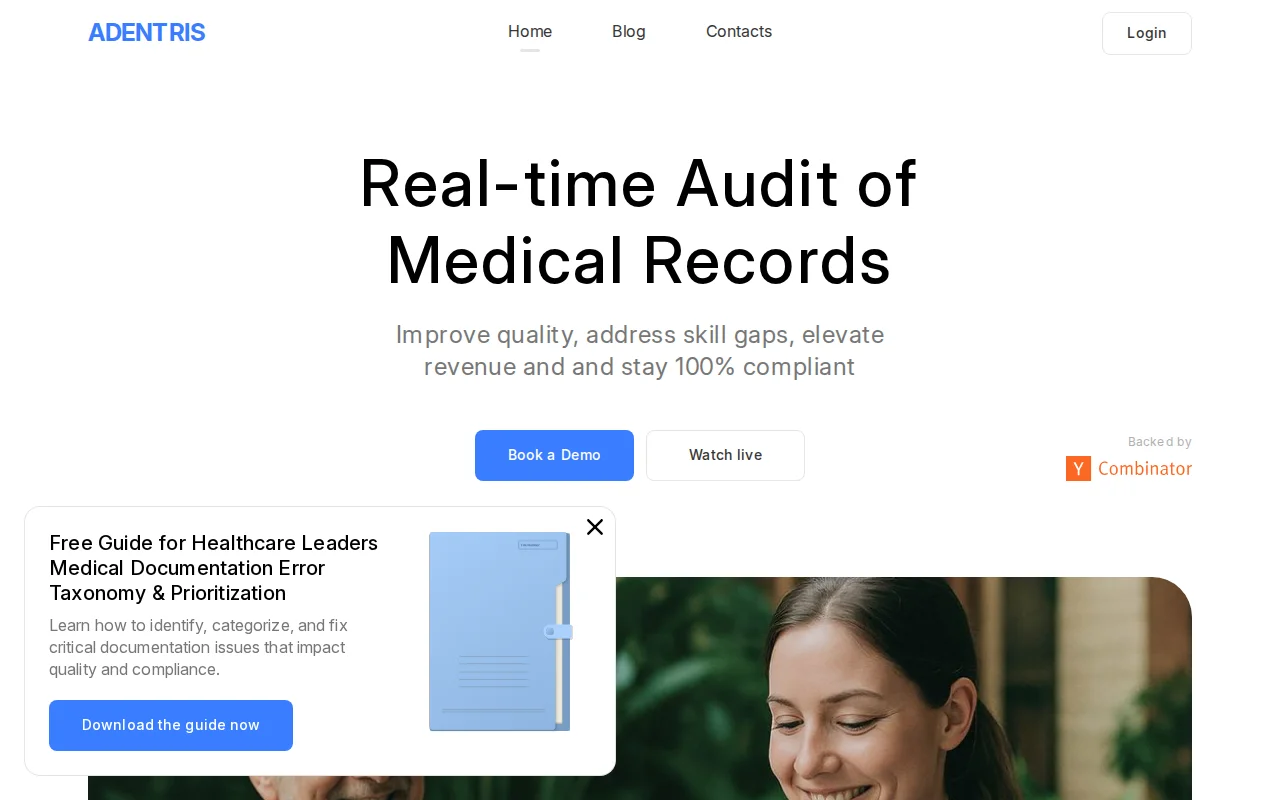
YC-backed SaaS doing AI medical compliance when dozens of enterprise tools already exist.
Healthcare administrators, compliance officers, medical providers
3M CodeFinder · Optum · Doximity
In one sentence: we built a free product that allows patients and providers to upload medical charts in PDFs and automatically identify issues before they turn into treatment mistakes or denied insurance claims.
Create a free account: app.adentris.com Step-by-step interactive demo for patients: https://app.arcade.software/share/snXezdUhG0zGh5JxZNeB
Step-by-step interactive demo for providers:
https://app.arcade.software/share/bxuXt2mwsz2UabvghFFK
A year ago, we initially launched our demo on HN (https://news.ycombinator.com/item?id=44063000), and since then, we've developed a full audit product that integrates with Electronic Medical Records (EMR) systems via API across multiple clinics and hospitals.
Why is this important?
Medical records are crucial, but they are also susceptible to mistakes. As the Office of National Coordinator on Healthcare Technology notes, reviewing your own records is vital because "you may have forgotten to tell your healthcare provider something or they may have forgotten to write it down. The staff in your provider’s office are busy people who make mistakes just like everyone else." For Patients: Reviewing your records helps ensure their accuracy, which can prevent potential issues—for example, an empty "Allergies" field could be disastrous in an emergency room visit. The Health Insurance Portability and Accountability Act (HIPAA) guarantees your right to review and request corrections for errors you find. Our free tool allows anyone, regardless of medical knowledge, to flag potential discrepancies (like a mismatch in date of birth, medications, or allergies) to discuss with their provider. (See the official government guide: https://healthit.gov/get-it-check-it-use-it/check-it/ and this article: https://californiahealthline.org/news/check-your-medical-rec...). As an example, I (Dmitry) used the analysis on 800 pages of my own 5-year medical history and identified three issues to discuss with my primary care physician: mismatched medications, allergies, and outdated vaccinations. For Healthcare Providers: The product is a significant time-saver, automating the quality and compliance review that often takes dozens of hours of manual "scrubbing" each month. The free version includes two specialized rule libraries for providers: Acute care and Substance Use Disorder treatment.
OUR ASK:
We value community feedback on what we're building, especially from healthcare providers. We want to demonstrate how efficient and time-saving automated review is compared to manual chart scrubbing.
Please share a link to our provider-specific interactive demo with the doctors and nurses in your network. It could save them a lot of time that they could spend with patients. To help the doctors and nurses in your network save valuable time that they could be spending with patients, please share the link to our provider-specific interactive demo with them.
https://app.arcade.software/share/bxuXt2mwsz2UabvghFFK
Thank you.
Family medical hub that extracts lab values and preps appointment questions.
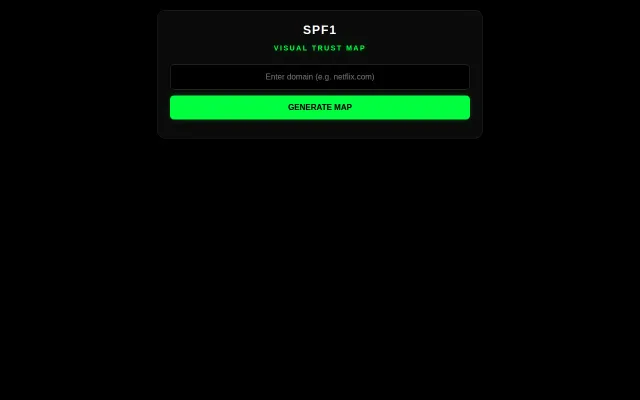
SPF scanner hits 50ms, but no differentiation from existing email security tools.
SHA-256 hash-chained AI audit log, but only 9 commits and ko-fi upsell.
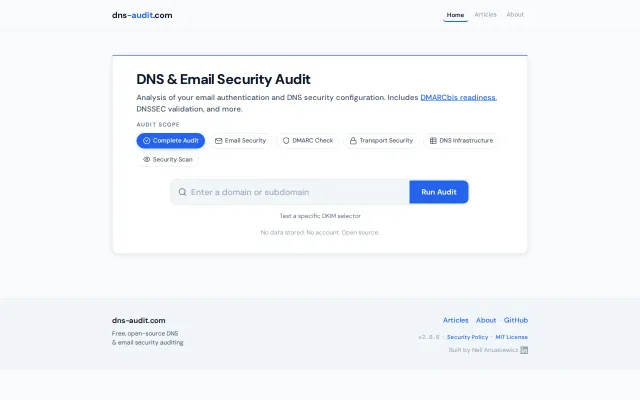
Another DMARC checker in a sea of free tools like MXToolbox and Google Admin.
Intent contracts catch what agents were supposed to do, not just what they did.
GAP research proved models hide harmful actions in tool calls—this catches them at runtime.