AI/ML●Mid
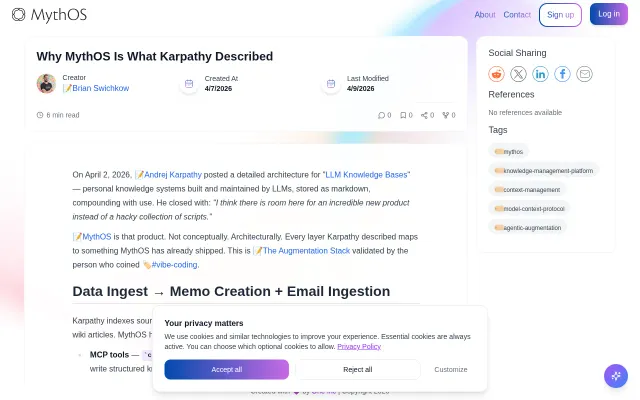
We built the "LLM knowledge base" Karpathy described 9 yrs ago
Karpathy name-drop is marketing—Obsidian, Logseq, and Mem already do LLM knowledge bases.
Bold BetShip It
brianswichkow
251mo ago
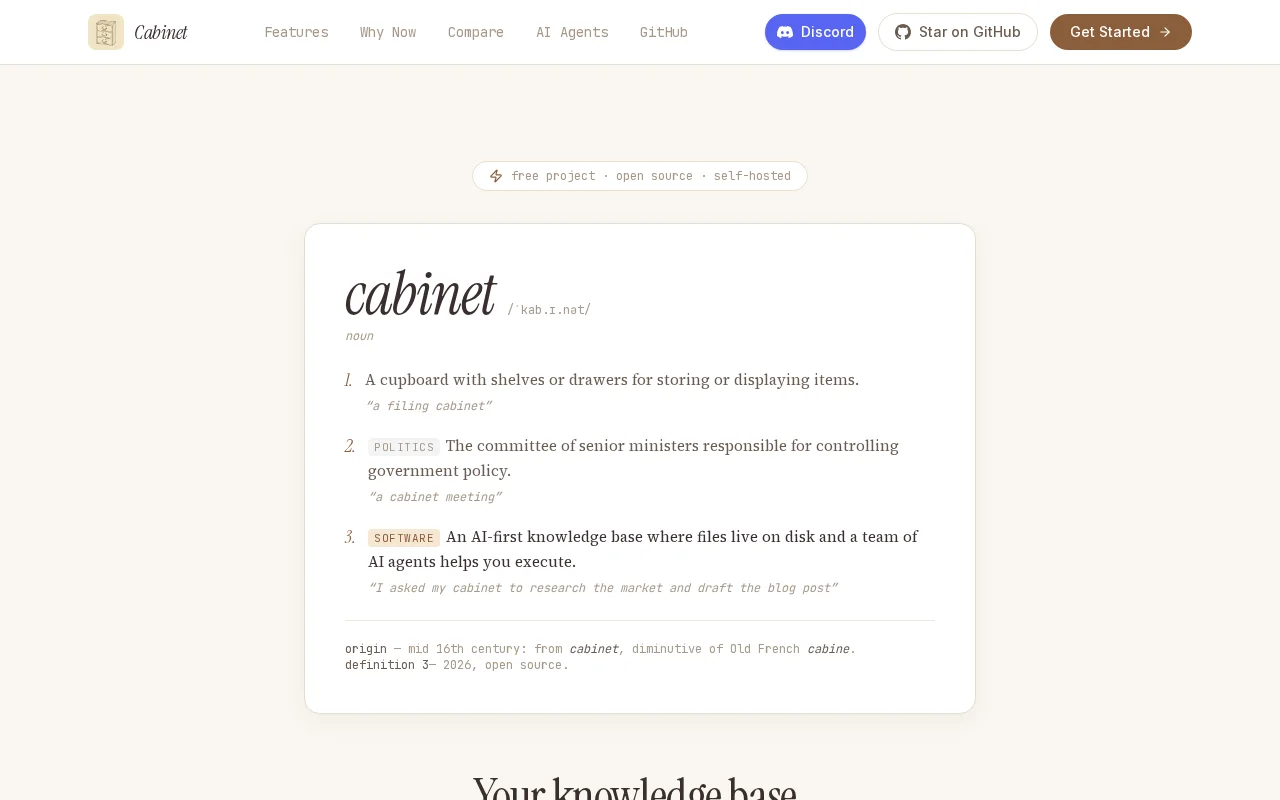
Markdown files on disk with AI agents, no database lock-in like Obsidian.
Indie founders, developers, knowledge workers wanting local AI memory
Obsidian · Paperclip · Mem
for quite some time I've been thinking how LLMs are missing the knowledge base, where I can dump CSVs, PDFs, and most important, inline web app. running on Claude Code (bring your own agent) with agents with heartbeats and jobs
It runs locally and is installable via npm. GitHub (open source): https://github.com/hilash/cabinet
This is still very early. I put the first version together quickly after seeing a post by Andrej Karpathy about LLM knowledge bases, which matched closely with what I’d been building. Some people have already started trying it and opening PRs, which has been encouraging (got 374 stars in 2 days :] )
If useful: Waitlist for a hosted version: https://runcabinet.com/waitlist Discord (small, but growing): https://discord.gg/rxd8BYnN
Would really appreciate feedback: does this “KB + agents” model make sense? what would you expect from a system like this? where does this fall apart? Happy to answer anything.
Hila
Karpathy name-drop is marketing—Obsidian, Logseq, and Mem already do LLM knowledge bases.
Zero-knowledge architecture means prompts never touch disk — unlike LiteLLM.
Compiled wiki beats query-time RAG with vectorless PageIndex retrieval for long PDFs.
LLM compiles knowledge into wiki pages instead of RAG retrieving raw chunks.
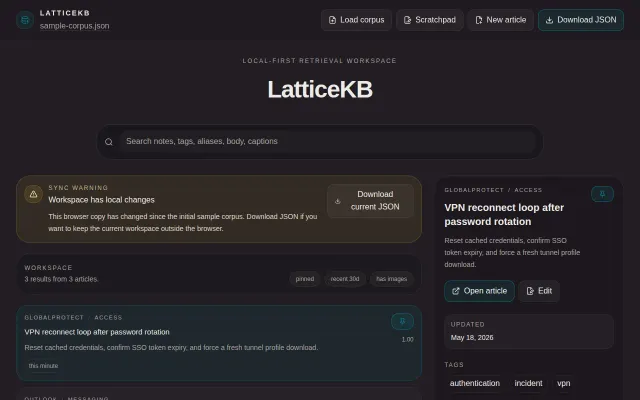
Self-hosted Obsidian rival with native MCP server and sqlite-vec semantic search built-in.
Local-first JSON storage is smart, but Obsidian and Logseq already own this niche.