Developer Tools●●Solid
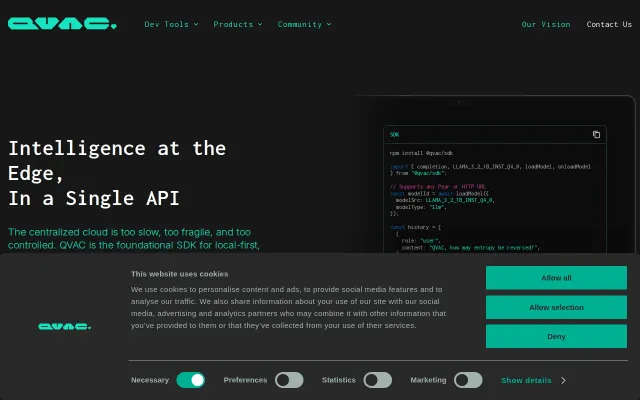
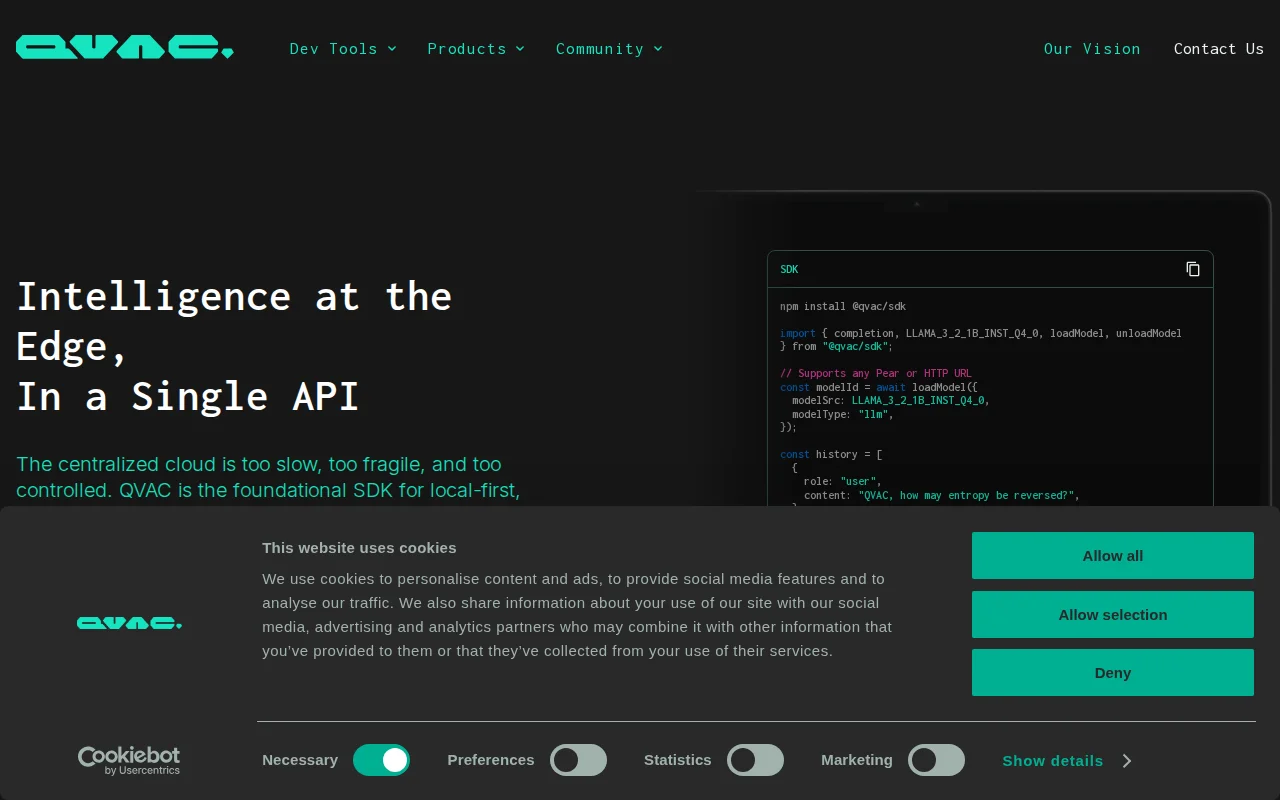
QVAC SDK, a universal JavaScript SDK for building local AI applications
Run local AI models in JS with optional Holepunch P2P distribution.
Big BrainNiche Gem
qvac
30162mo ago
Another local AI SDK from Tether, competing with Ollama and LM Studio.
JavaScript developers building local AI applications
Ollama · LM Studio · MLX
The project is fully open source under the Apache 2.0 license. Our goal is to make it easier for developers to build useful local-first AI apps without having to stitch together a lot of different engines, runtimes, and platform-specific integrations. Under the hood, the SDK is built on top of QVAC Fabric [1], our cross-platform inference and fine-tuning engine.
QVAC SDK uses Bare [2], a lightweight cross-platform JavaScript runtime that is part of the Pear ecosystem [3]. It can be used as a worker pretty much anywhere, with built-in tooling for Node, Bun and React Native (Hermes).
A few things it supports today:
Local inference across desktop, mobile and servers Support for LLMs, OCR, translation, transcription, text-to-speech, and vision models Peer-to-peer model distribution over the Holepunch stack [4], in a way that is similar to BitTorrent, where anyone can become a seeder Plugin-based architecture, so new engines and model types can be added easily Fully peer-to-peer delegated inference
We also put a lot of effort into documentation [5]. The docs are structured to be readable by both humans and AI coding tools, so in practice you can often get pretty far with your favorite coding assistant very quickly.
A few things we know still need work:
Bundle sizes are larger than we want right now because the current packaging of Bare add-ons is not as efficient as it should be yet Plugin workflow can be simpler Tree-shaking is already possible, but at the moment it still requires a CLI step, and we'd like to make that more automatic and better integrated into the build process
This launch is only the beginning. We want to help people build local AI at a much larger scale. Any feedback is truly appreciated! Full vision is available on the official website [6].
References:
[0] SDK: http://qvac.tether.io/dev/sdk [1] QVAC Fabric: https://github.com/tetherto/qvac-fabric-llm.cpp [2] Bare: https://bare.pears.com [3] Pear Runtime: https://pears.com [4] Holepunch: https://holepunch.to [5] Docs: https://docs.qvac.tether.io [6] Website: https://qvac.tether.io
Run local AI models in JS with optional Holepunch P2P distribution.
Comprehensive inference survey from CUDA to Kubernetes, but it's a book not a tool.
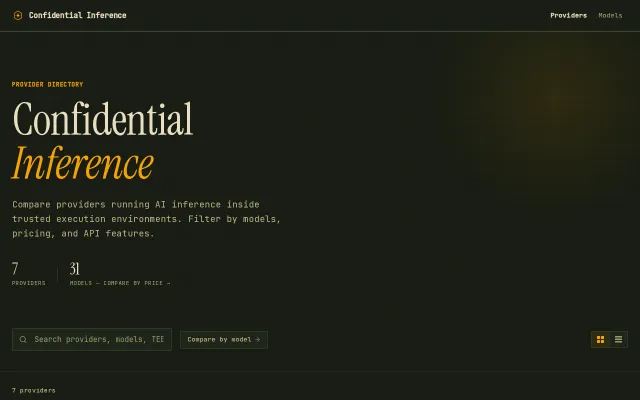
Scrapes 7 TEE inference providers and their pricing; semi-manual curation.
First multi-GPU TEE stack for training trillion-parameter models with under 10% overhead.
Pure Vulkan compute enables LLMs inside game loops without CUDA lock-in.
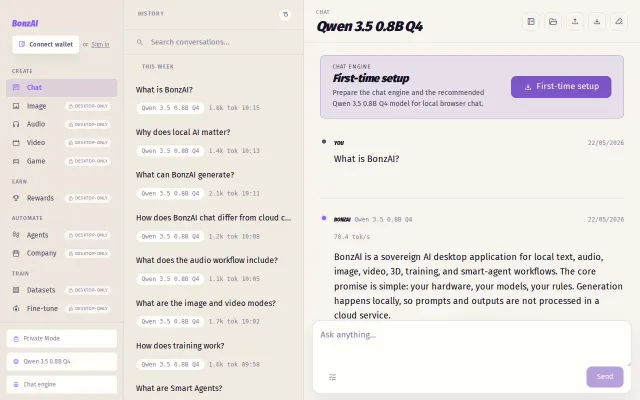
Local AI suite tangled with crypto wallets and token rewards.