Developer Tools●Mid
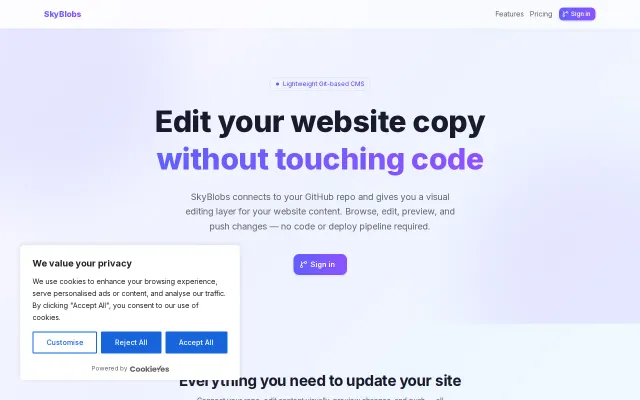
SkyBlobs – Visual editor for content files in your GitHub repo
Git-based CMS for JSON and YAML files when TinaCMS and Decap already exist.
CozyShip It
Vercist
203mo ago
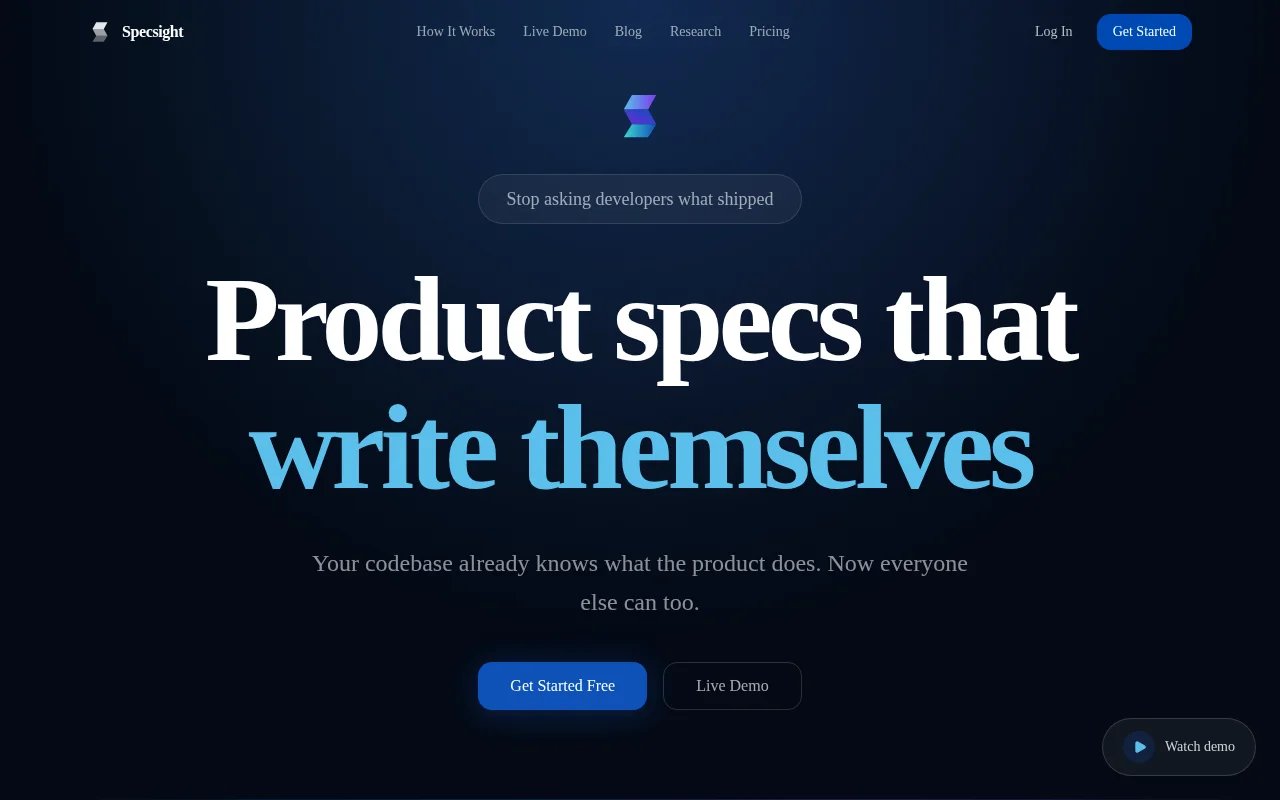
Continuous spec sync detects changes from every release automatically.
Product managers and non-technical stakeholders
Mintlify · Swimm · Sourcegraph Cody
I'm an engineer myself, and everywhere I've worked there was a similar dynamic: someone from the non-technical side of the team (PM, CS, stakeholders) needs to understand what changed recently or how something works today. They rely on stale Confluence pages or ping engineers in Slack and wait. engineers get interrupted daily answering "how does this actually work". it's a mess that gets worse as the team grows
or when you join a new company and try to get a sense of the product. turns out the documentation doesn't exist or is months old. you ask 5 people and get 5 different answers. I've seen it and experienced it sooo many times
I decided to start exploring this space and built Specsight for those non-technical teams. it connects to your GitHub repos, analyses the codebase with Claude (Agent SDK), extracts business-level features of the product, and generates plain-language specifications in Context/Action/Outcome format for every feature. it also builds a visual graph of how features connect to each other, so you can see your product architecture without reading a line of code. On every merge or release, it re-analyses what changed and updates everything automatically
how it works under the hood: the AI does a full scan on initial setup, reads the entire codebase, then does merge syncs on each new release. a triage step filters out irrelevant merges so it only re-analyses what actually changed feature behaviour. It's capable of processing large codebases, though only on the paid plan (it's quite expensive to run heh)
tech stack for those curious: Next.js 16 on Vercel, Supabase (Postgres, Auth, Realtime), Claude Agent SDK for code analysis with a two-pass architecture (map the codebase then deep-dive each feature), Trigger.dev for background jobs, and a GitHub App for repo access and webhooks
ere's the live demo, a slice of Specsight's own spec generated from its own codebase: https://specsight.app/demo/project
I started just a few weeks ago, but I really want to spread the word about this and validate the idea. Hoping for your feedback and happy to answer any questions!
Git-based CMS for JSON and YAML files when TinaCMS and Decap already exist.
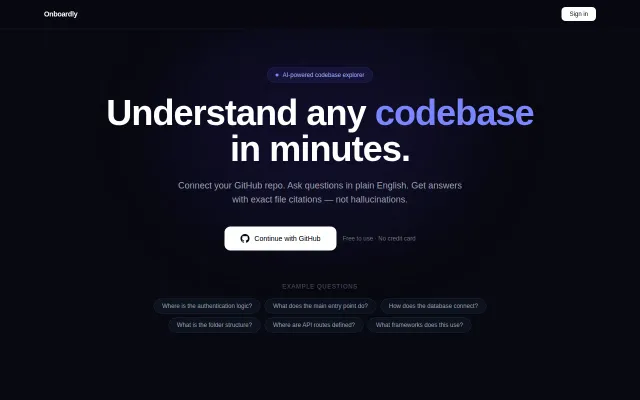
Yet another codebase Q&A tool when Cursor and Continue already do this.
Chat-with-your-codebase tool, but Cursor, Continue, and Cody already own this.
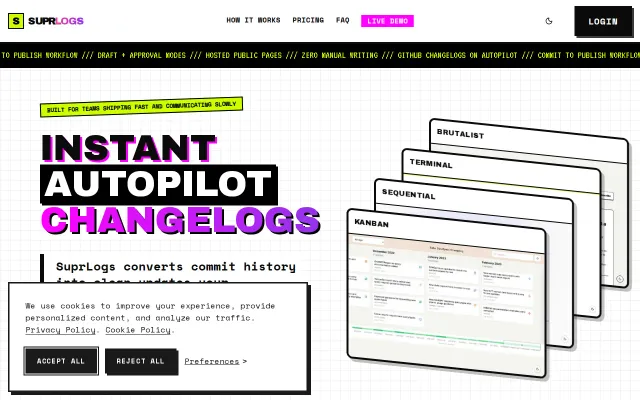
Yet another AI changelog generator when GitHub Releases already does this.
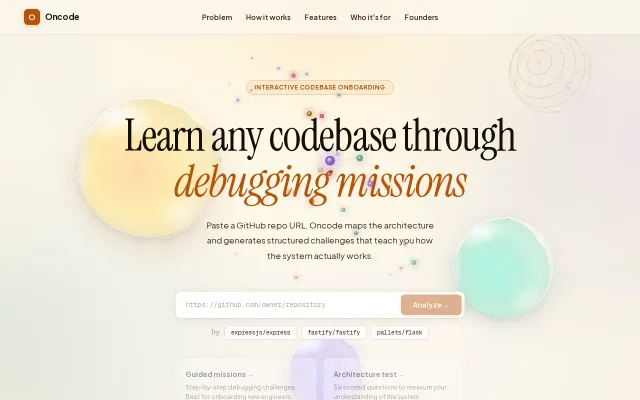
Debugging missions beat Q&A — structured challenges instead of chatting with codebases.
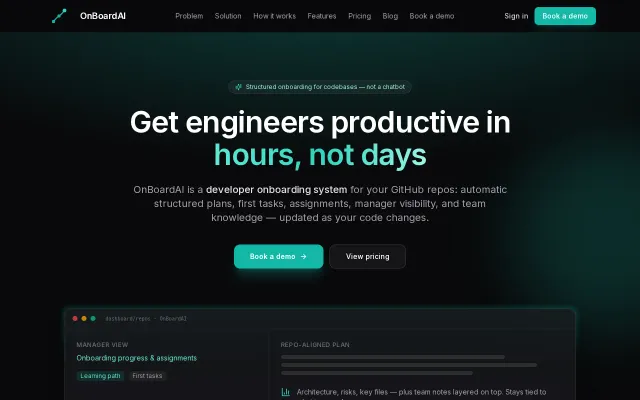
Turns codebase scanning into assigned tasks with manager progress tracking.