Security●●Solid
Secure-by-default OpenClaw on Ubuntu with verifiable security reports
Hardening automation with verifiable reports, but OpenClaw adoption is still niche.
Solve My ProblemNiche Gem
ninoskopac
203mo ago
Blocks unauthorized agent actions before execution with cryptographic intent binding.
Developers building autonomous AI agents with OpenClaw
Lakera · Guardrails AI
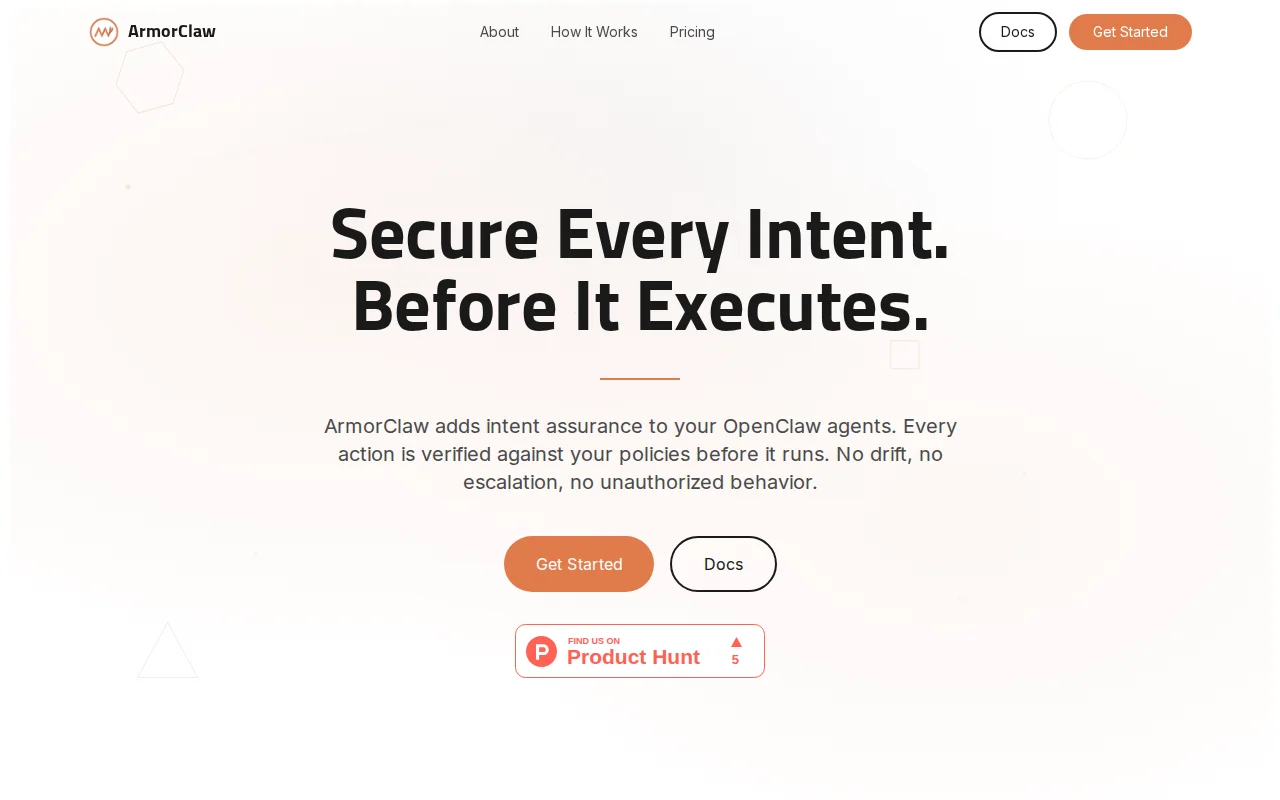
ArmorClaw captures intent and cryptographically binds the agent’s tool use to that committed intent. If an agent tries to call a tool outside that plan, it gets rejected.
For example, if you ask your agent to ‘email dad asking how he’s doing,’ it should only need your email tool. If it also tries to read your calendar, ArmorClaw rejects that.
It’s an open-source OpenClaw plugin, and installation is one command:
curl -fsSL https://armoriq.ai/install-armorclaw.sh | bash
Use code AIQLAUNCH for a free month.
Repo: https://github.com/armoriq/armorclaw
This is still early, so I’d really love feedback.
Hardening automation with verifiable reports, but OpenClaw adoption is still niche.
Single-file, zero-dep scanner for a niche product, but OpenClaw audience is tiny.
Bundles CI-friendly scanners that target agent-specific risks: 17 patterned secret detectors, prompt-injection and instruction‑malware heuristics, tool/SSRF and MCP auth checks, plus SARIF/JSON outputs for integration. Findings map to the OWASP Top 10 for Agentic Applications (2026) and it adds 'harden' profiles to apply safer defaults to OpenClaw/MCP installs — practical, focused ops tooling rather than a generic secret-finder.
OpenClaw but actually secure—encryption, sandboxing, and signed skills baked in.
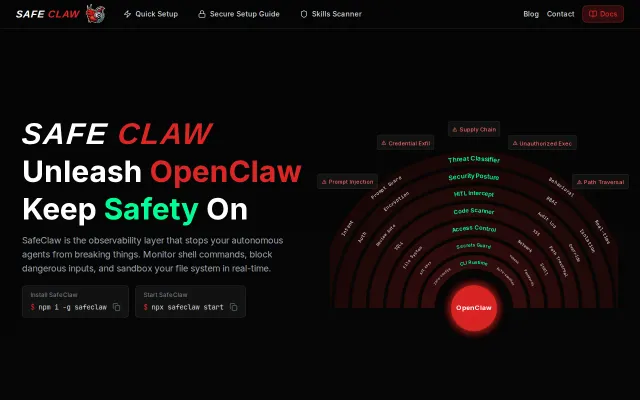
It actually looks for the weird stuff that trips up LLM agents — invisible Unicode, bidi overrides, embedded curl|bash one-liners, exfil links — and pairs a static skill scanner with a real-time interception flow that forces human approvals. The CLI-first approach (npx safeclaw start) plus Socket.IO alerts and per-command allow/deny decisions show practical thinking about developer workflows; I want to see model/false-positive metrics and enterprise integration docs next.
Deterministic policy engine blocks agent actions without relying on fragile LLM guardrails.