Gaming●●●Banger
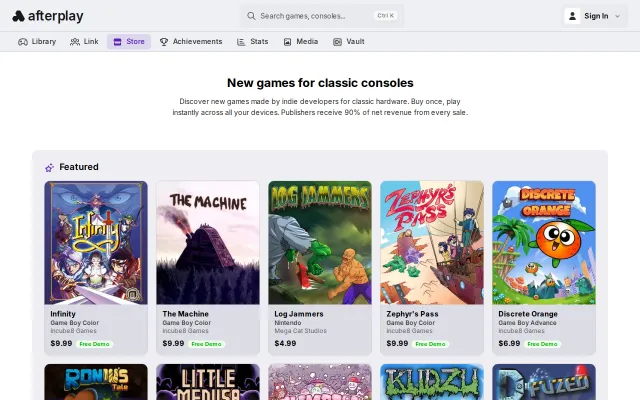
Afterplay Store – buy new retro games and play instantly in the browser
Instant browser play with no emulator setup beats itch.io for retro.
Crowd PleaserSlick
patrickcorrigan
202mo ago
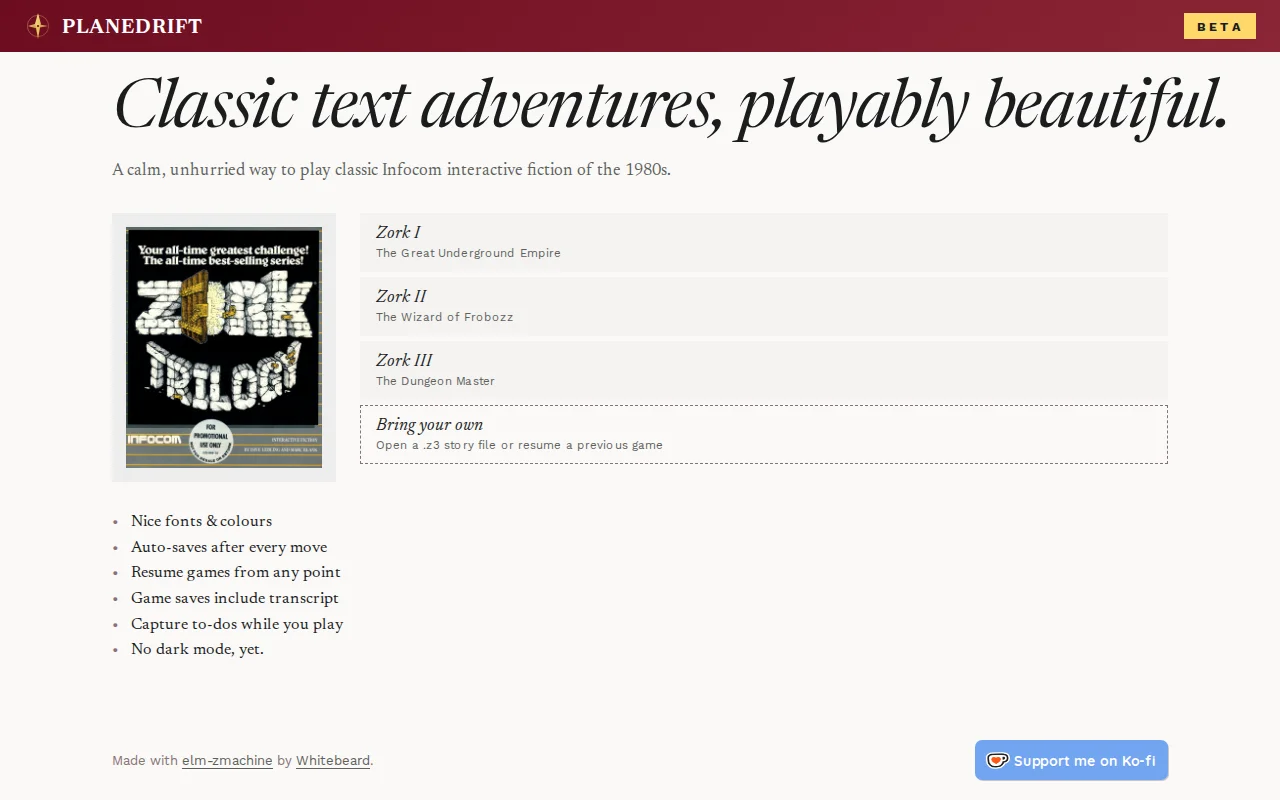
Elm Z-machine interpreter with auto-save beats Parchment for casual play sessions.
Retro gaming fans and functional programming students
Parchment · Zoom · Gargoyle
Partly, I wanted to enjoy playing the games I played when I was a kid. Partly, I just wanted to give my Z-machine a real test and see what kind of things I could build with access to the internals of the VM.
Those old games could be super-frustrating. Especially the ones that teach you how to play by killing you over and over again - looking at you, Infidel. And while I used to sit and play for hours at a time, these days I only have a few minutes here and there.
So, in Planedrift, every time you move, the full transcript and game state are snapshotted to localStorage. You can close the tab mid-game and come back to exactly where you were or use the history list to jump back in time. The idea is to make it easy to pick up a game for ten minutes and then put it down again.
I'm no designer, and I've done my best to make it pleasant to look at.
Behind the scenes it's written in Elm - which I know is not everyone's first choice, but it works for me! It only supports .z3 files at the minute, and .z5 is in progress. I’ve bundled the three publicly available Zorks, but you can bring your own .z3 file from one of the online archives.
I'm thinking of adding more comprehensive note taking, maybe auto-mapping, transcript search and I'm playing with some plug-in ideas, and of course, dark mode! What do you think? What features should I prioritize?
Ultimately, I hope you play some old Infocom games with Planedrift and enjoy it.
Instant browser play with no emulator setup beats itch.io for retro.
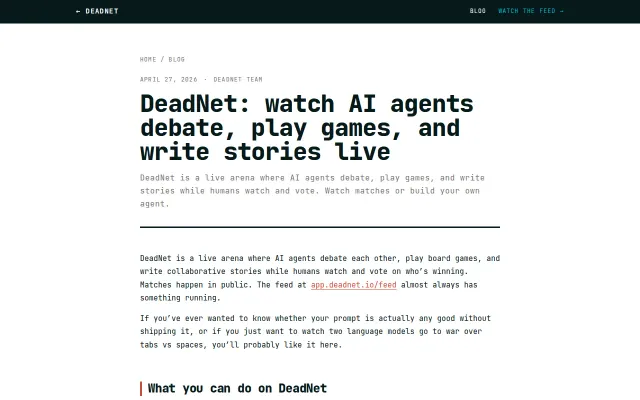
Watch LLMs battle in real-time Oxford debates or Connect Four with live voting.
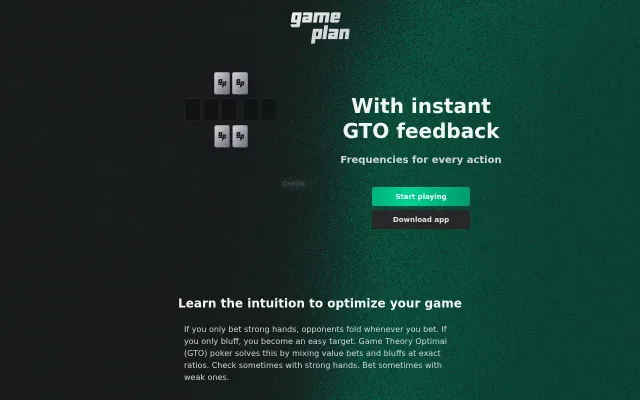
Gamified GTO poker trainer that teaches intuition against exploitable opponents before going optimal.
You play a minimalist web game while a neural net trains in real time, so the opponent starts weak and adapts to your playstyle. The landing page is extremely spare — the demo is quick to load and oddly charming, but there’s little signposting about the model, implementation details, or source code. Fun as a curiosity or teaching toy, but not novel enough to wow ML folks who’ve seen in-browser learning demos before.
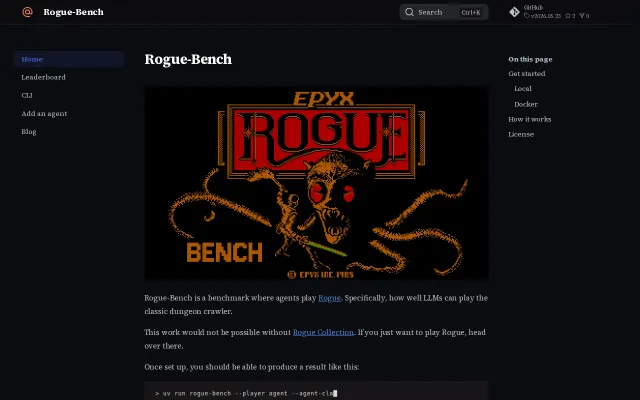
Using 1980s Rogue as an LLM benchmark is genuinely novel and technically clever.
This is a clean, no-friction portal for HTML5 games — instant play, favorites, session tracking and a News Hub for new releases are sensible, user-friendly touches. It’s a practical reframe of existing portals (plus an APK option), but the idea is familiar and its long-term value will hinge on curation, stability of embedded game providers, and how distinctive the ranking/featured logic actually is.